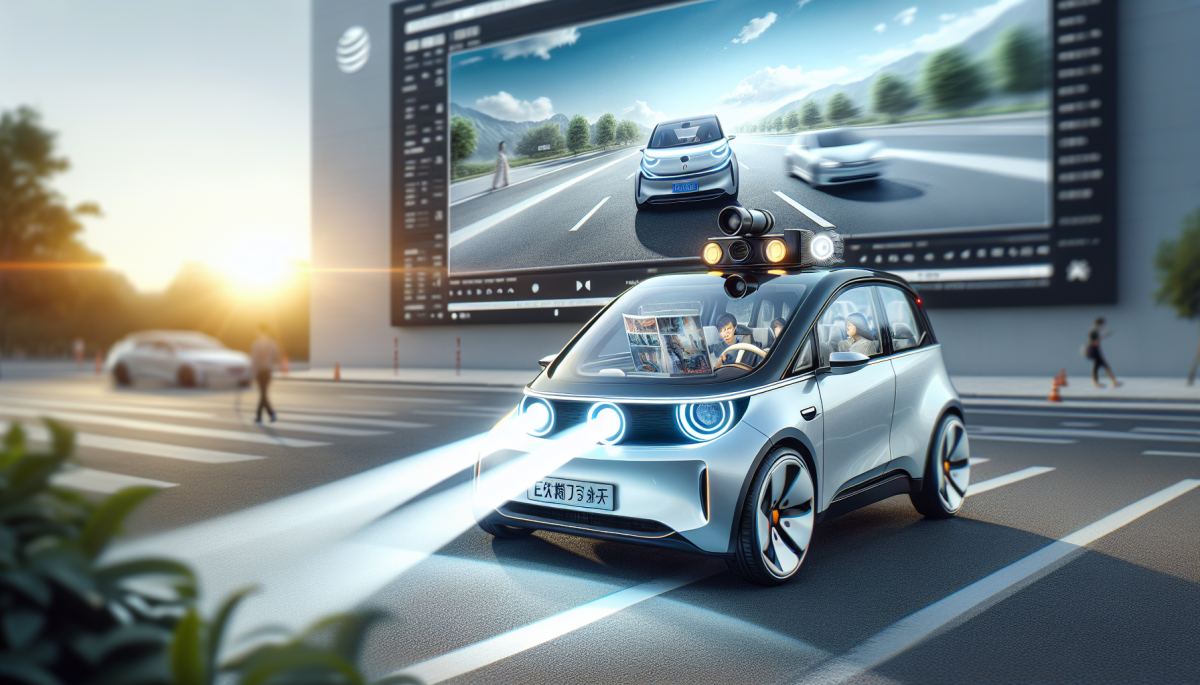
There is a peculiar way to measure the distance between two countries' technological ambitions: look at what they expect from a headlight. In the United States, regulators only recently cleared the path for adaptive driving beam technology, the kind that automatically dims portions of the light to avoid blinding oncoming drivers. It was a modest, long-overdue update. Meanwhile, in China, automakers have already lapped that milestone several times over. The latest Chinese electric vehicles can project full-color movies, animations, and navigation graphics directly onto road surfaces using their headlights. The gap is not just technical. It is philosophical.
BYD, Xpeng, and other Chinese EV manufacturers have begun equipping vehicles with what the industry calls Digital Light Processing headlights, or DLP systems, which use the same underlying technology found in cinema projectors. These systems contain millions of microscopic mirrors that can be individually tilted to shape and color light with extraordinary precision. The result is a headlight that can throw a crisp image onto pavement, a wall, or a screen. Some demonstrations have shown vehicles projecting full movie clips. Others show dynamic road markings, safety warnings, or branded animations that greet the driver when they approach the car. It is theatrical, yes, but it is also a signal of something more structurally significant.
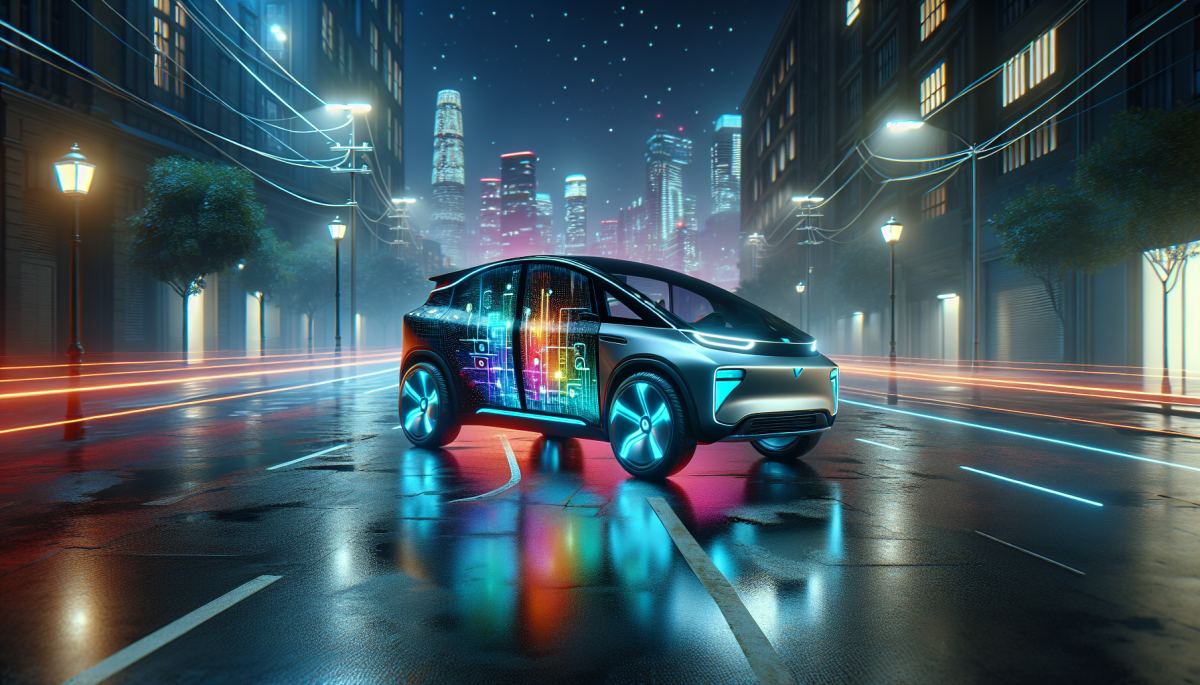
The United States did not permit adaptive driving beams on public roads until 2022, when the National Highway Traffic Safety Administration finally amended the Federal Motor Vehicle Safety Standard 108, which had been written in an era of halogen bulbs and had not meaningfully evolved since. For decades, American regulations required headlights to meet fixed beam pattern standards, which made it effectively illegal to sell the kind of intelligent, camera-linked lighting systems that European and Asian markets had been refining for years. The European Union approved adaptive beam systems back in 2006. That is a 16-year gap in regulatory permission, and the downstream effects on domestic innovation were real. Automakers designing for the U.S. market had little incentive to invest heavily in lighting technology that could not legally be deployed here.
China operates under a different dynamic. Its regulatory environment for automotive technology, particularly for EVs, has been structured to accelerate adoption rather than gatekeep it. The government's industrial policy, channeled through initiatives like Made in China 2025, has treated the EV sector as a strategic priority and created conditions where manufacturers can iterate quickly, deploy boldly, and compete on features that would still be stuck in a U.S. comment period. That is not to say Chinese regulation is absent or reckless, but the incentive structure is oriented differently, toward speed and market leadership rather than precautionary restraint.
The deeper systems-level consequence here is not about movies on pavement. It is about what happens when a car component transforms from a single-function safety device into a programmable output surface. A headlight that can project arbitrary images is, in effect, a display. And displays are platforms. They attract software developers, content creators, and eventually, advertisers. The moment a car's exterior becomes a canvas for dynamic content, the vehicle enters a new competitive category, one defined not just by range or horsepower but by software ecosystems, update cycles, and digital experiences.
This is the trajectory Chinese automakers are already navigating. Companies like Xpeng have built their identities around software-defined vehicles, where the hardware is almost secondary to the layers of digital capability running on top of it. A projector headlight fits neatly into that worldview. It is a feature that can be updated, expanded, and monetized over time through the same over-the-air update infrastructure that handles everything else. American and European automakers, many of whom are still wrestling with how to build compelling in-cabin software experiences, are now watching a new frontier open up on the outside of the car.
The second-order effect worth watching is how this reshapes consumer expectations globally. Once drivers in China grow accustomed to vehicles that communicate visually with the world around them, that expectation will travel. It will show up in reviews, in social media, in the questions people ask at dealerships in other markets. Regulatory permission is one bottleneck. Consumer demand, once it crystallizes, tends to be another kind of pressure entirely, and it moves faster than any rulemaking process.
Discussion (0)
Be the first to comment.
Leave a comment