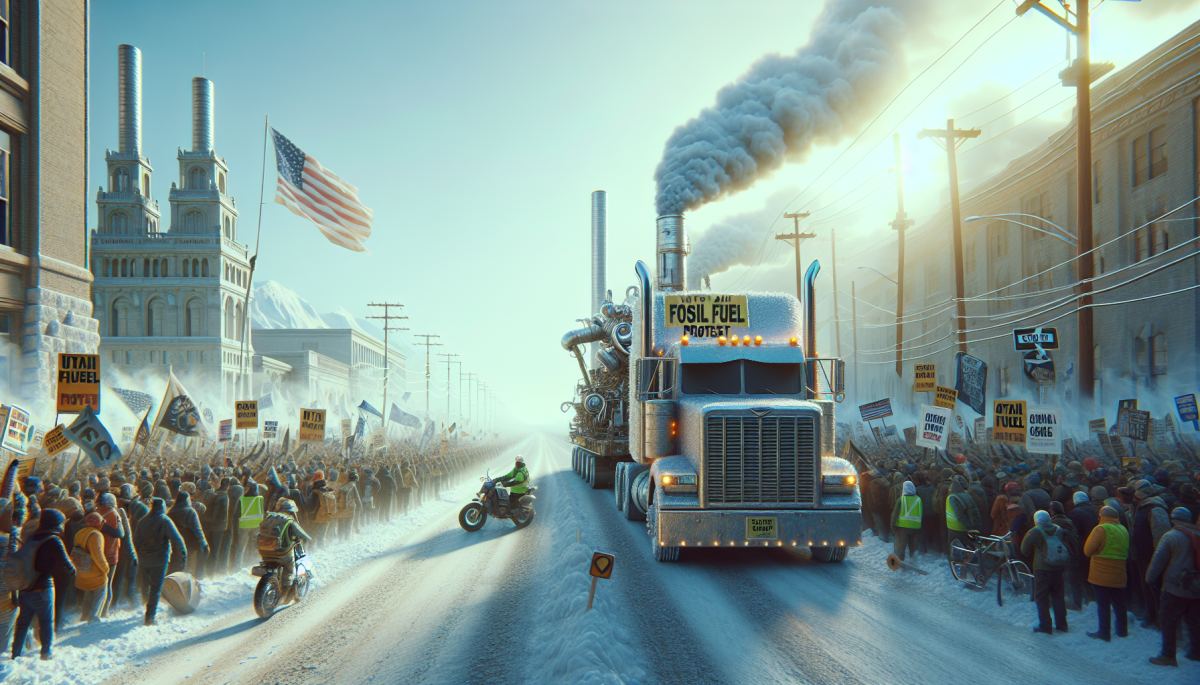
Utah has quietly erected one of the most aggressive legal barriers in the country against climate accountability, passing legislation that makes it nearly impossible for residents to sue fossil fuel companies for climate-related damages. The move, which critics describe as a direct handout to the oil and gas industry, is being watched closely by lawmakers in other states who may be preparing similar measures.
The law effectively strips Utah residents of a legal pathway that communities across the country have been increasingly willing to use. Cities and counties from Honolulu to Baltimore have filed lawsuits against major oil companies in recent years, arguing that these corporations knew for decades about the climate consequences of their products and deliberately obscured that knowledge from the public. Utah's legislation slams that door shut at the state level, insulating companies like ExxonMobil, Chevron, and Shell from the kind of liability that has reshaped industries from tobacco to asbestos.
Advocacy groups have been blunt in their assessment. One described the law as prioritizing "profits for the biggest polluters over communities," a framing that cuts to the heart of what is really a fight over who bears the cost of climate change. For decades, that cost has been distributed broadly across society through rising insurance premiums, disaster relief spending, and public health burdens. Legislation like Utah's ensures that distribution continues, while the companies most responsible for the underlying problem remain financially insulated.
This law did not emerge from a vacuum. It is part of a coordinated push by the fossil fuel industry and its political allies, including advocacy organizations with deep ties to oil and gas money, to preempt climate litigation before it can gain further traction in courts. The strategy mirrors what the tobacco industry attempted in the 1990s, lobbying state legislatures to limit liability exposure as federal and state attorneys general began closing in. The difference now is that the legal and scientific record against fossil fuel companies is arguably even more damning. Internal documents from companies like ExxonMobil have shown that their own scientists accurately projected global warming trends as far back as the 1970s and 1980s, even as the companies publicly funded doubt about climate science.
The political architecture supporting Utah's law is not unique to the state. Groups tied to right-leaning donor networks have been pushing similar model legislation in multiple statehouses, treating liability protection for fossil fuel companies as a priority alongside broader efforts to roll back environmental regulations. When one state passes such a law, it provides both a legal template and a political cover for others to follow. That contagion effect is precisely what has alarm bells ringing among environmental lawyers and public health advocates.
The second-order effects of this kind of legislation deserve more attention than they typically receive. When legal accountability is removed from an industry, the incentive structure that might otherwise push companies toward cleaner practices weakens considerably. Litigation risk, even the threat of it, has historically been one of the more effective mechanisms for changing corporate behavior. Remove it, and you remove one of the few remaining market-based pressures on the fossil fuel sector to internalize the costs of its emissions.
There is also a federalism dimension worth watching. If enough states pass laws shielding fossil fuel companies from climate liability, it could effectively nullify the legal strategies that municipalities and states in other parts of the country are pursuing. A patchwork of immunity laws could make it harder for plaintiffs to establish jurisdiction or enforce judgments, even in states that have not passed similar protections. The legal geography of climate accountability could become as fragmented as the political one.
For ordinary Utah residents, the practical consequences are more immediate. A family whose home is damaged by a wildfire intensified by decades of unchecked emissions now has one fewer avenue for recourse. A community dealing with drought conditions that strain water supplies has less leverage to demand that the companies most responsible contribute to solutions. The law does not change the physical reality of climate change in Utah, one of the fastest-warming states in the American West. It simply determines who pays for it.
What happens next in statehouses across the country will say a great deal about whether the legal system remains a viable tool for climate accountability, or whether that tool is being systematically dismantled before it can be fully used.
References
- Franta, B. (2021) — Weaponizing economics: Big Oil, economic consultants, and climate policy delay
- Supran, G. & Oreskes, N. (2017) — Assessing ExxonMobil's climate change communications
- Burger, M. et al. (2020) — The Law and Science of Climate Change Attribution
- Ekwurzel, B. et al. (2017) — The rise in global atmospheric CO2, surface temperature, and sea level from emissions traced to major carbon producers




Discussion (0)
Be the first to comment.
Leave a comment