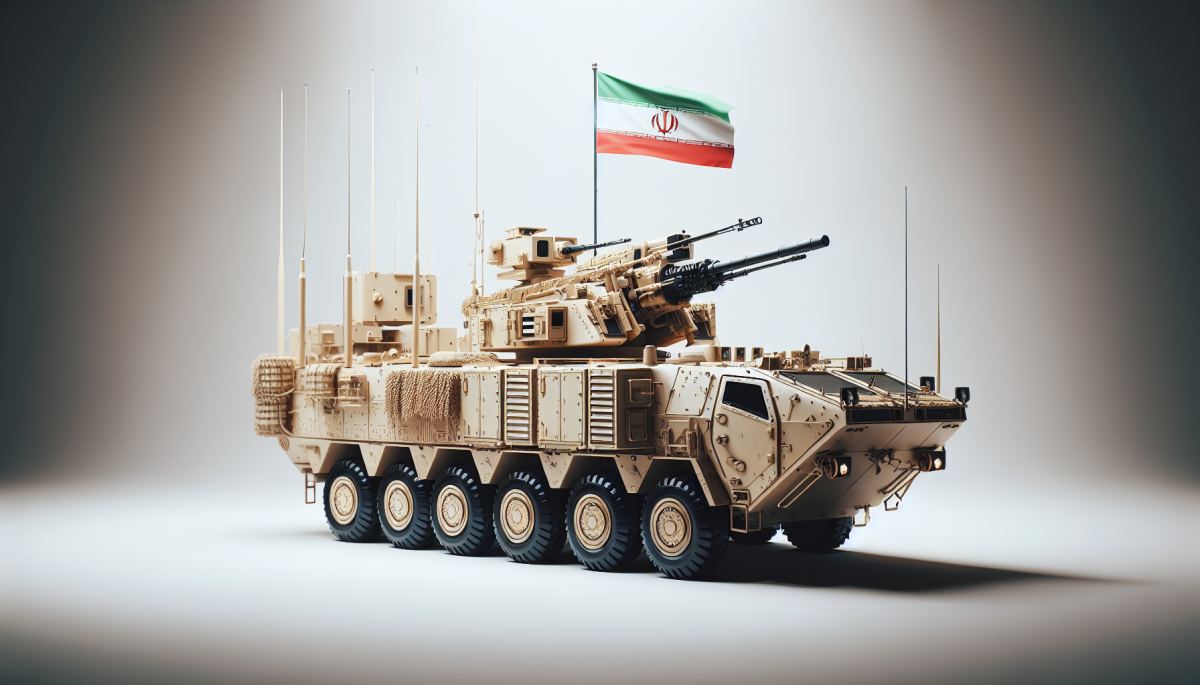
Something unusual is happening inside Iran's borders. As ordinary Iranians watch their purchasing power evaporate, their currency collapse, and basic goods become luxuries, a parallel economy is not just surviving but thriving. The military-industrial complex, the Islamic Revolutionary Guard Corps, and the networks of companies tied to Iran's defense establishment are, by many accounts, expanding. The country is fracturing along an economic fault line that runs not between rich and poor in the traditional sense, but between the civilian and the military.
The Iranian rial has lost staggering value over the past decade. Inflation has repeatedly exceeded 40 percent annually, and the International Monetary Fund has documented persistent economic contraction tied to the compounding weight of U.S. and international sanctions. Food insecurity, once barely discussed in a country with a proud agricultural tradition, has become a measurable crisis. The middle class, which had grown substantially during the reform era of the late 1990s and 2000s, has been hollowed out. And yet, Iran continues to supply drones to Russia for use in Ukraine, develop ballistic missile capabilities that alarm Western intelligence agencies, and fund proxy forces across Lebanon, Yemen, Iraq, and Syria. The money is going somewhere.
The mechanism behind this divergence is not accidental. The IRGC, which functions simultaneously as a military force, an intelligence apparatus, and a business conglomerate, controls significant portions of Iran's import and export infrastructure. Because it operates outside the formal banking channels that sanctions target most effectively, it has developed workarounds that the civilian economy simply cannot access. Barter arrangements, cryptocurrency transactions, and trade routed through intermediary countries have allowed the defense sector to keep importing components while ordinary Iranian businesses find themselves cut off from global supply chains.
This creates a feedback loop with deeply corrosive consequences. As the civilian economy weakens, the state becomes more dependent on IRGC-linked enterprises to keep basic functions running, which in turn gives the military establishment greater leverage over economic policy. Privatization efforts in Iran over the past two decades have frequently resulted in state assets being transferred not to genuine private actors but to IRGC-affiliated entities, a process sometimes called "privatization to the powerful." The result is that economic reform, which might otherwise create pressure for political liberalization, instead reinforces the security state.
Western sanctions were designed with a theory of change: squeeze the economy hard enough and the population will demand political concessions, or the government will negotiate to relieve the pressure. That theory has not played out as expected. What sanctions have accomplished, at least in part, is the elimination of the civilian private sector as a counterweight to military power. The businesses, entrepreneurs, and professionals who might have constituted a reformist economic bloc have been devastated. The IRGC has not.
The longer this dual economy persists, the more it reshapes Iran's internal political geography in ways that extend well beyond the current moment. A generation of young Iranians is being economically formed under conditions of scarcity and state dependency. Brain drain, already severe, accelerates as educated professionals calculate that no civilian career path offers stability. According to some estimates, Iran loses more trained professionals per year than almost any other country in the region, a slow hemorrhage of exactly the human capital that civilian economic recovery would require.
Meanwhile, the military economy's growth is not simply a domestic Iranian story. The drone supply chains linking Tehran to Moscow have drawn scrutiny from European governments and created new pressure points in the broader architecture of Russia-Western confrontation. Iran's ability to sustain that supply relationship, despite sanctions, suggests that the tools the West has relied upon are hitting their limits. If the civilian economy's collapse is actually making Iran's defense sector more autonomous and more resilient, then the sanctions regime may be producing the opposite of its intended effect at the strategic level.
What happens when a government no longer needs its civilian economy to fund its military ambitions? That question, once theoretical, is becoming increasingly concrete in Iran. And the answer, when it fully arrives, will matter far beyond Tehran.
Discussion (0)
Be the first to comment.
Leave a comment