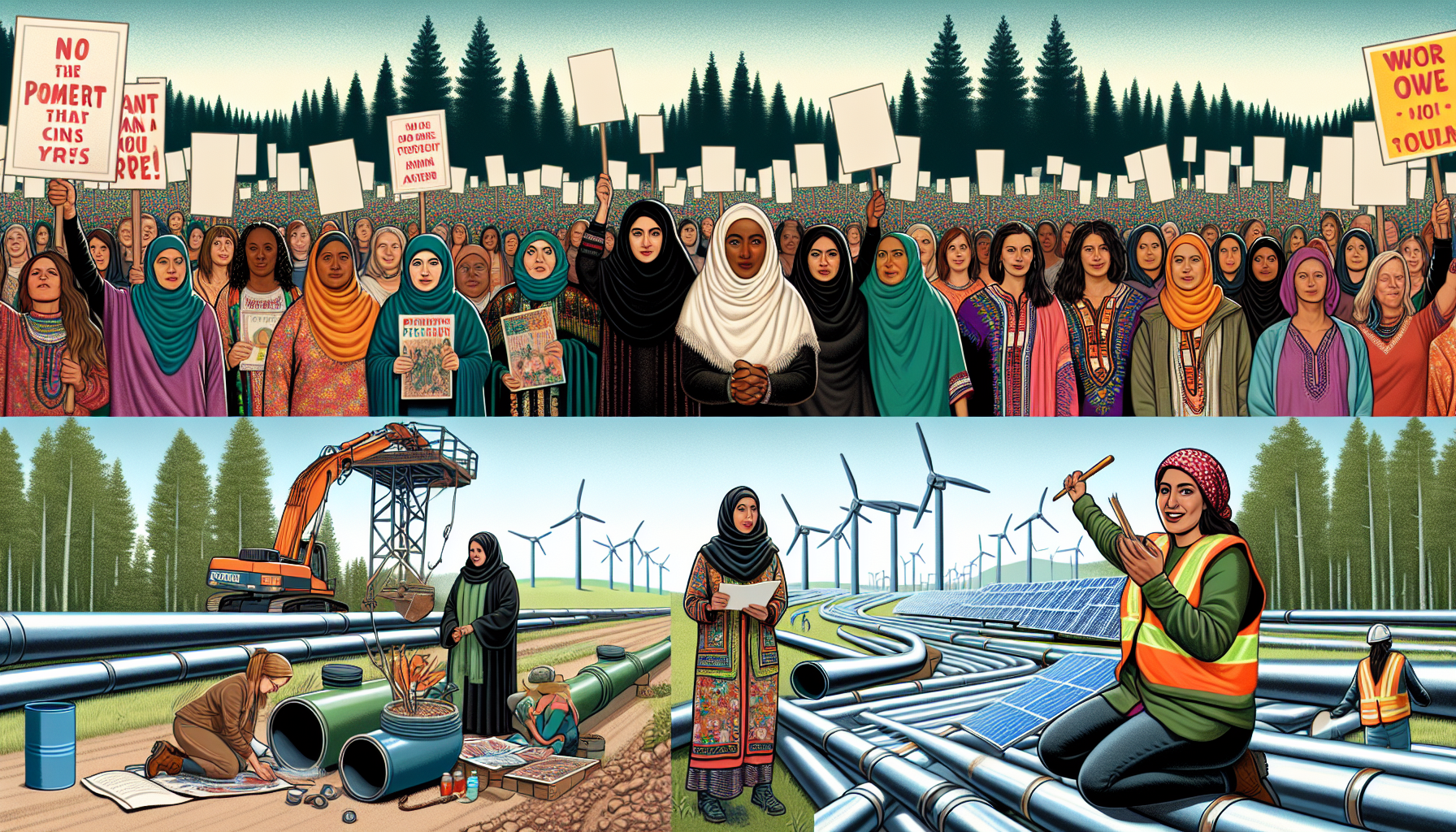
There is a pattern that keeps appearing in climate research, in courtrooms, and in the field: when women lead, fossil fuel projects stall, and cleaner alternatives take root faster. It is not a coincidence, and it is not sentiment. It is a structural reality that the energy transition has been slow to reckon with.
Across the globe, from Indigenous communities in the Americas to smallholder farming regions in sub-Saharan Africa, women are disproportionately positioned on the front lines of environmental harm. They manage water sources, tend land, and bear primary responsibility for feeding households. When a pipeline leaks or a coal plant poisons an aquifer, the consequences land hardest on them first. This proximity to consequence is precisely what makes women such effective and motivated opponents of extractive energy infrastructure — and such credible architects of what replaces it.
The relationship between gender and environmental outcomes is not simply about representation in boardrooms or ministerial offices, though that matters too. It runs deeper, into the incentive structures that shape who fights hardest against fossil fuel expansion and who has the most to gain from a genuine energy transition. Studies consistently show that communities with stronger female leadership make more sustainable land-use decisions, protect biodiversity at higher rates, and resist the short-term cash logic that extractive industries use to win local consent. The mechanism is not mysterious: when the people making decisions are also the people who will live with the consequences for generations, the calculus changes.
This is why women-led movements have been central to stopping energy projects that would otherwise have sailed through regulatory approval. The opposition is rarely just about climate in the abstract. It is about a specific river, a specific crop cycle, a specific community's ability to survive the next decade. That granularity makes the resistance harder to dismiss and harder to buy off. It also makes it more durable. Movements anchored in lived material stakes tend to outlast movements anchored in ideology alone.
The flip side of this dynamic is equally important. Women-led communities and organisations are not only blocking harmful projects — they are building regenerative ones. From community solar cooperatives in South Asia to reforestation enterprises run by women's collectives in West Africa, the evidence base for female-led clean energy development has grown substantially in recent years. These projects tend to prioritise energy access alongside energy generation, which means they are more likely to deliver power to the households that have historically been excluded from grid infrastructure.
The cost of sidelining women from energy decision-making is not merely ethical. It is operational. Projects that fail to engage women in affected communities face higher rates of local opposition, longer permitting delays, and greater reputational risk. Conversely, clean energy transitions that actively incorporate women's leadership at the design stage move faster, encounter less friction, and generate more equitable economic outcomes. The International Energy Agency and various UN bodies have flagged this connection repeatedly, yet the composition of energy ministries, utility boards, and international climate finance institutions remains heavily male.
This gap creates a feedback loop that slows the transition. Institutions dominated by men tend to fund and approve projects that reflect male-dominated networks and priorities. Those projects are more likely to replicate the centralised, large-scale infrastructure logic of the fossil fuel era rather than the distributed, community-anchored models that women's organisations have pioneered. The result is a transition that changes the energy source without changing the power structure — and that, in turn, leaves the communities most harmed by fossil fuels still waiting at the margins of the clean economy.
The cascading consequence here is significant. If the clean energy transition is built on the same exclusionary foundations as the system it replaces, it will generate the same patterns of local resistance, the same legitimacy deficits, and ultimately the same political fragility. Populations that feel bypassed by green infrastructure will not defend it when it comes under political attack — and in an era of rising resource nationalism and anti-climate backlash, that defence will matter enormously.
The phaseout of fossil fuels is not only a technical or financial challenge. It is a governance challenge. And the evidence suggests that the communities most likely to solve it are the ones that have been most systematically excluded from the rooms where decisions get made. The question is whether the institutions controlling climate finance and energy policy will recognise that before the window for an equitable transition closes.




Discussion (0)
Be the first to comment.
Leave a comment