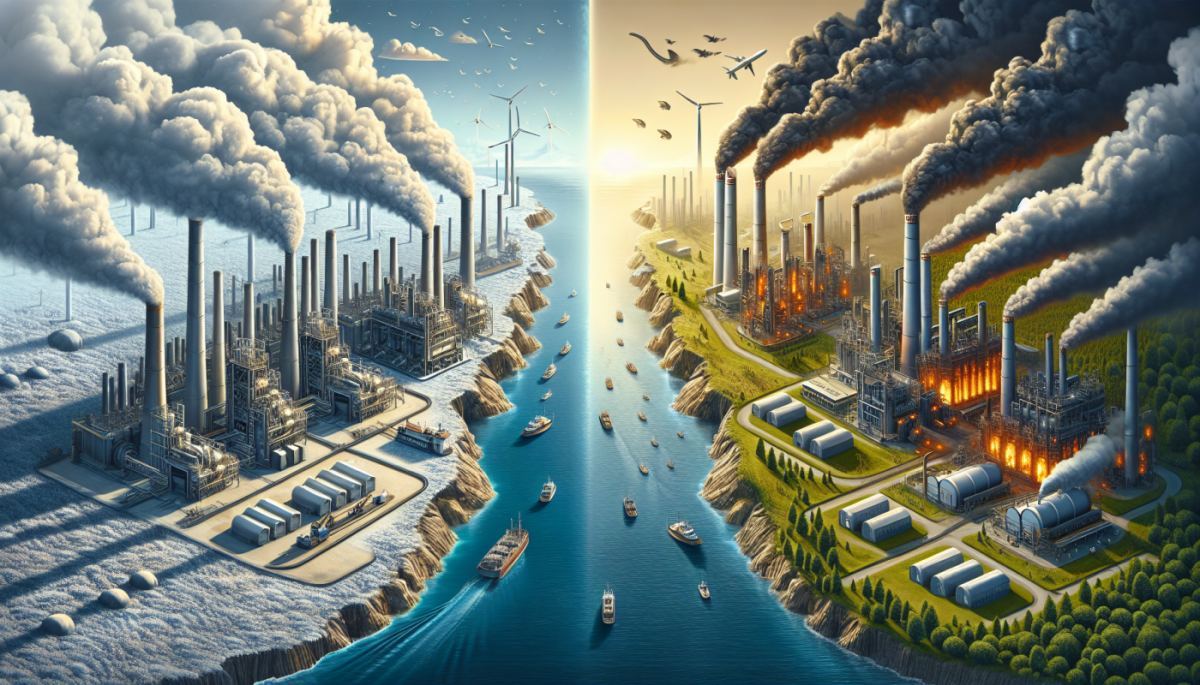
Methane does not linger the way carbon dioxide does. While CO2 can persist in the atmosphere for centuries, methane burns off in roughly a decade, which means that cutting it now produces a measurable cooling effect within years rather than generations. That is an almost unique property in the landscape of climate interventions, and it explains why the Global Methane Pledge, signed by over 150 countries at COP26 in Glasgow, committed to a 30% reduction in methane emissions by 2030. The science said it was possible. The politics said it was achievable. The implementation, however, tells a different story.
Scientific assessments confirm that the technical potential to meet the 2030 target genuinely exists. The gap is not one of invention or even, in most cases, of cost. It is a gap of execution, of political will, of misaligned incentives, and of the stubborn distance between what governments pledge in conference halls and what actually happens in oil fields, landfills, and rice paddies. That distance, measured in parts per billion of atmospheric methane, is widening rather than closing.
Methane comes from three broad source categories: fossil fuels, agriculture, and waste. Each presents its own implementation challenge, and each reveals a different failure mode in how societies manage the transition away from warming gases. In the fossil fuel sector, leaks from oil and gas infrastructure are often the lowest-hanging fruit. Many of these emissions can be captured and sold, meaning the economics of repair are not inherently hostile. Yet detection remains patchy, enforcement is inconsistent, and in some jurisdictions the regulatory frameworks to compel action simply do not exist. Satellite monitoring has improved dramatically in recent years, with instruments like the European Space Agency's Sentinel-5P and commercial operators such as GHGSat now capable of identifying individual facility-level leaks from orbit. The data exists. The political machinery to act on it, in many producing nations, does not.
Agriculture is harder. Livestock, particularly cattle, produce methane through enteric fermentation, a digestive process that cannot be switched off the way a valve can be closed. Rice cultivation, which floods fields and creates anaerobic conditions ideal for methane-producing microbes, feeds billions of people and cannot simply be redesigned overnight. Solutions exist, from feed additives like 3-nitrooxypropanol, which has shown meaningful reductions in cattle emissions in trials, to alternate wetting and drying techniques in rice paddies. But scaling these interventions requires farmer education, supply chain changes, and in many cases direct financial support for agricultural communities that are already operating on thin margins. The Global Methane Pledge offers no binding mechanism to deliver any of that.
This is where the systems-level failure becomes most visible. The pledge is a voluntary commitment, and voluntary commitments in climate policy have a well-documented tendency to drift. Countries that signed in 2021 are not legally obligated to report progress in any standardised way, which makes accountability diffuse and comparison difficult. The incentive structure rewards the announcement of ambition rather than the delivery of outcomes. Meanwhile, atmospheric methane concentrations have continued to rise, reaching record levels in recent years according to NOAA monitoring data, driven in part by increased emissions from wetlands as temperatures rise, a feedback loop that human policy cannot directly control but that makes the case for urgent action on the sources we can control even more pressing.
That feedback loop deserves more attention than it typically receives. Warmer temperatures accelerate microbial activity in natural wetlands, releasing more methane, which warms the atmosphere further, which accelerates wetland emissions again. Human-caused methane from fossil fuels and agriculture is not the only driver of rising concentrations, but it is the driver we can actually influence. Cutting anthropogenic methane emissions aggressively is therefore not just a contribution to long-term climate targets. It is, in a meaningful sense, a race against a natural amplification process that gets harder to outrun the longer action is delayed.
The cruel irony is that the window in which methane cuts deliver their fastest payoff is precisely the window that is closing. Every year of delayed implementation is a year in which the short-lived but powerful warming effect of methane continues unchecked, and a year in which the feedback dynamics of a warming planet make the overall problem incrementally worse. The technology is ready. The monitoring infrastructure is increasingly capable. What remains is the less glamorous, more grinding work of turning a global pledge into a global practice, and the question of whether the institutions built to do that work are actually equal to the task.
Discussion (0)
Be the first to comment.
Leave a comment