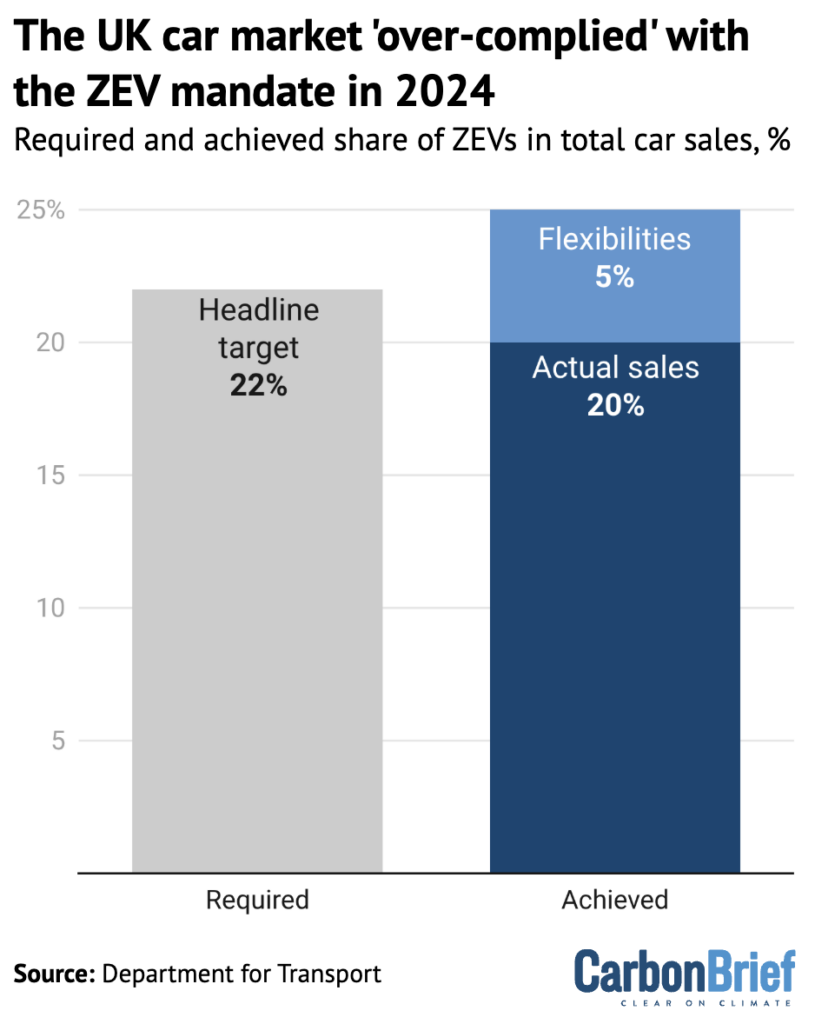
The British car industry has spent years insisting that electric vehicle demand simply isn't there, that consumers aren't ready, and that government targets are dangerously out of step with reality. It's a compelling narrative, and it has worked remarkably well in lobbying circles. But a closer look at the numbers tells a more complicated story, one that the industry has been conspicuously reluctant to tell in full.
The core claim from manufacturers and their trade bodies is that EV demand is weak among private buyers. This is partially true. Private consumers in the UK have been slower to adopt electric vehicles than fleet buyers, and affordability remains a genuine barrier for many households. But the industry's framing consistently omits a critical variable: supply. For much of the past three years, the most affordable electric vehicles, particularly those from Chinese manufacturers like BYD, have been either unavailable in the UK market or available only in limited quantities. When you restrict the supply of cheaper options and then point to sluggish sales figures as evidence of weak demand, you are not describing a market failure. You are describing a distribution strategy.
The UK's Zero Emission Vehicle mandate, which requires that a rising percentage of each manufacturer's annual car sales be electric, starting at 22% in 2024 and climbing to 80% by 2030, has become the central battleground. Automakers have lobbied aggressively to have the targets softened, delayed, or restructured. The Society of Motor Manufacturers and Traders, the industry's main lobbying body, has repeatedly warned of dire consequences if the mandate is not relaxed. What gets less attention is that several manufacturers have been banking ZEV credits, trading allowances between themselves, and using the mandate's own flexibility mechanisms to delay the harder work of actually putting affordable EVs on forecourts.
Fleet sales, which include company cars, rental vehicles, and government procurement, tell a very different story than the private market. Electric vehicles now make up a substantial share of fleet registrations in the UK, driven by favourable benefit-in-kind tax rates that make EVs significantly cheaper for businesses and employees than equivalent petrol or diesel cars. This bifurcation is not accidental. It reflects the fact that when the financial incentives are structured correctly, demand materialises. The private market lacks equivalent incentives. There is no purchase subsidy for private buyers, unlike in France or Germany, and the used EV market remains thin and uncertain enough to deter cautious consumers.
This is where the industry's argument becomes self-serving in a way that deserves more scrutiny. Manufacturers benefit from fleet sales without having to invest heavily in consumer education, charging infrastructure confidence, or affordable entry-level models. They can meet a portion of their ZEV obligations through fleets while continuing to sell high-margin petrol SUVs to private buyers. The mandate, in its current form, creates enough wiggle room for this strategy to persist for several more years.
The deeper systems-level problem is what happens to UK automotive competitiveness if the industry successfully delays or dilutes the mandate. Chinese EV manufacturers are not pausing. BYD overtook Tesla in global EV sales in 2023, and European and British markets are increasingly in their sights. Every year that domestic manufacturers defer the transition is a year in which Chinese brands, with their lower production costs and rapidly maturing technology, consolidate their advantage. The UK's import tariff structure offers some protection, but trade relationships shift, and the EU's own tariff decisions on Chinese EVs will shape what flows through to British consumers.
There is also a workforce dimension that rarely surfaces in the lobbying rhetoric. The UK battery manufacturing base remains underdeveloped relative to the ambition of the ZEV mandate. Gigafactories have been announced, delayed, and in some cases quietly shelved. If the mandate is weakened in response to industry pressure, the investment case for domestic battery production weakens with it, creating a feedback loop in which lower ambition produces lower investment, which in turn makes higher ambition seem less credible.
The car industry's demand argument is not entirely wrong. But it is strategically incomplete. And in the gap between what is being said and what is being left out, a great deal of industrial and climate policy is being quietly shaped.
References
- Carbon Brief (2024) — Factcheck: What the UK car industry is not saying about EV targets
- Society of Motor Manufacturers and Traders (2024) — New Car Registrations Data
- UK Government (2023) — Zero Emission Vehicle Mandate
- International Energy Agency (2024) — Global EV Outlook 2024
- European Commission (2024) — Provisional countervailing duties on electric vehicles from China
Discussion (0)
Be the first to comment.
Leave a comment