
Abraham Kampalei has spent more than 50 of his 70 years watching the sky over Oldonyonyokie, a small hamlet in Kajiado county in southern Kenya. He knows what rain looks like when it comes, and he knows what its absence does to the land, the animals, and the people who depend on both. After four months of drought, the first rains finally arrived. "All we can do now is pray that they continue," he said.
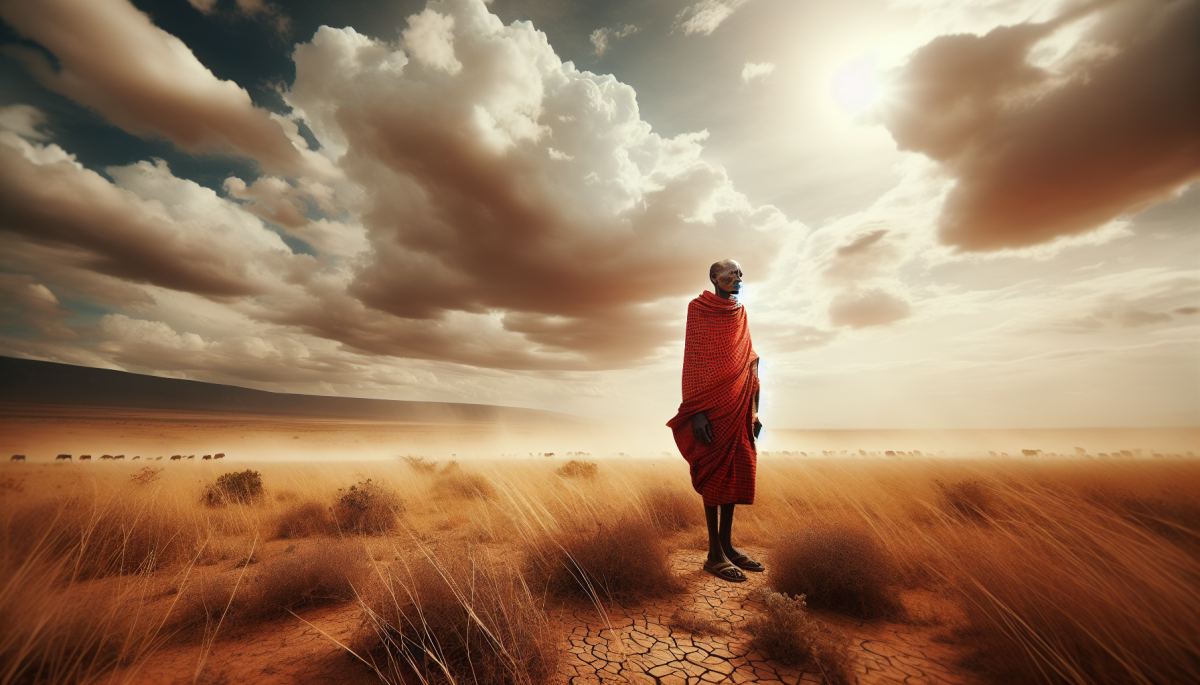
For the Maasai, that kind of prayer is not resignation. It is the accumulated wisdom of a pastoral people who have always lived at the mercy of rainfall patterns that were, for centuries, at least somewhat predictable. What Kampalei and his community are navigating now is something different: a climate that is measurably, structurally shifting beneath their feet.
Kenya has always had harsh weather. The country sits in a region where rainfall is naturally variable, governed by the seasonal movement of the Inter-Tropical Convergence Zone and shaped by ocean temperature anomalies in the Indian Ocean. But the operative word in that sentence is "always" — because what climate scientists are documenting now is not variability. It is a directional trend.
East Africa has experienced a prolonged pattern of below-average rainfall since around 2020, contributing to what the United Nations described as one of the worst droughts in the region in 40 years. Kenya, Ethiopia, and Somalia were all severely affected, with tens of millions of people facing acute food insecurity. The rains that failed most catastrophically were the so-called "long rains" of March through May, a season that has become increasingly unreliable. Research published in journals including Nature Climate Change has linked this drying trend to warming in the Indian Ocean, which alters atmospheric circulation in ways that suppress rainfall over the Horn of Africa.
For pastoralists like the Maasai, who measure wealth in cattle and whose entire way of life is organized around moving animals to water and pasture, this is not an abstract data problem. It is an existential one. Livestock deaths during drought years can wipe out decades of accumulated family wealth in a matter of weeks. Pasture that takes years to recover can be gone in a season.
What makes the situation in Kajiado and communities like it particularly difficult to reverse is the way drought triggers its own cascading consequences. When pasture fails, herders are forced to move their animals further and faster, which increases pressure on whatever land still has grass. Overgrazing degrades soil structure and reduces the land's capacity to absorb and retain water when rain does eventually come. That degraded land then produces less vegetation, which reduces local evapotranspiration, which in turn suppresses the formation of rain clouds. The drought, in other words, creates conditions that make the next drought more likely.
This is a textbook feedback loop, and it operates at a scale that individual communities cannot break on their own. Reforestation and sustainable grazing programs can help at the margins, and Kenya has invested in some of these efforts, but they require long time horizons and consistent funding that rarely survive political cycles.
There is also a harder political economy at work. Kajiado county, like much of Kenya's arid and semi-arid land, has seen growing pressure from agricultural encroachment, land subdivision, and infrastructure development that fragments the migration corridors pastoralists have used for generations. When those corridors close, herders lose the flexibility that has historically been their primary adaptation strategy. The ability to move is, for pastoral communities, what a savings account is for a salaried worker. Remove it, and a single bad season can become a catastrophe.
The first rains arriving in Oldonyonyokie are genuinely good news. Soft soil after four months of hardpan is something. But the structural forces shaping Kenya's climate trajectory — ocean warming, land degradation, corridor fragmentation, and the slow erosion of traditional adaptive capacity — do not pause for a good week of rainfall. If anything, the brief relief that comes with early rains can reduce the urgency felt by policymakers and donors, making it harder to sustain attention on a crisis that is slow-moving, cumulative, and deeply unglamorous. The Maasai know the rains may not continue. The harder question is whether the systems meant to support them will.
References
- Rowell et al. (2015) — Reconciling Past and Future Rainfall Trends over East Africa
- OCHA (2022) — Eastern Africa Drought Crisis: Regional Humanitarian Overview
- Funk et al. (2008) — Warming of the Indian Ocean Threatens Eastern and Southern African Food Security
- FAO (2022) — Drought in the Horn of Africa: FAO Response and Outlook




Discussion (0)
Be the first to comment.
Leave a comment