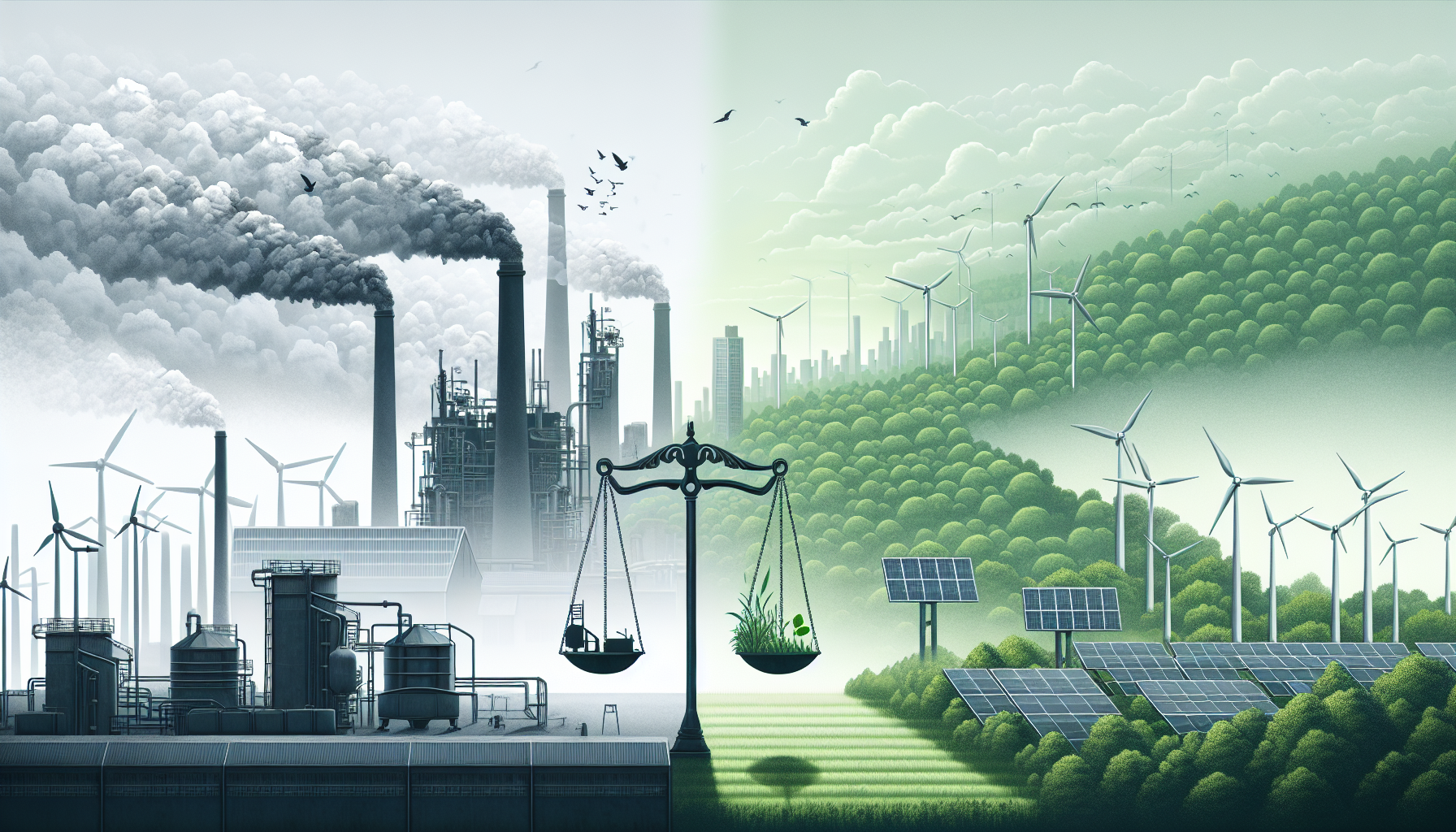
Beijing's latest five-year economic plan has quietly loosened China's near-term climate ambitions, raising alarms among analysts who have spent years tracking the world's largest emitter. The new framework eases the intensity targets that previously served as the country's primary domestic lever on carbon, leaving the trajectory of China's enormous and still-growing coal power fleet frustratingly unclear. For a country that accounts for roughly a third of global greenhouse gas emissions, the signal matters far beyond its borders.
The retreat on targets is not entirely surprising. China's economic planners have been navigating a difficult trifecta: sluggish post-pandemic growth, energy security anxieties sharpened by the war in Ukraine, and a political culture that has grown more cautious about binding international commitments. Coal, for all its climate costs, remains the one fuel source Beijing feels it can control entirely from extraction to generation. Approvals for new coal power plants surged in recent years, a trend that the new plan does little to reverse. The result is a fleet that keeps expanding even as wind and solar capacity breaks records.
What makes China's situation genuinely unusual, and what most coverage of this story misses, is that the policy signal and the physical reality are moving in opposite directions at the same time. China installed more solar capacity in 2023 alone than the entire United States has ever built. Its wind and solar buildout is not a rounding error; it is a structural transformation of the electricity system happening at a speed that no central planner fully anticipated. Experts who study Chinese energy closely point out that clean energy additions are now growing fast enough that, even without tighter official targets, emissions from the power sector could peak and begin declining within this planning period.
The persistence of coal approvals alongside record renewables investment looks contradictory until you understand the institutional logic driving both. Provincial governments, which bear responsibility for keeping lights on and workers employed, have strong incentives to approve coal plants as insurance against grid instability. Renewables, despite their falling costs, still require storage and grid infrastructure that China is building but has not yet fully deployed. Coal plants approved today may run for decades, locking in emissions long after the clean energy transition would otherwise have made them redundant. This is the core tension the five-year plan fails to resolve.
There is also a financing dimension that rarely gets the attention it deserves. State-owned banks and energy enterprises have deep balance sheet exposure to coal assets. Writing those down prematurely creates financial system risk that Beijing's economic managers are not willing to accept, particularly at a moment when property sector stress is already weighing on bank portfolios. The political economy of coal retirement in China is, in this sense, not unlike the political economy of fossil fuel subsidy reform almost anywhere: the costs are concentrated and immediate, the benefits are diffuse and long-term.
The more optimistic reading, and it is not an unreasonable one, is that China's clean energy momentum has developed a logic of its own that policy targets no longer fully control. Utility-scale solar is now so cheap in China that it is being built speculatively, without guaranteed offtake agreements, because developers expect the economics to work regardless. Electric vehicle penetration is reshaping oil demand faster than most forecasters predicted even three years ago. If these trends compound, the emissions curve could bend downward even in the absence of tighter official commitments, a kind of accidental decarbonisation driven by market forces that the plan neither celebrates nor fully acknowledges.
The second-order consequence worth watching is what China's softened targets do to international climate diplomacy ahead of the next round of nationally determined contributions under the Paris Agreement. Other major emitters, particularly in the developing world, watch Beijing's posture closely. If China is seen to be retreating from ambition, it provides political cover for others to do the same, eroding the fragile norm of progressive target-setting that the Paris framework depends on. The damage may not show up in any single negotiation, but in the accumulated willingness of governments to treat climate commitments as genuinely binding rather than aspirational.
The deeper question is whether the world can afford to rely on the possibility that China's clean energy economics outrun its policy ambitions. That is a bet with very high stakes and no guarantee of a payout, and the five-year plan has done nothing to shorten those odds.




Discussion (0)
Be the first to comment.
Leave a comment