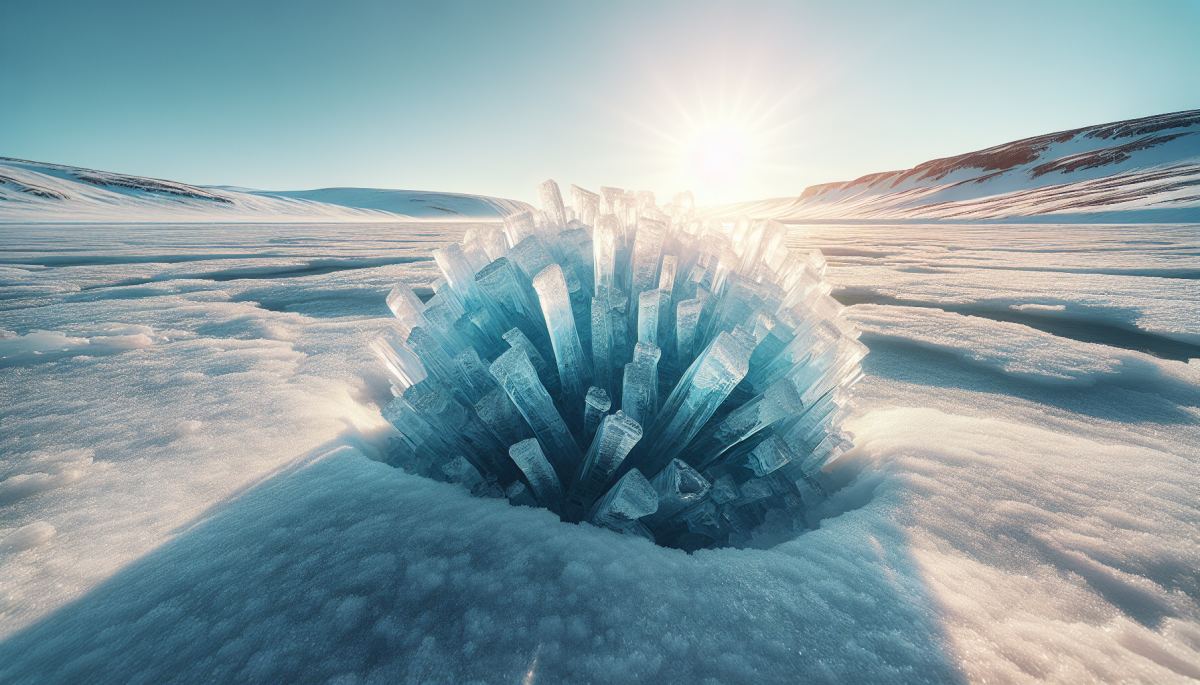
The Arctic has always kept secrets buried beneath its frozen surface, but those secrets are now escaping faster than scientists had anticipated. A sweeping new study analyzing decades of high-resolution data across northern Alaska has found that thawing permafrost is fundamentally reshaping the region's river systems while releasing vast quantities of ancient carbon that had been locked underground for thousands of years. The findings point to a feedback loop that could accelerate climate change well beyond what current models project.
Permafrost covers roughly 15 percent of the Earth's land surface and stores an estimated 1.5 trillion metric tons of organic carbon, accumulated over millennia from decomposed plant and animal matter. As long as the ground stays frozen, that carbon stays put. But as Arctic temperatures rise at roughly four times the global average rate, the permafrost is thawing, and the carbon it holds is entering the water cycle in ways that are only beginning to be understood.
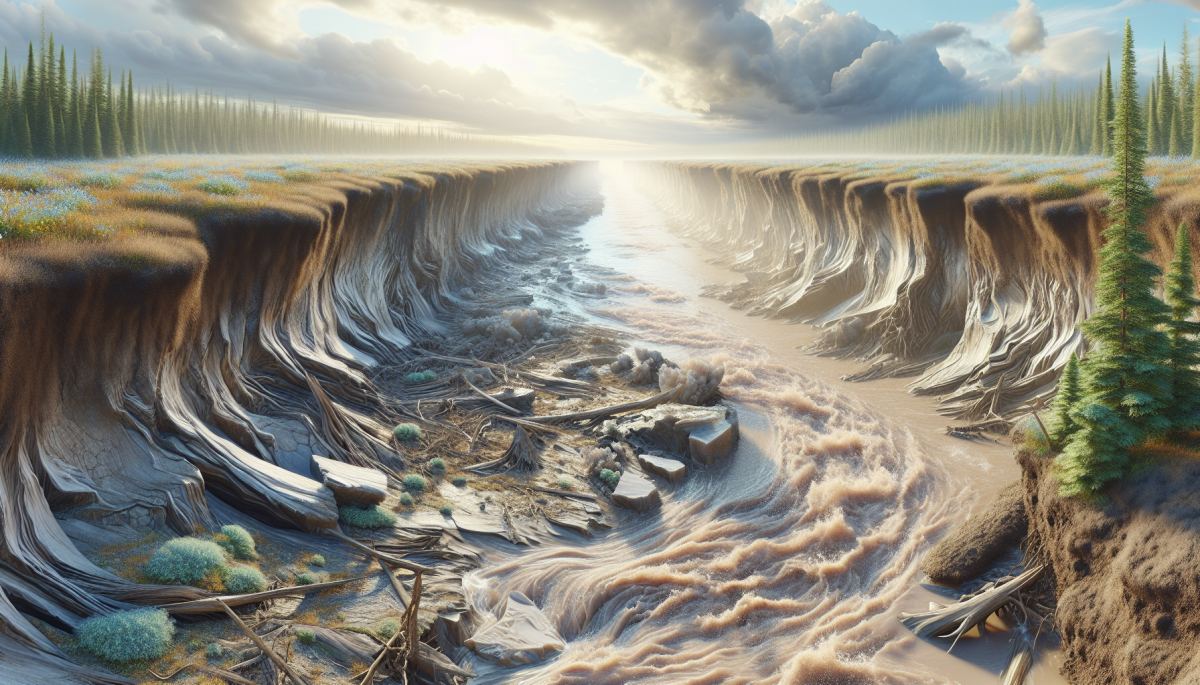
The study found that runoff across northern Alaska is increasing, rivers are carrying higher concentrations of dissolved carbon, and the thawing season is now stretching further into the fall months than historical records show. That last detail matters enormously. A longer thaw window means more time for carbon to leach from the soil into waterways, more time for rivers to carry that material toward the coast, and more time for microbial activity to convert organic carbon into carbon dioxide before it even reaches the ocean.
Rivers in the Arctic are not passive bystanders in this process. They function as active transport systems, moving dissolved organic carbon from the terrestrial interior to the coastal ocean. Once that carbon reaches marine environments, a portion of it is oxidized and released into the atmosphere as CO2, while another portion sinks and is temporarily sequestered in ocean sediments. The balance between those two outcomes is still poorly understood, but recent research suggests the atmospheric release pathway is more significant than previously assumed.
What makes this particularly difficult to model is the age of the carbon being released. Much of what is now entering Arctic rivers is not recently formed organic matter but ancient material that has been frozen since the Pleistocene, some of it tens of thousands of years old. This so-called "old carbon" was never part of the modern carbon cycle, meaning its release represents a genuine net addition of greenhouse gases to the atmosphere rather than a reshuffling of carbon already in circulation. It is, in effect, a one-way door.
The hydrological changes compound the problem. As permafrost thaws, the ground subsides and drainage patterns shift. Some areas that were once waterlogged dry out as water drains more efficiently through newly thawed soil layers. Others flood as ice-rich permafrost collapses. These changes alter which ecosystems survive, how much vegetation grows, and ultimately how much carbon is produced versus absorbed at the surface. The system is not moving toward a new equilibrium so much as cascading through a series of destabilizing transitions.
The second-order consequence that deserves far more attention is the self-reinforcing nature of what is now underway. Thawing permafrost releases carbon, which warms the atmosphere, which thaws more permafrost. Scientists have long identified this as one of the most dangerous potential tipping points in the climate system, but it has historically been underrepresented in the models that inform international climate policy, partly because the dynamics are so difficult to quantify and partly because the data from remote Arctic regions has been sparse.
Studies like this one help close that gap, but they also raise uncomfortable questions about whether existing climate commitments are calibrated to a world that no longer exists. If permafrost carbon emissions are accelerating faster than models assumed, then the carbon budgets underpinning targets like 1.5 degrees Celsius of warming may already be more constrained than policymakers realize.
The Arctic has spent thousands of years accumulating a carbon debt that the rest of the planet is now being asked to pay. How quickly that debt comes due may depend less on what happens in the Arctic itself than on decisions made in capitals and boardrooms far to the south.
References
- Schuur et al. (2015) — Climate change and the permafrost carbon feedback
- Turetsky et al. (2020) — Carbon release through abrupt permafrost thaw
- McGuire et al. (2018) — Dependence of the evolution of carbon dynamics in the northern permafrost region on the trajectory of climate change
- Vonk et al. (2015) — Reviews and syntheses: Effects of permafrost thaw on Arctic aquatic ecosystems
- IPCC (2022) — Climate Change 2022: Impacts, Adaptation and Vulnerability


Discussion (0)
Be the first to comment.
Leave a comment