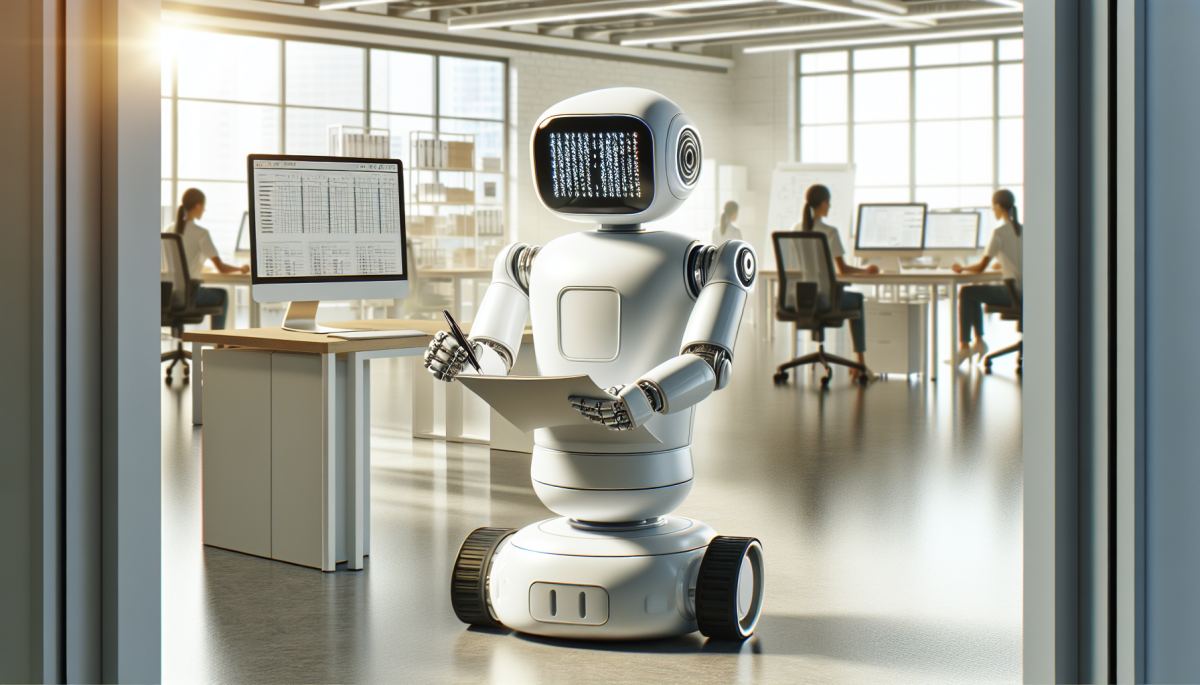
The fear has been building for years: that artificial intelligence would hollow out the professional class the way automation gutted manufacturing towns in the 1980s. Lawyers, accountants, analysts, radiologists — the assumption was that any job reducible to pattern recognition was a job on borrowed time. That story turns out to be more complicated, and in some ways more interesting, than the doomsday version.
What the evidence increasingly suggests is that AI is doing something subtler than replacement. It is expanding the scope of what white-collar workers can do, compressing the time it takes to do it, and in the process raising the ceiling on what a single skilled professional can produce. A lawyer who once billed hours reviewing contracts can now review ten times as many in the same window. A financial analyst who spent days building models can iterate through scenarios in hours. The work doesn't disappear — it accelerates, and the person doing it becomes, in economic terms, more valuable.
This is not a new pattern in the history of technology. When spreadsheet software arrived in the late 1970s and early 1980s, many predicted it would devastate the accounting profession. Instead, the number of accountants grew. The tool lowered the cost of financial analysis, which expanded demand for financial analysis, which required more people who understood how to do it. Economists call this the productivity paradox's flip side: when technology makes skilled work cheaper, it often makes that work more prevalent, not less.
The more precise framing isn't "AI versus workers" but "AI plus workers versus problems that were previously too expensive to solve." A mid-sized company that couldn't afford a full legal team can now use AI-assisted tools supervised by a single attorney. A hospital system can deploy AI triage tools that extend the diagnostic reach of physicians who are already stretched thin. In both cases, the professional isn't replaced — they become the essential human layer on top of a system that would be dangerous or legally incoherent without them.
This is where the second-order consequences get genuinely important. If AI raises the productive output of each white-collar worker, firms may need fewer people to do the same volume of work — even if total demand for that work grows. The net effect on employment is not predetermined. It depends on how fast demand expands relative to how fast productivity rises, and that race will play out differently across sectors, geographies, and firm sizes. Junior roles are particularly exposed in the near term: the entry-level associate who once learned by doing the grunt work may find that grunt work automated before they've had a chance to develop judgment. That creates a pipeline problem. If AI handles the tasks that used to train people, the profession may produce fewer senior experts a decade from now, because there will have been fewer apprentices doing the foundational work.
There is also a distribution question that tends to get lost in the optimism about augmentation. When a single lawyer can do the work of five, the economic gains don't automatically flow to that lawyer. They flow to whoever owns the firm, the platform, or the client relationship. The history of productivity-enhancing technology is not a history of workers capturing proportional shares of the value they help create. Without deliberate policy choices — around labor protections, licensing, profit-sharing structures — the white-collar augmentation story could easily become a story about fewer, more stressed professionals doing more work for wages that don't reflect their expanded output.
The optimistic scenario and the pessimistic one are not mutually exclusive. AI probably will expand the scope and raise the ceiling of white-collar work, as the argument goes. It will also compress headcounts in specific roles, disrupt the traditional apprenticeship model that builds expertise over time, and concentrate gains among those who own the tools rather than those who use them. Both things can be true simultaneously, and usually are when a general-purpose technology moves through an economy.
What matters now is less whether AI replaces white-collar jobs in aggregate and more who gets to define the terms of the transition. The professions that move deliberately — building AI literacy into training, renegotiating what junior roles look like, and advocating for structures that share productivity gains — will look very different in 2035 than those that simply let the technology arrive and sort things out on its own.
References
- Autor, D. et al. (2022) — The Work of the Future: Building Better Jobs in an Age of Intelligent Machines
- Brynjolfsson, E. et al. (2023) — Generative AI at Work
- Goldman Sachs (2023) — The Potentially Large Effects of Artificial Intelligence on Economic Growth
- Acemoglu, D. (2024) — The Simple Macroeconomics of AI
Discussion (0)
Be the first to comment.
Leave a comment