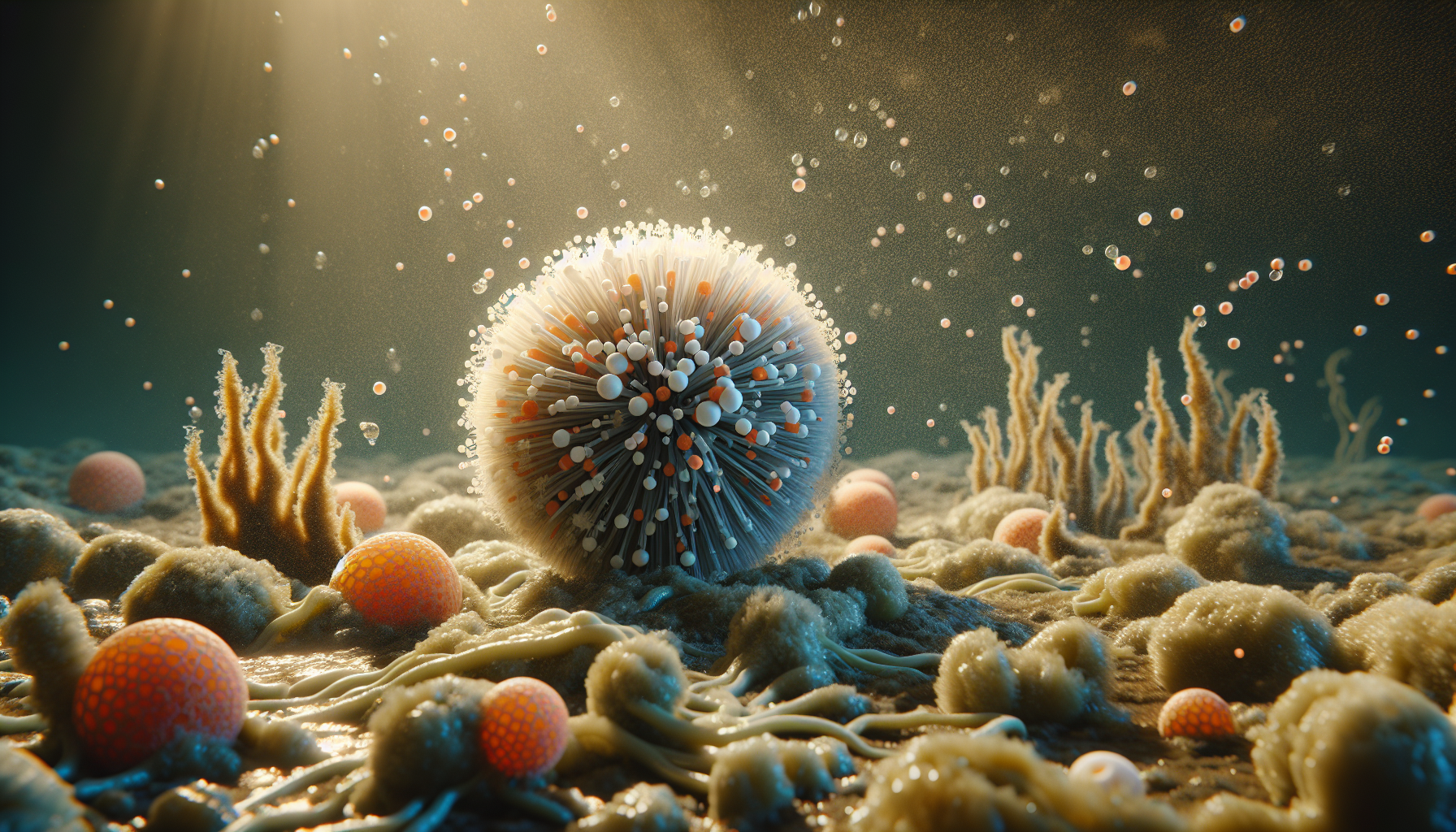
Every summer, stretches of Mediterranean coastline close without warning. Beaches in Spain, Italy, and France post advisory signs as a microscopic algae called Ostreopsis cf. ovata blooms in warm, shallow water, releasing aerosols that sting the lungs, redden the skin, and send beachgoers to emergency rooms. Lifeguards clear the water. Fishermen lose income. And scientists, for decades, have had very few tools to stop it. A newly identified marine fungus may be about to change that calculus entirely.
Researchers have discovered and named Algophthora mediterranea, a parasitic fungus capable of infecting and killing Ostreopsis cf. ovata and several other algae species. What makes the find genuinely unusual is not just its appetite for toxic algae but its apparent versatility. The organism can survive on pollen, a trait almost unheard of among marine parasites, suggesting it occupies a far wider ecological niche than scientists initially assumed. That adaptability is both the most exciting and the most consequential detail in the discovery.
Harmful algal blooms, or HABs, are one of the more stubborn problems in coastal environmental management. They are driven by a feedback loop that is, in many ways, a product of human activity: nutrient runoff from agriculture and urban development feeds algae populations, warmer sea surface temperatures extend bloom seasons, and reduced water circulation in sheltered bays concentrates the problem. Once a bloom takes hold, the options for intervention are limited. Chemical treatments risk collateral damage to non-target species. Physical removal is expensive and logistically impractical at scale. Biological controls have long been theorized but rarely validated in marine environments with enough specificity to be useful.
That is what makes Algophthora mediterranea so scientifically interesting. A parasite that targets toxic algae with apparent precision, and that can persist in the environment by feeding on pollen when algae are scarce, is not just a curiosity. It is a potential mechanism. The fact that it can infect multiple algae species adds complexity, but it also suggests the fungus is robust enough to survive the seasonal and ecological variability of coastal systems, where a single-host strategy would leave a parasite stranded between bloom events.
The broader context here matters. Ostreopsis blooms have been intensifying across the Mediterranean for at least two decades, with documented expansions into the Atlantic coast of the Iberian Peninsula and even the Canary Islands. Climate projections suggest warmer, more stratified seas will make conditions more favorable for these events, not less. The public health burden is real: respiratory irritation, dermatitis, and in rare cases more serious neurological symptoms have been recorded in people exposed to bloom aerosols near the shore.
The discovery opens a door, but walking through it responsibly will require careful systems thinking. Biological control agents have a complicated history in ecology. The cane toad in Australia, the mongoose in Hawaii, the Nile perch in Lake Victoria: the archive of well-intentioned introductions that cascaded into ecological disasters is long enough to demand serious caution before anyone considers deploying Algophthora mediterranea at scale.
The fungus's ability to infect multiple algae species is the detail that demands the most scrutiny. If it can kill Ostreopsis, what else can it kill? Coastal phytoplankton communities underpin marine food webs. A parasite that is too effective, or too indiscriminate, could suppress not just toxic blooms but the broader algal productivity that feeds zooplankton, fish larvae, and ultimately the fisheries that coastal communities depend on. The pollen-feeding behavior adds another layer of uncertainty: a marine organism that can persist on terrestrial organic matter is one with potentially broad dispersal pathways.
None of this diminishes the significance of the find. It simply reframes it. Algophthora mediterranea is most valuable right now as a research subject, a key that could unlock a deeper understanding of how marine microbial communities regulate bloom dynamics naturally. If scientists can characterize the conditions under which the fungus thrives, they may be able to manage coastal environments in ways that encourage its natural proliferation without the risks of deliberate introduction.
The Mediterranean has been a kind of early warning system for climate-driven ecological change for years. Warmer, saltier, and more stratified than it was a generation ago, it tends to show the rest of the world what is coming. A tiny fungus found in its waters may not be a silver bullet, but it is a reminder that the ocean's own microbial toolkit is still largely unmapped, and that the most elegant solutions to human-made problems sometimes arrive from directions no one was watching.
References
- Trainer et al. (2020) — Pelagic Sargassum morphology, growth rates and pigmentation
- Mangialajo et al. (2008) — The toxic benthic dinoflagellate Ostreopsis ovata: Quantification, spreading and biotic substrate preferences
- Penna et al. (2005) — Characterization of Ostreopsis and Coolia (Dinophyceae) isolates in the western Mediterranean Sea
- Scholz et al. (2016) — Chytrid fungi and their interactions with harmful algal bloom species



Discussion (0)
Be the first to comment.
Leave a comment