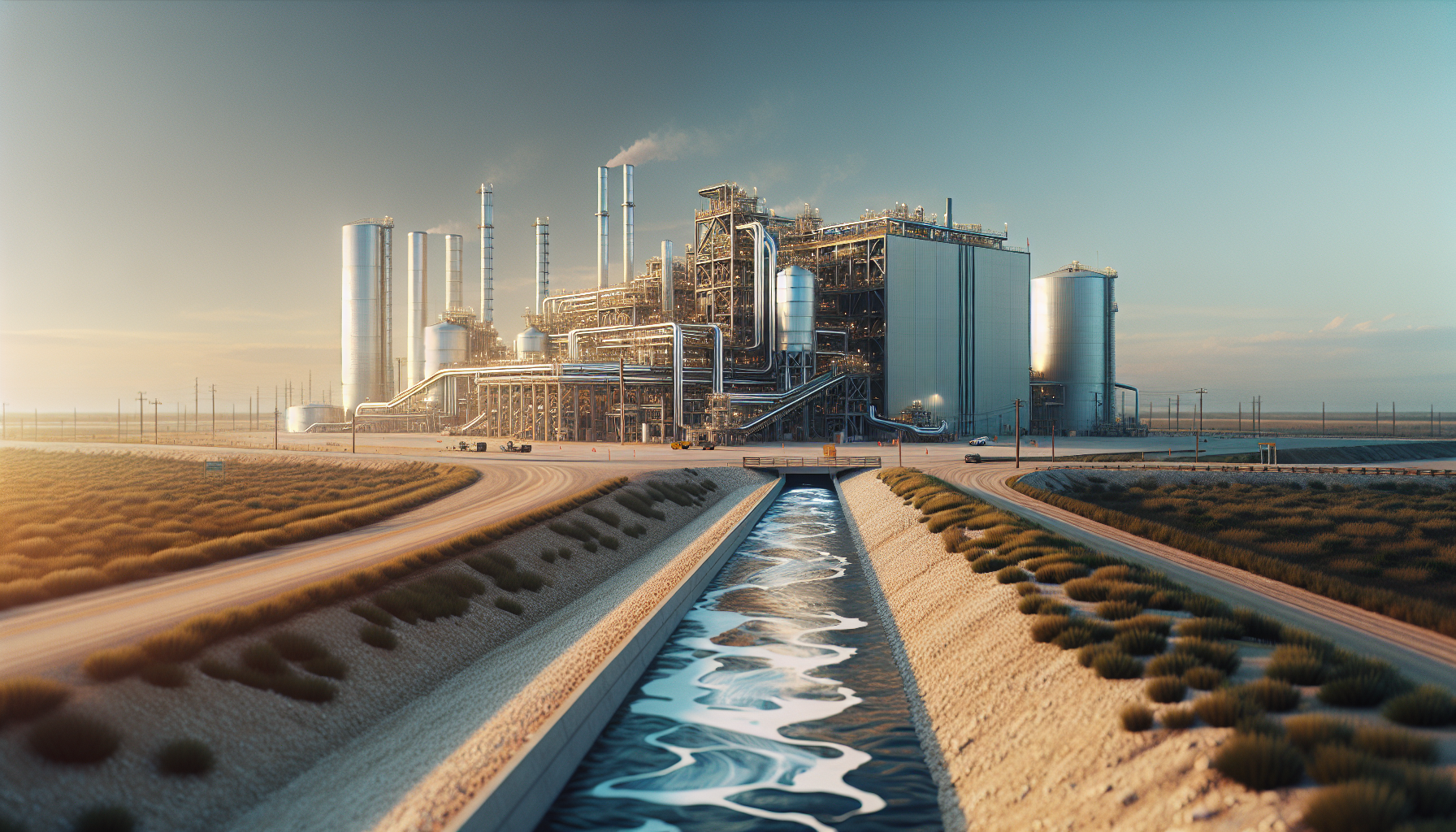
When workers for Nueces County Drainage District No. 2 encountered an unfamiliar substance flowing through a local ditch near Robstown, Texas, they had no idea it was coming from one of the most closely watched industrial facilities in the state. Tesla's battery-grade lithium compounds manufacturing plant, operating in Nueces County as part of the company's broader push to control its own supply chain, had been discharging wastewater into that ditch without local drainage officials knowing anything about it. That gap between what regulators permitted and what local infrastructure managers actually knew speaks to something larger than one company's paperwork.
The Texas Commission on Environmental Quality completed its investigation and approved a report on Friday concluding that Tesla had not violated the terms of its wastewater discharge permit. In the narrowest regulatory sense, that finding closes the case. But the circumstances that opened it deserve more scrutiny than a clean bill of compliance can provide.
Permitting systems are designed to set legal thresholds, not to ensure that every stakeholder downstream, literally and figuratively, is informed about what flows past them. The Nueces County Drainage District No. 2 oversees the physical infrastructure of that ditch. Its workers are the ones who maintain it, who notice when something looks or smells different, and who bear responsibility if something goes wrong with the channel itself. Yet they were apparently unaware that a lithium refinery had been authorized to discharge into it.
This is not necessarily anyone's fault in a legal sense, but it is a systems failure in a practical one. Environmental permitting in Texas, as in most states, is administered at the state level through agencies like TCEQ, while local drainage districts operate under separate jurisdictional authority. The two systems are not required to talk to each other in any meaningful, ongoing way. A permit can be valid, the discharge can be within limits, and the people responsible for the receiving infrastructure can still be completely in the dark.
Tesla's Robstown facility is part of the company's ambition to manufacture battery-grade lithium compounds domestically, reducing dependence on foreign refining, particularly from China, which currently dominates global lithium processing capacity. The facility represents a significant industrial bet, and its presence in South Texas was welcomed as an economic development win for a region that has historically had fewer of those than it deserves. That context matters because it shapes how regulators and local officials approach oversight. When a facility arrives with the promise of jobs and strategic importance, the institutional pressure to find compliance rather than conflict is real, even when it operates below the surface of any individual decision.
The second-order consequence worth watching here is not whether Tesla broke a rule. It didn't, apparently. The more durable concern is what this episode reveals about the readiness of local communities to absorb the industrial footprint of the clean energy transition. Lithium refining is not a benign process. It involves chemical inputs, thermal treatment, and wastewater streams that carry dissolved solids and potentially other compounds depending on the feedstock and process chemistry. The fact that a drainage district's workers encountered an unfamiliar discharge and had to trigger a state investigation just to find out what it was suggests that the communication infrastructure around these facilities has not kept pace with the speed of their deployment.
As the United States accelerates domestic critical mineral processing, driven by the Inflation Reduction Act's incentives and broader supply chain anxiety, more facilities like Tesla's Robstown plant will come online in communities that have limited experience with this category of industrial activity. Local drainage workers, water managers, and emergency responders will be the first people to notice when something seems off. If they don't know what's supposed to be flowing through their infrastructure in the first place, their ability to catch a real problem early is severely compromised.
TCEQ's finding of no violation is the end of this particular regulatory thread. But the ditch in Nueces County is still there, and so is the plant, and so is the gap between what state permits authorize and what local officials understand about their own infrastructure. The clean energy transition is generating new categories of industrial neighbor, and the communities closest to those facilities are still figuring out what questions to ask.
References
- U.S. Environmental Protection Agency (2023) — NPDES Permit Program Basics
- Benchmark Mineral Intelligence (2023) — Lithium Refining and the China Dominance Problem
- U.S. Department of Energy (2023) — Inflation Reduction Act and Critical Minerals Provisions
- Texas Commission on Environmental Quality — Wastewater Permits Overview




Discussion (0)
Be the first to comment.
Leave a comment