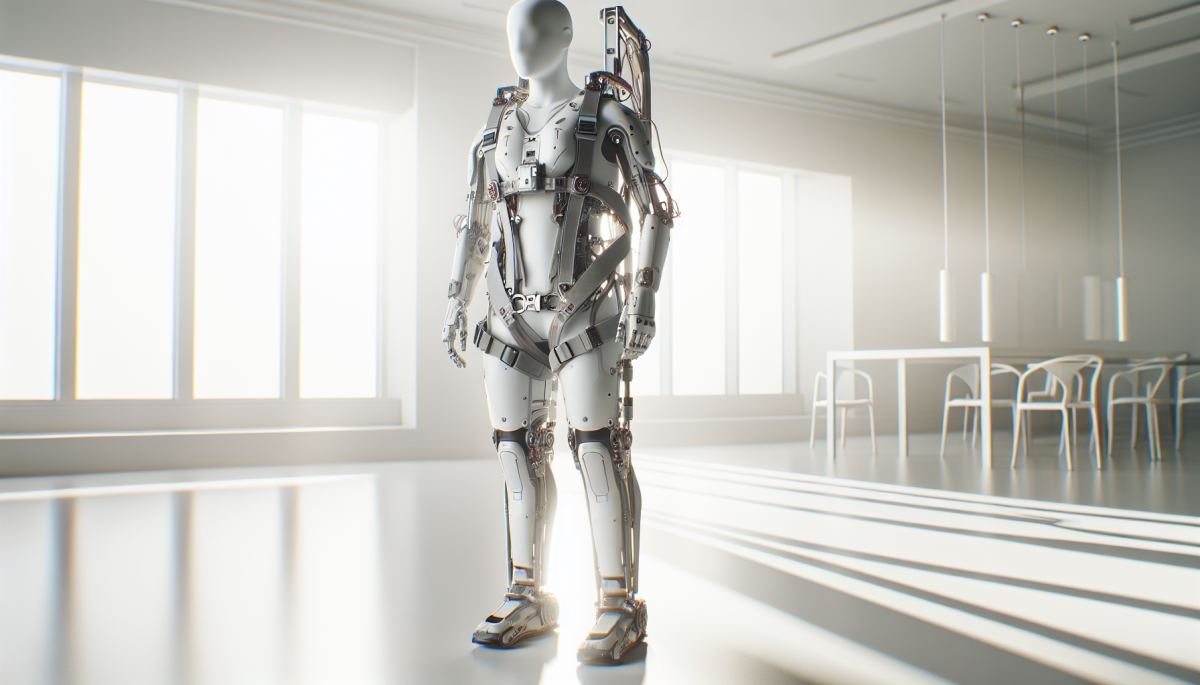
Robert Woo was bent over his laptop in a construction-site trailer on the morning of December 14, 2007, when a crane's nylon sling gave way thirty floors above him. He was the only person in the office that day — his colleagues had stayed home after the company holiday party the night before. What fell changed everything. Woo, an architect working on the new Goldman Sachs headquarters in Lower Manhattan, lost his ability to walk. What followed, over the next decade and a half, would quietly reshape how engineers think about building machines for the human body.
Woo's story is not simply one of personal resilience, though it is certainly that. It is also a story about feedback — the kind that only comes from someone who refuses to treat a technology as a finished product. Robotic exoskeletons, the wearable powered frames designed to help people with spinal cord injuries stand and move, have been in clinical development since the early 2000s. But the gap between laboratory performance and real-world usability has always been stubborn. Devices that work beautifully in controlled trials can feel clumsy, exhausting, or even dangerous in the unpredictable terrain of actual life. What engineers needed, and rarely got, was a user who would push the hardware past its comfort zone and report back with precision.
That is exactly what Woo became. His background in architecture gave him an unusually systematic way of observing how built environments interact with bodies in motion. He understood load-bearing, spatial proportion, and the way small design failures compound into large structural problems. When he began using exoskeleton technology, he brought that same analytical eye to the machine strapped to his legs.
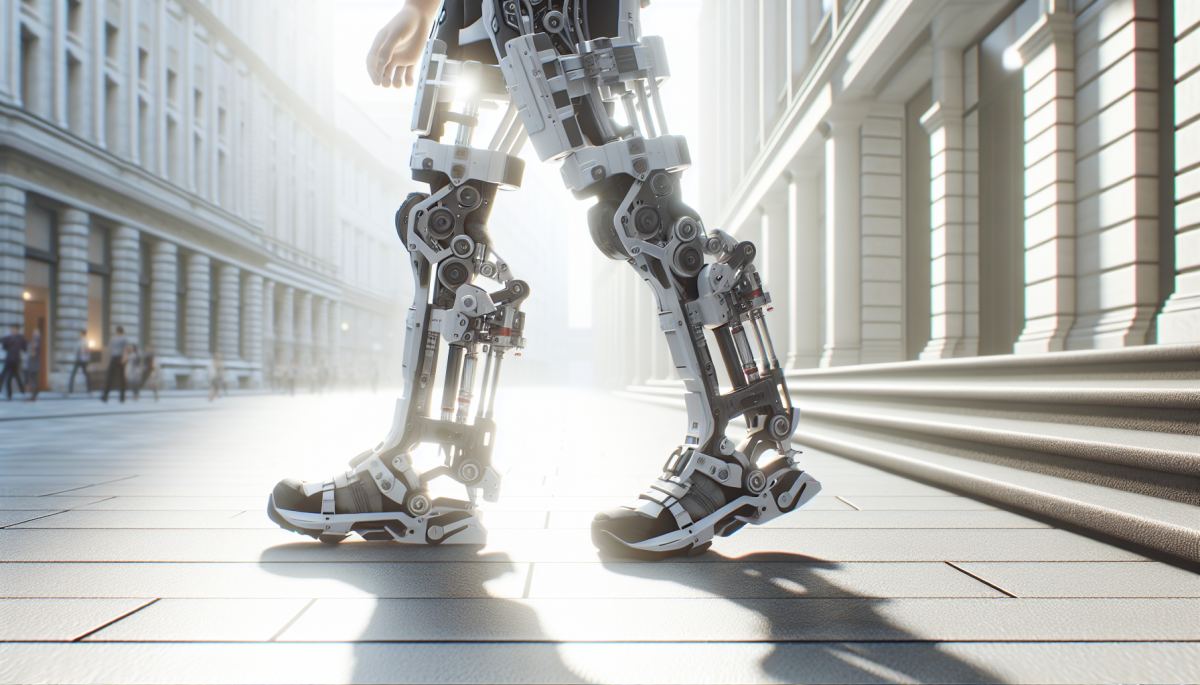
The exoskeleton industry has historically struggled with what might be called the clinical trial trap. Devices get tested on patients in rehabilitation centers, under the supervision of physical therapists, on flat floors with handrails nearby. The data looks promising. Then the device reaches someone trying to navigate a Brooklyn sidewalk in February, and the gap becomes obvious. According to research published in the Journal of NeuroEngineering and Rehabilitation, community use of exoskeletons remains far below clinical use, and one of the primary barriers is that devices are simply not designed around the variability of real environments.
Woo's sustained engagement with the technology over years — not weeks — gave manufacturers something rare: longitudinal, expert-level criticism from a single user. He could articulate not just what failed, but why, and under what conditions. That kind of structured feedback is the difference between iterating on a prototype and genuinely understanding a product's failure modes. Engineers working on successive generations of devices have credited engaged users with surfacing problems that lab testing never would have caught, from battery behavior in cold weather to the way certain joint geometries create pressure sores over long sessions.
This points to a broader systems dynamic that the assistive technology sector has been slow to internalize. When the end user is excluded from the design loop — or included only briefly, at the testing stage — the product optimizes for the wrong environment. It becomes good at passing trials rather than good at serving lives. The incentive structure of medical device development, which rewards regulatory clearance over post-market performance, quietly reinforces this problem.
The exoskeleton market is growing. ReWalk, Ekso Bionics, and Honda's experimental systems have all advanced significantly over the past decade, and newer entrants are incorporating machine learning to help devices adapt to individual gait patterns in real time. The global market for lower-limb exoskeletons was valued at over $400 million in recent years and is projected to expand substantially as the technology matures and costs fall.
But the more interesting pressure on the industry may not come from engineering breakthroughs. It may come from users like Woo, who demonstrate through sustained, public engagement that the technology's ceiling is set not by physics but by the quality of the conversation between designer and user. As more people with disabilities become visible participants in the development process — not as subjects but as collaborators — the feedback loops that have historically been slow and thin could become faster and richer.
There is a second-order consequence worth watching here. If exoskeleton design genuinely improves through deep user collaboration, the resulting devices will likely perform better not just for people with spinal cord injuries but for aging populations, workers in physically demanding jobs, and rehabilitation patients across a much wider range of conditions. The lessons extracted from one relentless user have a way of traveling far beyond the original problem they were meant to solve.
References
- Louie D.R. et al. (2015) — Gait speed using powered robotic exoskeletons after spinal cord injury
- Ekso Bionics — Exoskeleton Technology Overview
- ReWalk Robotics — Clinical and Personal Use Systems
- Esquenazi A. et al. (2012) — The ReWalk Powered Exoskeleton to Restore Ambulatory Function
- Benson I. et al. (2016) — Exoskeleton use in paraplegia: A systematic review


Discussion (0)
Be the first to comment.
Leave a comment