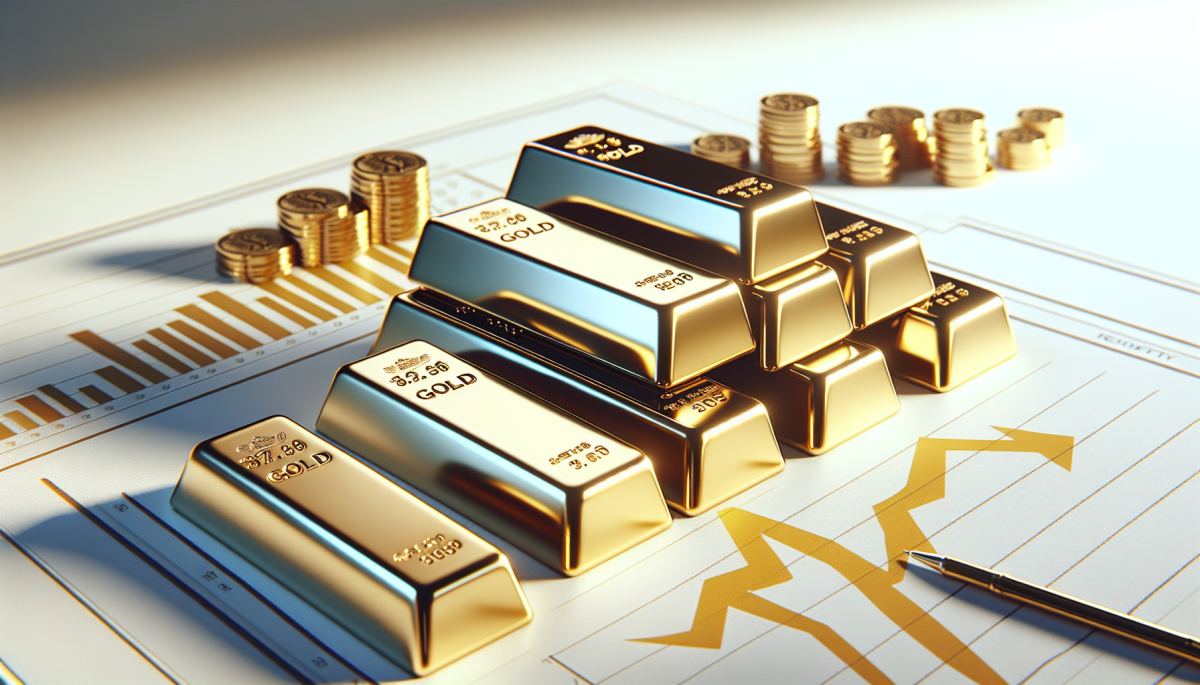
Gold crossed $3,000 per troy ounce in March 2025, a threshold that would have seemed almost theatrical just a few years ago. The metal has now outperformed nearly every major asset class over the past two years, and the investors piling in are not just the usual doomsday preppers and inflation hawks. Sovereign wealth funds, central banks, and a new generation of retail investors are all reaching for the same ancient store of value, and the reasons why tell us something uncomfortable about the state of the global financial system.
The most immediate driver is central bank buying, which has reached historic levels. According to the World Gold Council, central banks purchased more than 1,000 tonnes of gold for the third consecutive year in 2024, with institutions in China, Poland, India, and Turkey leading the charge. This is not incidental portfolio diversification. It is a deliberate, coordinated shift away from dollar-denominated assets, accelerated sharply by the freezing of Russia's foreign exchange reserves following the 2022 invasion of Ukraine. That decision sent a signal heard in every finance ministry from Beijing to Brasilia: holding reserves in U.S. Treasuries is no longer a purely financial decision. It is a geopolitical one.
The dollar remains the world's dominant reserve currency, but its grip is loosening at the margins, and gold is one of the primary beneficiaries. When the U.S. weaponized the dollar-based financial system against Russia, other nations began quietly asking themselves how exposed they were to the same risk. The answer, for many, was uncomfortably exposed. Gold offers something no sovereign bond can: it sits outside any nation's jurisdiction. It cannot be frozen, sanctioned, or devalued by a foreign government's policy decision.
At the same time, the United States is running fiscal deficits that few economists consider sustainable. The Congressional Budget Office projects federal debt held by the public will reach 116 percent of GDP by 2034, up from roughly 97 percent today. When investors look at that trajectory alongside persistently elevated interest rates, they face a genuine puzzle: Treasuries offer yield, but they also carry the long-term risk of a sovereign that is borrowing at a pace that has historically ended badly. Gold, which offers no yield at all, suddenly looks more attractive when the alternative is a bond issued by a government with a structurally deteriorating balance sheet.
Retail investors have also entered the picture in ways that were not possible a decade ago. Exchange-traded funds backed by physical gold have made the asset accessible to anyone with a brokerage account, and platforms catering to younger investors have seen notable spikes in gold-related activity during periods of market stress. This democratization of gold ownership creates a new feedback loop: as prices rise, media coverage intensifies, drawing in more buyers, which pushes prices higher still.
The rally's deeper consequences extend well beyond the price of a commodity. When gold rises sharply relative to equities and bonds, it functions as a kind of real-time referendum on institutional trust. Markets are, in a sense, voting on whether the frameworks that have governed global finance since Bretton Woods still hold. The current vote is not a landslide, but it is not close either.
One underappreciated second-order effect involves the mining sector and the countries that depend on it. Higher gold prices dramatically improve the economics of extraction projects that were previously marginal, unlocking investment in regions of West Africa, Central Asia, and South America where gold deposits are significant but infrastructure is thin. That capital inflow can be transformative or destabilizing depending on governance quality, and history suggests the outcomes are rarely neutral. Resource booms have a well-documented tendency to strengthen authoritarian governments, crowd out agricultural investment, and create currency pressures that hurt export-oriented industries.
There is also the question of what a sustained gold rally does to the psychology of financial markets more broadly. If enough institutional actors conclude that hard assets are structurally preferable to financial ones, the cost of capital for governments and corporations rises, investment slows, and the self-reinforcing logic of the rally becomes harder to break. Gold does not cause these problems, but it reflects them with unusual clarity.
The metal has been declared obsolete many times across the past century, most famously when Nixon closed the gold window in 1971 and severed the last formal link between gold and the dollar. What the current rally suggests is that the world's investors are not convinced the replacement system has proven itself worthy of unconditional trust. Whether that skepticism is rational or self-fulfilling may be the defining financial question of the next decade.
Discussion (0)
Be the first to comment.
Leave a comment