
For decades, the World Health Organization has quietly relied on a sprawling constellation of institutions to do much of its most important scientific work. These are the WHO Collaborating Centres, more than 800 of them spread across 80-plus countries, embedded in universities, research hospitals, and public health agencies from Geneva to Nairobi to Seoul. They develop standards, train health workers, generate data, and translate WHO policy into local action. Until now, they had never all been in the same room.
The first-ever Global Forum of WHO Collaborating Centres changed that, convening representatives from across this vast network for what the organization described as a historic gathering aimed at strengthening scientific collaboration. The significance of that word, "first," is worth sitting with. The Collaborating Centre network has existed in various forms since the 1940s. That it took this long to hold a dedicated global forum says something about how international health governance has historically operated: in vertical silos, with WHO at the apex issuing guidance downward, rather than as a genuinely networked system capable of learning horizontally.
WHO Collaborating Centres are not household names, but their fingerprints are on nearly every major international health standard most people take for granted. The network includes institutions like the U.S. Centers for Disease Control and Prevention, the Karolinska Institute in Sweden, and dozens of national public health laboratories that serve as the backbone of disease surveillance in their regions. When WHO sets a reference standard for a vaccine, or defines diagnostic criteria for a disease, it is typically a Collaborating Centre that did the underlying technical work.
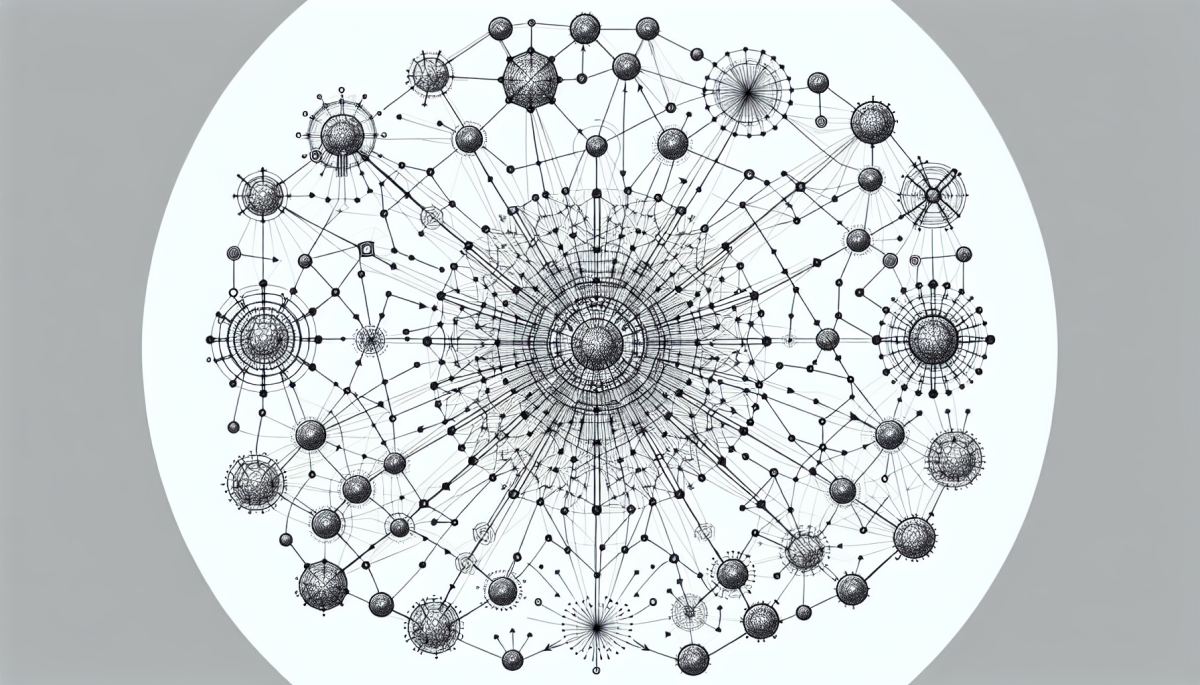
What makes this network structurally unusual is its distributed nature. These institutions are not WHO employees or subsidiaries. They are independently governed bodies that accept a formal designation, typically renewed every four years, in exchange for contributing expertise to WHO's mandate. The relationship is collaborative in name, but in practice it has often been transactional: WHO identifies a technical need, a centre fills it, and the interaction ends there. There has been limited infrastructure for centres to share methods with each other, identify overlapping work, or collectively push back on gaps in WHO's scientific agenda.
That is precisely the kind of systemic inefficiency that a global forum is designed to address. By creating a space where institutions from high-income and low-income countries sit alongside each other, the WHO is, at least in principle, opening the door to a more genuinely multipolar model of health science. Whether that potential is realized depends heavily on what institutional structures follow the forum itself.
The timing of this forum is not incidental. Global health governance is under unusual stress. The COVID-19 pandemic exposed deep fractures in how scientific knowledge flows between countries, particularly the asymmetry between nations that generate research and those that are primarily expected to implement it. The ongoing negotiations around a global pandemic treaty have sharpened debates about equity in health data, intellectual property, and who gets to set the terms of international scientific cooperation.
Against that backdrop, a more connected network of Collaborating Centres could function as a meaningful counterweight to the concentration of health science capacity in a handful of wealthy nations. If institutions in West Africa, Southeast Asia, and Latin America are genuinely integrated into the standard-setting process rather than consulted after the fact, the outputs of that process are likely to be more robust, more contextually appropriate, and more trusted by the populations they are meant to serve.
But there is a less optimistic reading available too. Large convening events in international health have a long history of producing declarations that do not survive contact with budget cycles and institutional inertia. The Collaborating Centre network's strength, its diversity and geographic reach, is also a coordination challenge of considerable complexity. Building genuine feedback loops across 800-plus institutions in 80 countries requires sustained investment in shared infrastructure, not just a forum.
The more interesting question, then, is not what was said in the room but what governance mechanisms emerge from it. If the WHO uses this moment to build durable channels for centres to surface scientific priorities from the ground up, the forum could mark a genuine inflection point in how global health knowledge is produced. If it remains a one-time convening, it will have been a remarkable symbol of a more connected world that did not quite materialize.



Discussion (0)
Be the first to comment.
Leave a comment