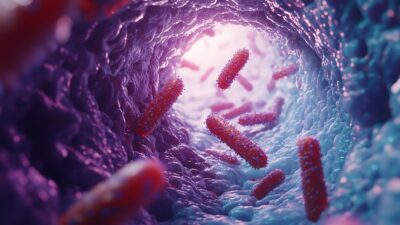
The human gut is one of the most complex ecosystems on earth, hosting trillions of microorganisms that influence everything from immune function to mood. For decades, scientists understood that the composition of this microbial community shifts as people age, with beneficial bacteria declining and potentially harmful species gaining ground. What was less clear was why. New research published in Aging Cell is beginning to answer that question, and the answer points to something more troubling than simple microbial drift: the intestine itself may be actively creating conditions that favor the wrong kinds of bacteria.
The study lays out a relationship between two interdependent biological systems, the intestinal lining and the gut microbiome, that appear to deteriorate together in a self-reinforcing loop. As the intestinal wall ages, its structural integrity weakens. The tight junctions between epithelial cells loosen, mucus production declines, and the gut's ability to regulate what passes through its barrier becomes compromised. These changes, collectively described as intestinal aging, don't just make the gut less efficient. They fundamentally alter the chemical and physical environment in which gut bacteria live, and that altered environment appears to selectively benefit bacteria associated with inflammation and disease.
What makes this finding particularly significant from a systems perspective is the feedback dynamic at its core. The intestinal lining doesn't just passively deteriorate and then happen to attract bad bacteria. The bacteria that thrive in a degraded gut environment are themselves producers of compounds that further damage the intestinal wall. Lipopolysaccharides, toxins shed by gram-negative bacteria, are known to trigger inflammatory cascades that erode epithelial tissue. So the intestine's decline invites microbes that accelerate that same decline. It is a loop with no obvious off switch.
This kind of bidirectional causality is easy to miss when researchers study either the microbiome or intestinal biology in isolation, which is historically how most of this science has been done. The Aging Cell paper's contribution is in treating these two systems as genuinely coupled, which opens the door to a more accurate model of how gut health deteriorates with age and, crucially, where interventions might actually work.
The implications extend well beyond gastroenterology. The gut microbiome is now understood to communicate with the brain via the gut-brain axis, to regulate systemic inflammation, and to influence metabolic health in ways that affect cardiovascular disease risk. If intestinal aging is quietly tilting the microbial ecosystem toward harmful species across the adult lifespan, the downstream consequences could be showing up in conditions that clinicians don't typically associate with gut function at all. Cognitive decline, chronic low-grade inflammation, and metabolic syndrome may all carry a gut-aging signature that has gone largely unexamined.
The research also reframes how scientists and clinicians should think about probiotic and dietary interventions. Most current approaches to improving the aging microbiome focus on introducing or feeding beneficial bacteria, essentially trying to change the microbial population directly. But if the intestinal environment itself is the primary driver of microbial change, then seeding a degraded gut with beneficial bacteria may be a bit like planting a garden in soil that actively resists the seeds. The environment has to change first, or at least simultaneously.
This suggests that interventions targeting intestinal barrier integrity, such as compounds that support tight junction proteins, mucus layer thickness, or epithelial cell renewal, might be more foundational than microbiome-focused strategies alone. Research into butyrate, a short-chain fatty acid produced by certain beneficial bacteria and known to support the gut lining, has already pointed in this direction. But the new framing from Aging Cell suggests the relationship between barrier health and microbial composition needs to be treated as a system, not a sequence.
The second-order consequence worth watching is demographic. As the global population ages, the proportion of people living with a chronically degraded gut environment will grow. If that environment is systematically producing inflammatory microbial profiles, the burden on healthcare systems from inflammation-related chronic disease could be substantially larger than current projections account for. Aging gut biology may be one of the quieter drivers behind the chronic disease epidemic, operating below the threshold of clinical attention precisely because its effects are diffuse and slow-moving.
Science rarely offers clean villains, and intestinal aging is no exception. But understanding that the gut's physical decline and its microbial shift are not parallel stories but one interconnected story changes what questions researchers should be asking, and what answers might actually matter.


Discussion (0)
Be the first to comment.
Leave a comment