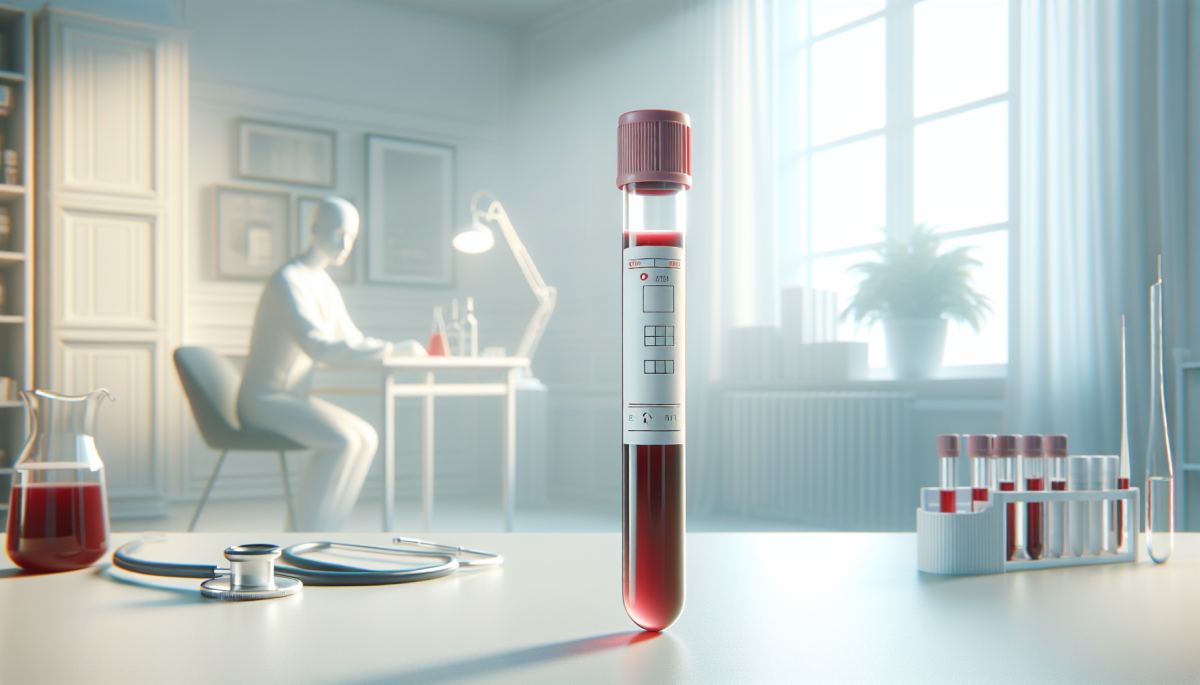
For decades, diagnosing depression has relied almost entirely on what patients can articulate about their own suffering. A clinician asks questions, a patient answers, and somewhere in that exchange a judgment is made. It is a process shaped by stigma, language barriers, cultural norms, and the simple human difficulty of describing interior pain. A new study is now pointing toward something that could quietly upend that process: a blood test that detects biological signatures of depression before a person even recognizes the symptoms in themselves.
The research centers on monocytes, a type of white blood cell that plays a central role in the body's immune response. Scientists found that in people with depression, these cells show signs of accelerated aging, a kind of biological wear that outpaces what you would expect given a person's chronological age. What makes this finding particularly striking is the specificity of the connection. The accelerated aging in monocytes was not linked to the physical symptoms of depression, the fatigue, the disrupted sleep, the changes in appetite, symptoms that could plausibly be explained by a dozen other conditions. Instead, it tracked closely with the emotional and cognitive core of the illness: hopelessness, anhedonia, the loss of pleasure that makes ordinary life feel unreachable.
That distinction matters enormously. Physical symptoms of depression are notoriously difficult to disentangle from other medical conditions, which is part of why misdiagnosis rates remain stubbornly high. But if a biomarker can point specifically to the psychological architecture of depression, it offers something clinicians have never really had before: an objective signal that cuts through the noise.
The idea that the immune system is implicated in depression is not new, but it has taken years to move from hypothesis to something resembling clinical evidence. Research over the past decade has steadily built the case that inflammation and immune dysregulation are not merely side effects of depression but may be causally involved in its development. Elevated levels of inflammatory markers like C-reactive protein and interleukin-6 have been found in depressed patients across multiple studies. What this new monocyte research adds is a layer of cellular specificity, suggesting that the immune system is not just broadly inflamed in depression but that particular cells are aging in ways that mirror the psychological experience of the illness.
This opens a feedback loop worth taking seriously. Chronic psychological stress is known to accelerate immune aging, a process sometimes called "immunosenescence." If depression drives accelerated monocyte aging, and aged monocytes produce inflammatory signals that worsen mood and cognition, you have a self-reinforcing cycle that could explain why depression so often becomes chronic and treatment-resistant. Breaking that loop, whether through anti-inflammatory interventions, early detection, or targeted therapies, becomes a much more tractable problem once you can measure it.

The second-order consequences of a reliable biological screen for depression are worth thinking through carefully. On the surface, earlier detection sounds unambiguously good. Catch the illness before it deepens, intervene sooner, reduce suffering. But systems rarely work that cleanly. A blood test that flags depression risk could also trigger overdiagnosis, pulling people into treatment pipelines for conditions that might have resolved on their own. It could create new forms of discrimination, with insurers or employers gaining access to mental health biomarkers in ways that current legal frameworks are not fully equipped to prevent. The history of psychiatric diagnosis is not short on cautionary tales about what happens when biological reductionism outpaces ethical infrastructure.
There is also the question of what happens to the therapeutic relationship when diagnosis becomes more biological. The conversation between a patient and a clinician, imperfect as it is, often serves a function beyond information gathering. It can be the first moment a person feels heard about something they have never said out loud. A blood test cannot do that. The risk is not that biomarkers are wrong, but that they become a shortcut that bypasses the human work of understanding what a person is actually going through.
None of this diminishes the genuine promise of the research. If monocyte aging can be validated as a reliable, reproducible marker across diverse populations, it could eventually allow clinicians to identify people at high risk years before a depressive episode becomes debilitating. For a condition that affects roughly 280 million people worldwide and remains undertreated in most of them, that kind of lead time could be transformative. The harder question is whether the systems built around that test, the clinical, legal, and commercial infrastructure, will be designed with enough care to make early detection a benefit rather than a burden.
The biology may be ahead of the ethics, which is usually how these things go.
References
- World Health Organization (2023) — Depressive disorder (depression)
- Bauer et al. (2019) — Inflammatory biomarkers in depression: An updated review
- Raison et al. (2006) — Cytokines sing the blues: inflammation and the pathogenesis of depression
- Miller & Raison (2016) — The role of inflammation in depression



Discussion (0)
Be the first to comment.
Leave a comment