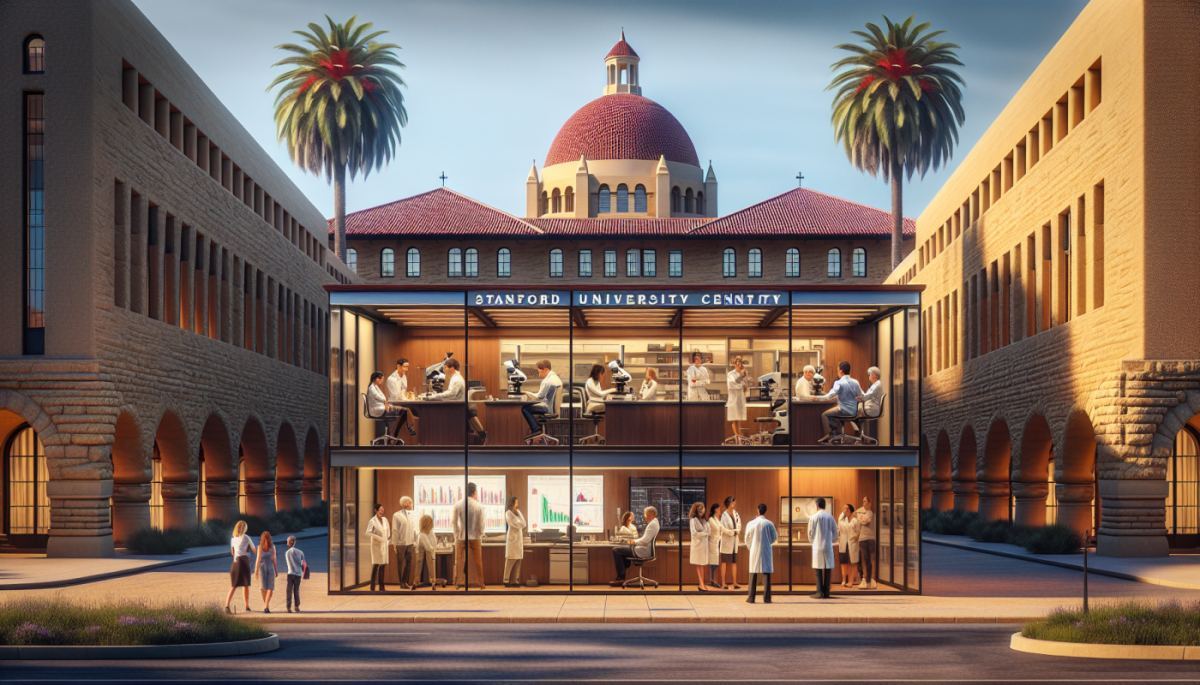
There is a quiet but consequential shift happening in how researchers, policymakers, and institutions think about human aging. It is not simply about living longer. It is about whether the systems built around human life, from education to retirement to healthcare, were ever designed to accommodate a life that now routinely stretches past eighty, ninety, or even a hundred years. The Stanford Center on Longevity has been at the forefront of pushing that question into sharper focus, and its ongoing editorial work reflects an institution wrestling seriously with the gap between biological reality and social architecture.
For decades, the dominant framework around longevity was essentially medical: delay death, manage disease, extend the body's functional years. That framing produced extraordinary results in clinical terms. But it left largely untouched the deeper structural question of what people are supposed to do with those extra decades. The Stanford Center's work increasingly suggests that the real crisis of longevity is not biological but institutional. Societies built their scaffolding around a three-stage life, education, work, retirement, and that scaffolding is buckling under the weight of a population that no longer fits neatly inside it.
Consider the feedback loops embedded in that three-stage model. Retirement systems were designed when the average person might spend a decade or less in retirement. Pension funds, Social Security, and equivalent programs globally calibrated their assumptions accordingly. As lifespans extended, those assumptions did not update at the same pace, creating a slow-motion fiscal pressure that is now becoming acute in Japan, Germany, South Korea, and the United States alike. The longevity dividend, the idea that longer lives represent an economic and social asset, has been consistently outpaced by the longevity liability, the cost of supporting populations that outlive the systems meant to serve them.
What makes the Stanford Center's editorial perspective notable is its insistence that this is a design problem, not merely a demographic one. The framing matters enormously. A demographic problem implies passive response: adjust benefits, raise retirement ages, manage decline. A design problem implies agency: rebuild the structures so they actually fit the lives people are living. That distinction carries real policy weight. Countries that treat longevity as a design challenge tend to invest in lifelong learning infrastructure, flexible work arrangements, and intergenerational housing models. Countries that treat it as a demographic burden tend to cut, delay, and defer.
The second-order effects of getting this wrong are substantial and underappreciated. When older adults are structurally excluded from meaningful economic participation, whether through age discrimination, obsolete skills, or retirement systems that penalize continued work, societies lose an enormous reservoir of experience and productivity. But the consequences ripple further. Younger workers in systems with aging populations face higher tax burdens, reduced upward mobility, and compressed opportunity, which in turn shapes fertility decisions, migration patterns, and political alignments. The longevity question is, in this sense, also the inequality question and the generational trust question, all braided together.
There is also a subtler cultural feedback loop at work. When longevity is framed primarily as a medical achievement, it tends to concentrate attention and resources on the final years of life, the expensive, often difficult years of managing decline. That framing quietly devalues the middle decades of a long life, the years between fifty and eighty that are, for many people, years of genuine capacity, creativity, and contribution. Institutions that internalize the Stanford Center's broader framing begin to invest differently, in the conditions that make those middle decades purposeful rather than merely prolonged.
The conversation the Stanford Center is sustaining is not a comfortable one for institutions that have spent generations optimizing for a shorter human lifespan. It asks universities to rethink who their students are and when learning happens. It asks employers to rethink what a career arc looks like. It asks governments to rethink the social contract in ways that are politically difficult and fiscally complex. None of that happens quickly or easily.
But the direction of pressure is clear. As the global population of people over sixty-five continues to grow, the cost of institutional inertia will rise faster than the cost of redesign. The institutions that begin treating longevity as a systems challenge now, rather than a medical footnote or a budget problem, are the ones most likely to find themselves on the right side of a very long transition.



Discussion (0)
Be the first to comment.
Leave a comment