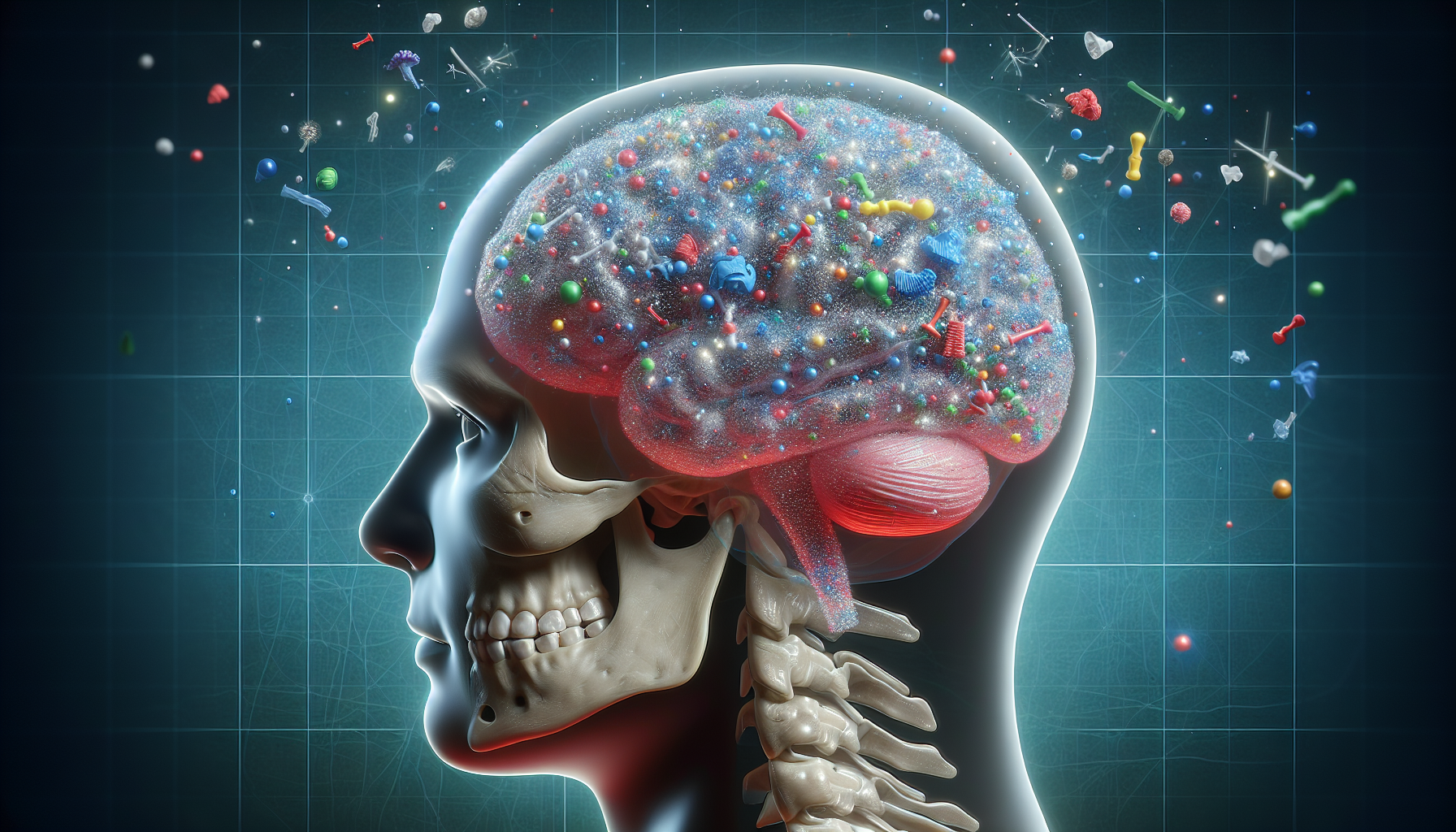
Every year, without knowing it, the average adult consumes roughly 250 grams of microplastics. That is approximately the weight of a bar of soap, ingested invisibly through drinking water, food packaging, seafood, and the fine particulate dust that settles across every surface of a modern home. For years, the dominant concern was environmental: what these particles do to marine ecosystems, to soil, to the food chain. Now, a growing body of research is shifting that anxiety inward, toward the human brain, and the implications are difficult to overstate.
New findings suggest that microplastics are not simply passing through the body. Some fraction of these particles, particularly the smallest nanoscale fragments, are capable of crossing the blood-brain barrier, the tightly regulated biological gateway that normally shields neural tissue from foreign substances. Once inside, they appear to trigger inflammatory responses and may interfere with the cellular machinery that keeps neurons functioning. Scientists have identified multiple biological pathways through which this damage could occur, and the conditions that researchers are beginning to associate with this accumulation include Alzheimer's disease and Parkinson's disease, two of the most devastating and least reversible neurological conditions known to medicine.
The brain is not designed to encounter plastic. When foreign particles breach its defenses, the immune cells of the central nervous system, known as microglia, respond with inflammation. In the short term, inflammation is protective. Sustained over months or years, it becomes destructive, gradually degrading the neural environment in ways that mirror the early stages of neurodegenerative disease. This is not a theoretical concern. Chronic neuroinflammation is already understood to be a significant driver of both Alzheimer's and Parkinson's progression, and researchers are now asking whether microplastic accumulation could be one of the environmental triggers that sets that process in motion.
What makes this particularly difficult to study, and to dismiss, is the ubiquity of exposure. Unlike a pharmaceutical compound or an industrial chemical with a traceable source, microplastics arrive from everywhere simultaneously. They are in bottled water and tap water. They shed from synthetic clothing during washing. They are released by food containers when heated. They drift through indoor air at concentrations that often exceed outdoor levels. There is no control group. There is no unexposed population against which to measure harm, which means that epidemiological studies face a structural challenge that may take decades to fully resolve.
From a systems perspective, what is unfolding here has the structure of a slow cascade with no obvious intervention point. Microplastics enter the environment through the degradation of larger plastic waste, a process that accelerates with heat and UV exposure. They enter the food chain through water and soil. They enter the human body through consumption and inhalation. And because plastic does not biodegrade in any meaningful timeframe, the particles already circulating in ecosystems and bodies are not going away. Production of new plastic continues to rise globally, meaning the baseline exposure level for future generations will be higher than it is today.
The second-order consequence that deserves serious attention is the potential interaction between microplastic-driven neuroinflammation and the existing social burden of dementia. Alzheimer's disease alone already affects tens of millions of people worldwide, and projections suggest that number will roughly triple by 2050 as populations age. If microplastic accumulation in the brain proves to be even a modest contributing factor, accelerating onset or worsening progression in vulnerable individuals, the downstream pressure on healthcare systems, caregiving infrastructure, and public health budgets could be substantial. The cost of dementia care globally already runs into the trillions of dollars annually. A new environmental driver, one baked into the infrastructure of modern consumption, would represent a compounding variable that current projections have not accounted for.
Researchers are careful to note that the science is still developing. Establishing causation rather than correlation requires longitudinal studies, better tools for detecting nanoplastics in tissue, and a clearer mechanistic picture of exactly how these particles interact with neural cells over time. That work is underway, but it moves at the pace of science while plastic production moves at the pace of industry.
The more unsettling question may not be whether microplastics are harming the brain, but how long it will take for the evidence to be considered conclusive enough to act on, and whether, by that point, the exposure will have already become irreversible at a population scale.




Discussion (0)
Be the first to comment.
Leave a comment