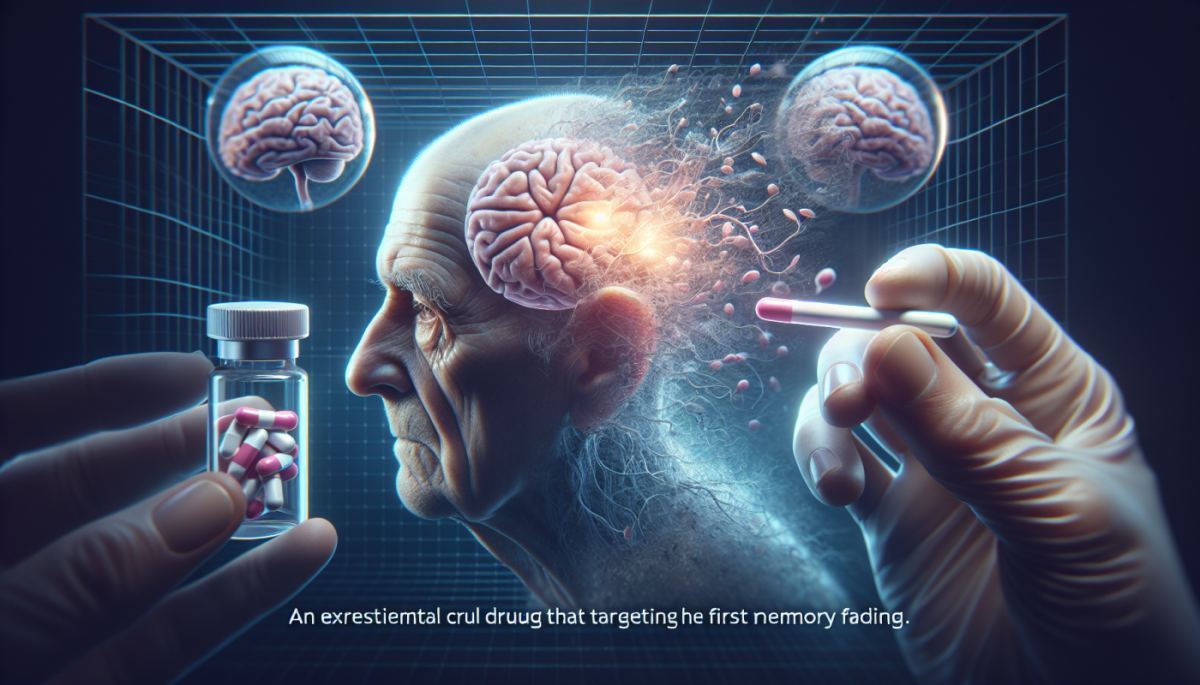
For decades, the clinical story of Alzheimer's disease has begun with forgetting — a name, a face, the way home. But the biological story, researchers are increasingly convinced, begins much earlier, quietly and invisibly, years or even decades before any symptom surfaces. A new wave of research is now targeting that silent prologue, and an experimental compound called NU-9 may represent one of the most promising early interventions yet identified.
Scientists studying NU-9 found that the drug blocks damage caused by a toxic form of protein that accumulates in the brain during the earliest stages of Alzheimer's progression. In mouse models, the treatment was administered before any symptoms appeared, and it demonstrably reduced both the structural damage associated with early disease and the neuroinflammation that tends to accelerate cognitive decline. The implications of that sequencing are hard to overstate: this is not a drug designed to slow a disease already in motion. It is designed to interrupt a process most patients don't yet know is happening inside them.
The toxic protein at the center of this research fits into a broader scientific reckoning with how Alzheimer's actually unfolds. The field spent much of the late 20th century focused on amyloid plaques and tau tangles as the defining hallmarks of the disease, but that framework has been complicated by repeated clinical failures — drugs that cleared amyloid from the brain without meaningfully preserving cognition. What NU-9 appears to target is an upstream trigger, a misfolded or aggregated protein form that may set the inflammatory cascade in motion before plaques even consolidate. If that model holds, then the amyloid-centric drugs weren't wrong so much as late.
The central challenge in Alzheimer's treatment has always been temporal. By the time a patient receives a diagnosis, substantial neuronal loss has already occurred. The brain has a remarkable capacity to compensate for early damage, which means symptoms often lag behind pathology by years. This compensation is, paradoxically, part of what makes the disease so difficult to treat: the window during which intervention might prevent irreversible harm is largely invisible to both patients and clinicians.
NU-9's approach — intervening before symptoms emerge — demands a fundamental rethinking of how Alzheimer's prevention is structured. It raises the prospect of a future in which people are screened for early toxic protein accumulation the way they are currently screened for elevated cholesterol or blood pressure, and treated prophylactically before any cognitive decline registers on a clinical scale. That future is not imminent, but the research trajectory is pointing toward it with growing insistence.
The inflammation angle is equally significant. Neuroinflammation has emerged over the past decade as a critical amplifier of Alzheimer's pathology rather than a mere side effect of it. Microglia, the brain's resident immune cells, shift into a chronic activation state in response to protein aggregates, and that sustained inflammatory response appears to damage neurons that might otherwise survive. A drug that reduces this inflammation at the earliest stage could, in theory, preserve cognitive reserve that would otherwise erode silently over years.
The gap between a promising mouse study and an approved human therapy is wide and littered with the wreckage of compounds that looked transformative in animal models and failed in trials. Alzheimer's research has been particularly humbling in this regard. The biology of the human brain differs from rodent models in ways that have repeatedly confounded translation, and the disease's long latency makes human trials enormously expensive and slow.
Still, the logic behind NU-9 is mechanistically coherent in a way that earlier amyloid-targeting drugs arguably were not. If the toxic protein it blocks is genuinely upstream of the inflammatory and structural damage that drives cognitive decline, then the intervention point is better chosen. The reduction in neuroinflammation observed in the mouse studies also aligns with what researchers have observed in human imaging and biomarker studies, lending the findings a degree of cross-species plausibility.
The second-order consequence worth watching here is systemic. If early-stage Alzheimer's intervention becomes viable, the healthcare infrastructure required to support it — widespread biomarker screening, long-term prophylactic treatment programs, updated diagnostic criteria — would need to scale rapidly and equitably. The risk is that a breakthrough therapy becomes accessible only to those with the resources and healthcare access to be screened early, deepening existing disparities in dementia outcomes along lines of income and geography. The science of prevention is advancing faster than the systems designed to deliver it, and that gap may ultimately determine how many people this research actually saves.
References
- Alzheimer's Association (2023) — 2023 Alzheimer's Disease Facts and Figures
- Long et al. (2019) — Alzheimer Disease: An Update on Pathobiology and Treatment Strategies
- Heneka et al. (2015) — Neuroinflammation in Alzheimer's disease
- Jack et al. (2018) — NIA-AA Research Framework: Toward a biological definition of Alzheimer's disease



Discussion (0)
Be the first to comment.
Leave a comment