The arrest of Nicolás Maduro in early January set off a predictable scramble of commentary about Venezuela's oil reserves, the largest proven reserves on the planet, and what American influence might mean for their development. What got far less attention was the observation made by Paasha Mahdavi, an associate professor of political science at the University of California, Santa Barbara, in an interview with Living on Earth: Venezuela's most consequential energy opportunity may not be underground at all.
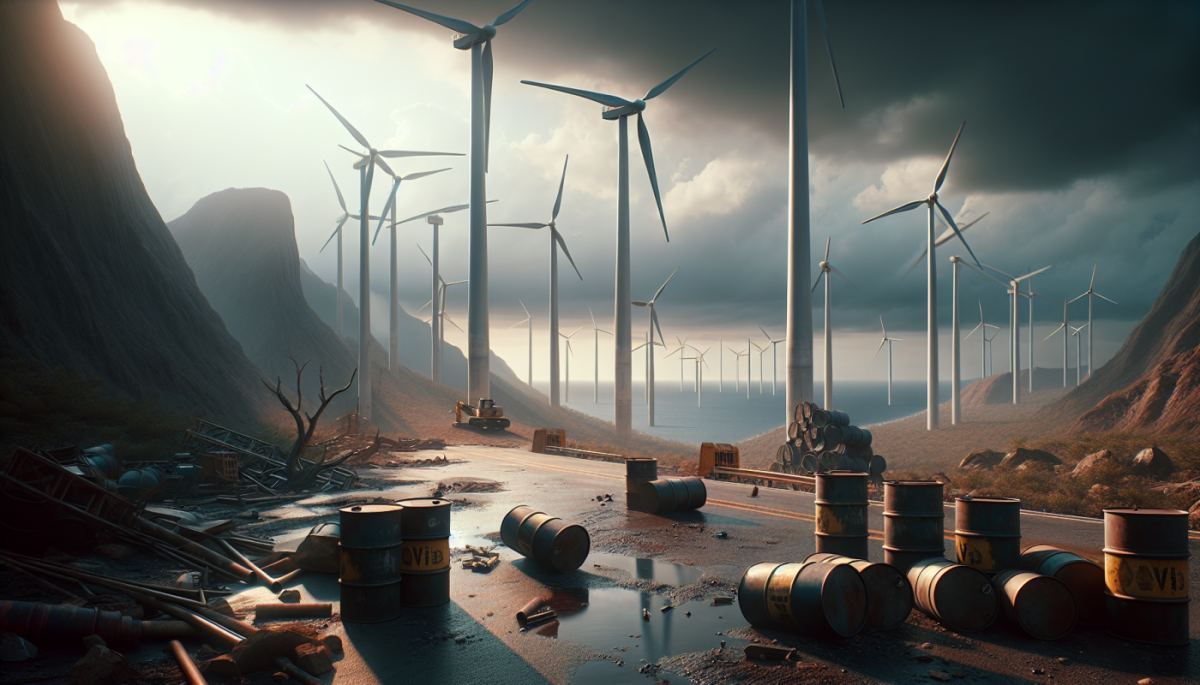
Mahdavi's argument is striking precisely because it cuts against the grain of every geopolitical reflex that Venezuela triggers. The country's Caribbean coastline and its exposure to consistent Atlantic trade winds make it one of the most promising sites for offshore wind development in the Western Hemisphere. While the world's energy analysts have spent decades mapping Venezuela's Orinoco Belt and its extraordinary heavy crude deposits, the wind resource sitting just offshore has gone almost entirely unexploited, a casualty of a political economy that has been organized, for a century, around the logic of petroleum.
The concept of the "resource curse" is well-established in political science and development economics. Nations that discover vast reserves of extractable wealth, particularly oil, tend to develop institutions that serve the extraction industry rather than the broader population. Revenues flow to the state, the state distributes patronage, and the incentive to diversify the economy withers. Venezuela is perhaps the most dramatic modern example of this dynamic. At its peak, the country held some of the highest living standards in Latin America. Decades of oil dependence, compounded by mismanagement and sanctions, left it with hyperinflation, mass emigration, and crumbling infrastructure.
The irony Mahdavi points to is that the very geography which gave Venezuela its oil curse also gave it something potentially more durable: wind. Offshore wind doesn't deplete. It doesn't require the kind of authoritarian revenue control that oil does. It generates jobs in construction, maintenance, and grid management that are harder to monopolize than a wellhead. And critically, it positions a country for an energy transition that is already reshaping global demand curves, even if that transition is moving more slowly than climate scientists would prefer.
But here is where the systems dynamics become genuinely complicated. The political attention now focused on Venezuela, driven largely by Washington's interest in oil market leverage and the ideological symbolism of ousting Maduro, is almost certainly going to reinforce the extractive logic rather than disrupt it. When powerful outside actors arrive with oil on their minds, oil is what gets developed. The infrastructure, the contracts, the diplomatic energy, all of it flows toward the familiar resource. Offshore wind requires a different kind of institutional capacity, a regulatory framework for maritime energy development, grid investment, and long-term planning horizons that are difficult to sustain in a country still in political transition.
The second-order consequence worth watching is what happens to Venezuela's energy trajectory if the post-Maduro period becomes defined by an oil production surge. A rapid ramp-up of Venezuelan crude, which some analysts have speculated could add meaningful volume to global markets within a few years given the right investment conditions, would suppress oil prices modestly and generate short-term revenue for whoever controls Caracas. That revenue would, in turn, create new political incentives to protect the oil sector, fund patronage networks through petroleum rents, and delay the kind of structural reform that might make renewable development attractive to both domestic and foreign investors.
In other words, the very success of an oil-first recovery strategy could make the wind opportunity harder to capture, not easier. This is the feedback loop that resource-dependent economies struggle to escape: each barrel produced makes the next barrel more politically necessary, and each year of oil dependence makes the institutional pivot to alternatives more costly and less likely.
Mahdavi's framing deserves more than a footnote in the geopolitical coverage. Venezuela is not simply a country with oil that the United States wants to influence. It is a country at a genuine crossroads between two energy futures, one that extends a century-old extractive pattern and one that could, with the right institutional choices, position it for a different kind of prosperity. The wind is already there. The question is whether the politics will ever be.
References
- Ross, M. (2012) — The Oil Curse: How Petroleum Wealth Shapes the Development of Nations
- Living on Earth (2025) — Interview with Paasha Mahdavi on Venezuela's Energy Future
- Mahdavi, P. (2020) — Political Leaders and Corrupt Networks in Resource-Rich States
- IRENA (2023) — Renewable Power Generation Costs in 2022
- U.S. Energy Information Administration (2024) — Venezuela Country Analysis
Discussion (0)
Be the first to comment.
Leave a comment