When the United Nations Declaration on the Rights of Indigenous Peoples passed in 2007, it was hailed as a turning point. After more than two decades of negotiations, 144 countries voted in favor of a document that recognized Indigenous peoples' rights to self-determination, land, culture, and free, prior, and informed consent over decisions affecting their communities. Australia, Canada, New Zealand, and the United States initially voted against it, though all four eventually reversed course. The declaration was non-binding, but its supporters argued that moral weight and political momentum would do the work that legal enforcement could not. Nearly 18 years later, that argument is being tested, and it is not holding up well.
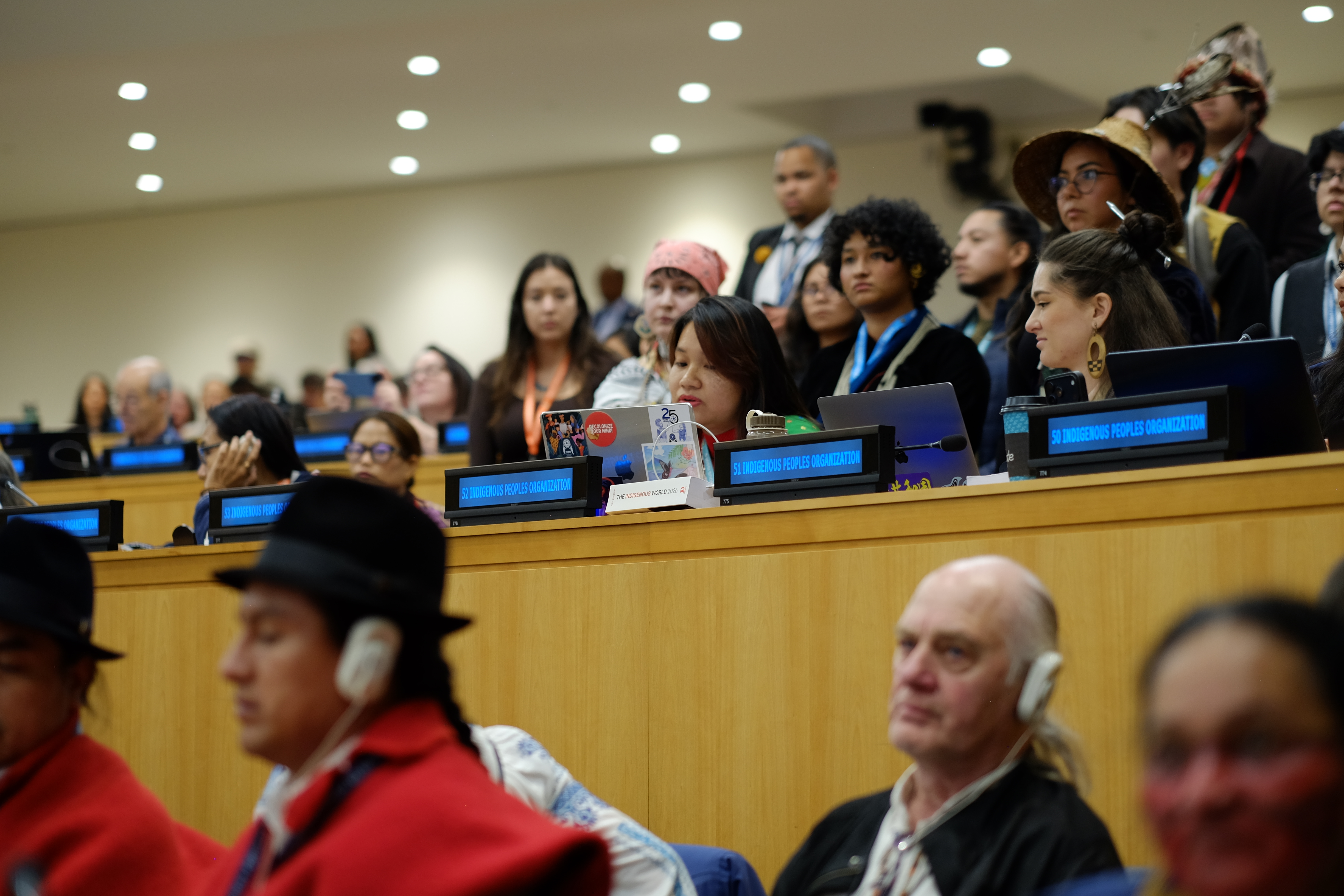
At a recent gathering of global leaders at the United Nations, a recurring message cut through the diplomatic language: governments have been talking about implementing UNDRIP for nearly two decades, and most of them still haven't done it. The gap between adoption and action has become one of the defining failures of international human rights architecture. Indigenous representatives and heads of state alike acknowledged that the declaration's promises, on land rights, cultural preservation, and meaningful political participation, remain largely aspirational for the more than 476 million Indigenous people living across 90 countries.
The reasons for this gap are not mysterious. They are structural. Governments that adopted UNDRIP often did so without any domestic legal mechanism to enforce it. In countries where extractive industries drive significant portions of GDP, the principle of free, prior, and informed consent collides directly with the economic incentives of mining, logging, and fossil fuel development. When a government must choose between honoring Indigenous land rights and approving a lithium mine that feeds the global battery supply chain, the political calculus rarely favors the former. The declaration offers no penalty for choosing wrong.
The concept of free, prior, and informed consent, often abbreviated as FPIC, sits at the heart of UNDRIP and at the center of most compliance failures. In theory, FPIC means that Indigenous communities must be genuinely consulted and must agree before projects affecting their lands and lives can proceed. In practice, governments and corporations have routinely interpreted "consultation" as notification, holding meetings that check a procedural box without altering outcomes. Legal scholars have documented this pattern across Latin America, Southeast Asia, and sub-Saharan Africa, where resource extraction projects have moved forward over Indigenous objections with little consequence for the parties responsible.
The problem is compounded by the fact that UNDRIP itself does not define what adequate consent looks like, leaving enormous interpretive room for states that are motivated to find it. Some countries have passed domestic legislation that references FPIC without giving Indigenous communities any actual veto power. Others have created consultation bodies that are underfunded, understaffed, and structurally subordinate to the ministries overseeing the very industries they are meant to scrutinize. The machinery of compliance, where it exists at all, is often designed to produce the appearance of consent rather than the reality of it.
There is a second-order consequence to this pattern that deserves more attention than it typically receives. When Indigenous communities observe that formal consultation processes are performative, they rationally disengage from them. That disengagement is then cited by governments and corporations as evidence that communities are not interested in participating, which is used to justify bypassing consultation altogether. The system produces the very outcome it was designed to prevent, and it does so through a feedback loop that each side can point to as the other's fault.
This dynamic has real consequences beyond individual communities. Research increasingly links Indigenous land stewardship to biodiversity preservation and carbon sequestration. Territories managed by Indigenous peoples contain a disproportionate share of the world's remaining intact ecosystems. When those territories are encroached upon, the environmental costs extend far beyond the communities directly affected. Failing to implement UNDRIP is not only a human rights failure; it is an ecological one, and the two are more tightly coupled than most climate policy discussions acknowledge.
The declaration's 18th year finds it at an inflection point. A growing number of countries, including Canada with its adoption of Bill C-15 in 2021, have begun translating UNDRIP into domestic law, though implementation even there remains contested and incomplete. Whether that momentum builds or stalls will depend less on what governments say at the United Nations and more on whether Indigenous communities gain the legal standing and resources to hold them accountable when they don't follow through. The words were written a long time ago. The question now is who gets to enforce them.
References
- United Nations (2007) — United Nations Declaration on the Rights of Indigenous Peoples
- International Work Group for Indigenous Affairs (2023) — The Indigenous World 2023
- Coates, K. & Favel, B. (2016) — Understanding FPIC
- Government of Canada (2021) — United Nations Declaration on the Rights of Indigenous Peoples Act, Bill C-15
- Garnett et al. (2018) — A spatial overview of the global importance of Indigenous lands for conservation
Discussion (0)
Be the first to comment.
Leave a comment