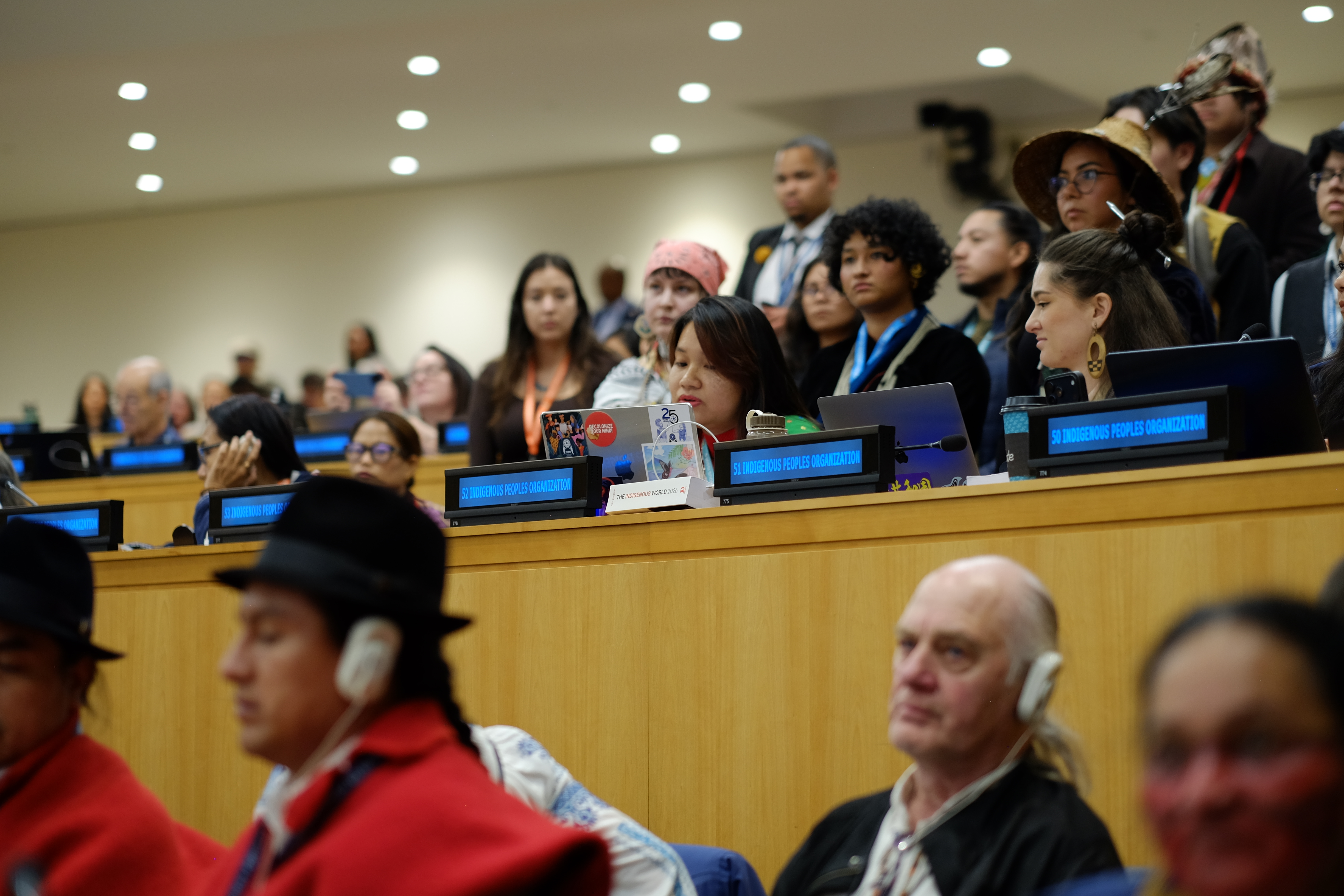
The promise of clean energy has always carried a moral weight that oil and gas never quite managed to claim. Renewables were supposed to be different: lighter on the land, gentler on communities, a break from the extractive logic that carved pipelines through sacred territories and left contaminated water in its wake. But at a landmark global conference focused on phasing out fossil fuels, Indigenous leaders delivered an uncomfortable message — the energy transition is beginning to look a lot like what came before it.
The warning was direct. The economic, security, and climate benefits of renewable energy must not come at the expense of well-protected natural environments and the Indigenous communities that steward them. High oil prices and the geopolitical turbulence unleashed by conflict in the Middle East have accelerated the push toward wind, solar, and critical mineral extraction in many parts of the world. That acceleration, delegates argued, is creating new pressure on territories that were already under siege.
This is not a hypothetical concern. The minerals required to build out clean energy infrastructure — lithium, cobalt, nickel, copper — are disproportionately located beneath or near lands that Indigenous peoples have managed, often for centuries. The Democratic Republic of Congo supplies roughly 70 percent of the world's cobalt, much of it mined in conditions that human rights organizations have documented extensively. In Latin America, the so-called Lithium Triangle spanning Argentina, Bolivia, and Chile sits atop some of the most ecologically sensitive and culturally significant landscapes on the continent. In the United States and Canada, wind and solar projects have faced opposition from Native nations who were not meaningfully consulted before permits were issued.
What makes this moment particularly sharp is the speed at which the transition is being pushed. Governments facing climate deadlines, energy security anxieties, and investor pressure are approving projects faster than regulatory and consultation frameworks can keep pace. The result is a familiar pattern: communities with the least political power absorb the costs of decisions made by those with the most.
The concept of Free, Prior and Informed Consent — enshrined in the United Nations Declaration on the Rights of Indigenous Peoples, which the UN General Assembly adopted in 2007 — is supposed to serve as a safeguard. In practice, it is inconsistently applied and frequently treated as a procedural checkbox rather than a genuine veto. A 2023 report from the Business and Human Rights Resource Centre found that Indigenous communities were raising rights concerns about clean energy projects at a rapidly increasing rate, with Latin America accounting for the largest share of documented disputes.
The systems-level consequence here is one that policymakers rarely model: if the clean energy transition proceeds by replicating the dispossession patterns of the fossil fuel era, it will generate a sustained and legitimate resistance that slows the very transition it claims to accelerate. Legal challenges, protests, and international scrutiny have already delayed or derailed projects in multiple countries. The irony is that the communities most vocal in opposing poorly designed renewable projects are often among those most exposed to climate change itself — a double bind that reflects a profound failure of planning.
The conference delegates were not arguing against clean energy. They were arguing for a different architecture of benefit and risk. Several Indigenous-led energy projects around the world offer a counter-model: the Pic River First Nation in Ontario operates its own hydroelectric facility; the Navajo Tribal Utility Authority has developed solar installations that return revenue to the community. These are not isolated curiosities — they are proof that the transition can be structured so that the people living closest to the resources share meaningfully in the returns.
The deeper question is whether the institutions driving the energy transition — multilateral development banks, national governments, private equity funds — have the incentive structures to slow down enough to do this properly. The pressure to deploy capital quickly, to hit renewable capacity targets, and to satisfy ESG metrics that reward megawatts over community outcomes all push in the same direction: faster, larger, and with less friction.
Friction, in this case, is another word for consent. And the leaders who spoke at this conference were making the case that a transition built on the suppression of consent is not a just transition at all. Whether that argument lands in the boardrooms and finance ministries where the real decisions get made will determine whether clean energy becomes a genuine rupture with extractive history — or simply its next chapter.
References
- United Nations (2007) — United Nations Declaration on the Rights of Indigenous Peoples
- Business and Human Rights Resource Centre (2023) — Renewable Energy and Human Rights Benchmark
- Sovacool et al. (2021) — Decarbonization and its discontents: a critical pluralist perspective on four low-carbon transitions
- Amnesty International (2016) — This Is What We Die For: Human Rights Abuses in the DRC Power the Global Trade in Cobalt
- Intergovernmental Panel on Climate Change (2022) — Sixth Assessment Report: Mitigation of Climate Change
Discussion (0)
Be the first to comment.
Leave a comment