
The claim has been repeated so often it has acquired the texture of common sense: environmental regulation is a drag on economic growth, a luxury that costs jobs and burdens industry. The Trump administration has leaned heavily on this framing to justify a sweeping rollback of climate and environmental protections, presenting the choice as a straightforward trade-off between prosperity and ecological concern. But the underlying math, when examined carefully, doesn't hold.
The economy-versus-environment framing treats nature as a cost center rather than what it actually is: a foundational input to virtually every sector of the American economy. Agriculture depends on stable precipitation patterns, healthy soil, and predictable growing seasons. The insurance industry is already absorbing the financial shock of intensifying hurricanes, wildfires, and floods. The U.S. real estate market, particularly along coastlines, is beginning to price in sea-level rise in ways that will reshape wealth distribution across entire regions. These are not abstract projections. They are balance sheet realities that corporations, municipalities, and pension funds are already navigating.
The National Oceanic and Atmospheric Administration has documented that billion-dollar weather and climate disasters in the United States have increased dramatically in frequency over recent decades. In 2023 alone, the U.S. experienced 28 separate billion-dollar disaster events, a record. The cumulative cost of those events exceeded $92 billion. When the administration frames deregulation as economic relief, it is, in effect, shifting costs rather than eliminating them. The expense doesn't disappear; it migrates from regulated industries onto taxpayers, local governments, and uninsured households.
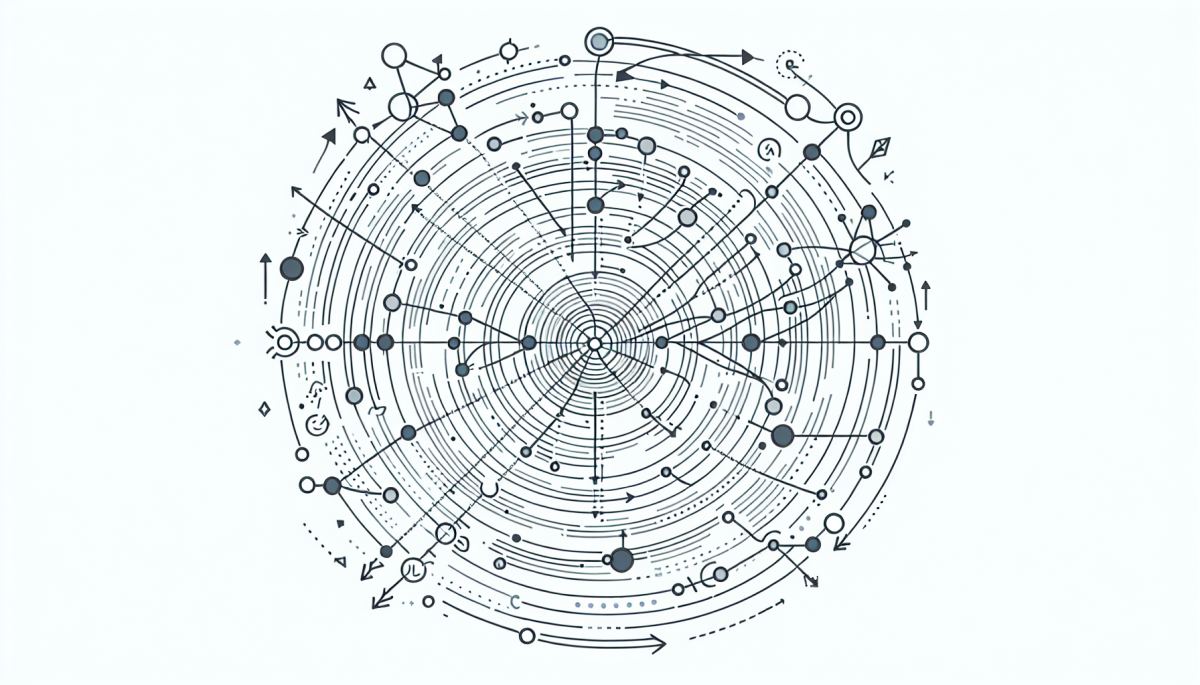
There is a systems-level dynamic at work here that conventional economic framing consistently misses. Environmental degradation is not a one-time cost; it is a feedback loop. Deforestation reduces the capacity of watersheds to buffer against flooding, which increases flood damage, which increases federal disaster spending, which increases the deficit. Loosening air quality standards raises rates of respiratory illness, which increases healthcare costs, which reduces workforce productivity, which slows the very economic growth the deregulation was supposed to unlock. These second-order effects are real, measurable, and well-documented in the public health and environmental economics literature.
A landmark study published in the journal Science estimated that the social cost of carbon, meaning the full economic damage caused by emitting one ton of carbon dioxide, is far higher than the figures the current administration has used in its regulatory calculations. When agencies are required to use artificially low social cost estimates, the cost-benefit analyses that justify deregulation are, by design, skewed. It is not that the administration has found a new economic truth; it is that it has changed the inputs to produce a preferred output.
The clean energy sector complicates the narrative further. Wind and solar now represent some of the fastest-growing sources of employment in the United States. The Bureau of Labor Statistics has consistently ranked solar photovoltaic installer and wind turbine technician among the fastest-growing occupations in the country. Rolling back incentives and regulations that support this sector does not preserve old energy jobs in any durable way; it simply slows the transition while the rest of the world accelerates it. The economic opportunity cost of that delay compounds over time.
Perhaps the most revealing aspect of the environment-versus-economy argument is what it excludes from the ledger entirely. Ecosystem services, the clean water filtration provided by wetlands, the pollination services provided by insects, the carbon sequestration provided by forests, are estimated to be worth trillions of dollars annually to the global economy. These services have no line item in GDP because they are not transacted in markets, but their loss would register catastrophically in markets if they disappeared.
The political economy of this situation is also worth examining. Industries that benefit from deregulation are concentrated, well-organized, and capable of making their preferences felt in Washington. The costs of deregulation, by contrast, are diffuse, often delayed, and fall disproportionately on communities with less political power. This asymmetry is not a bug in the system; it is a structural feature that explains why the same flawed argument keeps returning, administration after administration, regardless of the evidence against it.
The deeper question is not whether the United States can afford to protect its environment. It is whether the country can afford the compounding costs of not doing so, and who, specifically, will be handed the bill.
References
- NOAA National Centers for Environmental Information (2024) — Billion-Dollar Weather and Climate Disasters
- Ricke et al. (2018) — Country-level social cost of carbon
- Bureau of Labor Statistics (2024) — Occupational Outlook Handbook: Fastest Growing Occupations
- Costanza et al. (1997) — The value of the world's ecosystem services and natural capital
Discussion (0)
Be the first to comment.
Leave a comment