
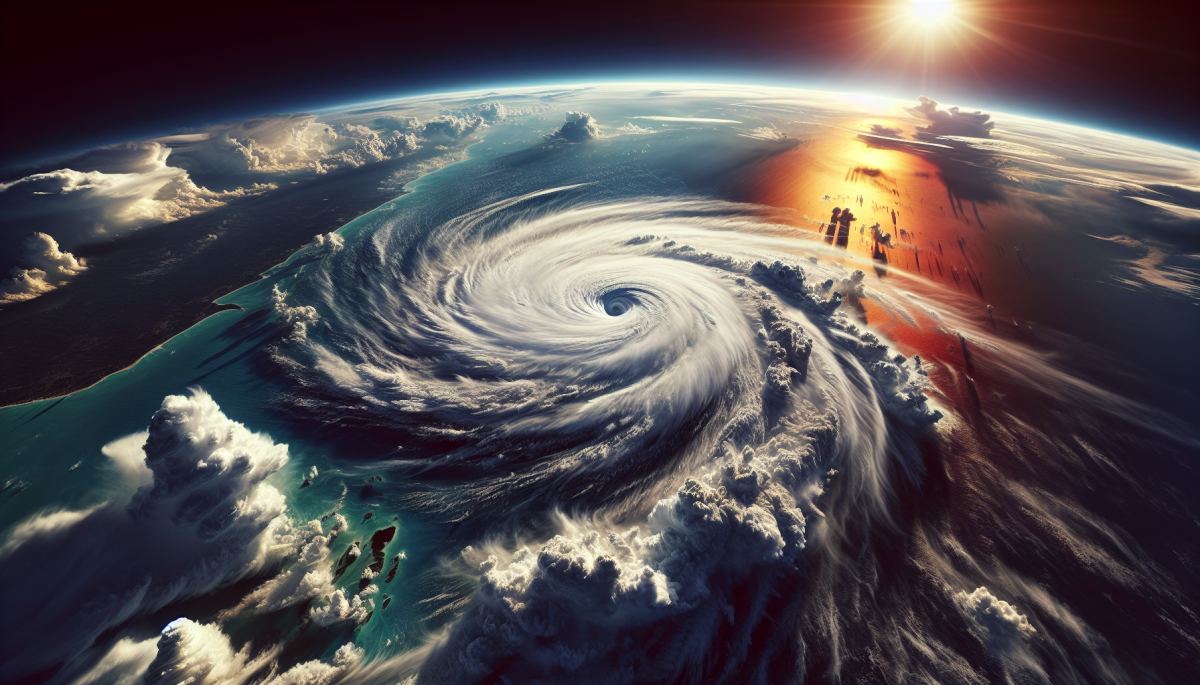
Tropical cyclones have always been among the most destructive forces on Earth, but a growing body of research is revealing that the ocean itself is quietly amplifying their power in ways that standard disaster models have consistently underestimated. When cyclones pass over marine heatwaves, patches of abnormally warm ocean surface water that have become more frequent and intense as global temperatures rise, they can rapidly intensify into far more destructive storms. A new study highlighted by Carbon Brief finds that this interaction nearly doubles the economic damage these storms cause compared to cyclones that develop over normal ocean conditions.
The mechanism is not mysterious. Tropical cyclones draw their energy from warm ocean water, and marine heatwaves essentially hand them a supercharged fuel source. When a storm passes over water that is several degrees warmer than average, it can intensify at a rate that outpaces the forecasting windows emergency managers rely on. Communities that might have had 48 hours to prepare for a Category 2 storm suddenly find themselves in the path of a Category 4 or 5. The difference in wind speed between those categories is not linear in terms of destruction. Damage from wind scales roughly with the cube of wind speed, meaning even a modest increase in intensity translates into a dramatically larger physical and economic impact.
What makes this finding particularly significant is the economic framing. Researchers have long documented the meteorological relationship between warm ocean anomalies and storm intensification, but translating that into dollar figures forces a reckoning with how societies price climate risk. If marine heatwaves are nearly doubling economic losses from cyclones, then every insurance model, every infrastructure investment calculation, and every disaster preparedness budget built on historical storm data is operating on a foundation that is quietly becoming obsolete.
The deeper systems problem here is that marine heatwaves and tropical cyclones are not independent phenomena sitting side by side. They are part of an interconnected climate system in which warming oceans drive more intense heatwaves, which in turn drive more destructive storms, which cause economic damage that strains the public resources needed to adapt to further warming. It is a feedback loop with compounding consequences.
Marine heatwaves have increased in frequency by roughly 50 percent since 1925, and their duration has more than doubled over the same period, according to research published in Nature Climate Change. The warming of the upper ocean is not uniform, but the trend is consistent enough that the conditions enabling rapid cyclone intensification are becoming a structural feature of the climate rather than an occasional anomaly. The Atlantic, the Pacific, and the Indian Ocean have all recorded record or near-record marine heatwave events in recent years, and the 2023 and 2024 ocean temperature anomalies were described by oceanographers as genuinely unprecedented in the instrumental record.
For coastal economies, particularly in the Gulf of Mexico, the Bay of Bengal, and the western Pacific, this is not an abstract concern. These are regions where fishing industries, tourism, and dense urban populations are already exposed to cyclone risk. When the storms that hit those coastlines are systematically more powerful than historical averages would predict, the gap between expected and actual losses widens with every season. Insurers have already begun pulling back from high-risk coastal markets in Florida and Louisiana, a retreat that shifts financial exposure onto homeowners and state governments least equipped to absorb it.
One of the more unsettling second-order consequences of this research is what it implies about the reliability of current catastrophe models used by governments and the reinsurance industry. These models are calibrated largely on historical storm behavior. If marine heatwaves are now a persistent feature of the ocean environment rather than a rare event, the baseline those models use is structurally wrong. Losses will keep surprising to the upside, not because the models are poorly built, but because the climate they were built to describe no longer exists.
There is also a humanitarian dimension that economic figures tend to obscure. Rapid intensification gives populations less time to evacuate, and the communities with the fewest resources to respond quickly are disproportionately located in the coastal zones most exposed to these storms. The doubling of economic damage is an aggregate number, but the distribution of that damage is deeply unequal.
As ocean temperatures continue to rise and marine heatwaves become more frequent, the question facing planners, insurers, and policymakers is not whether cyclones will keep getting more destructive on average, but how quickly institutions built around the old climate can adapt to the one that is already here.
References
- Oliver et al. (2018) — Longer and more frequent marine heatwaves over the past century
- Carbon Brief (2025) — Marine heatwaves nearly double the economic damage caused by tropical cyclones
- Trenberth et al. (2018) — Hurricane Harvey Links to Ocean Heat Content and Climate Change
- Sobel et al. (2016) — Human influence on tropical cyclone intensity
Discussion (0)
Be the first to comment.
Leave a comment