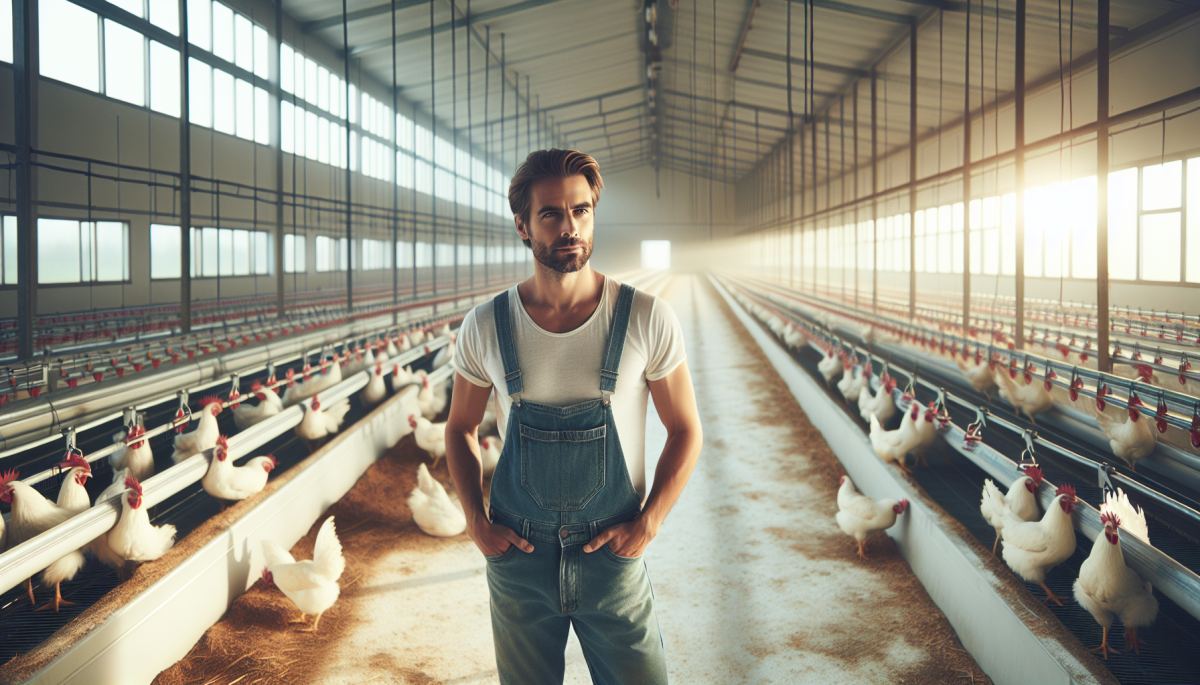
Craig Watts keeps photos taped to a fuse box in a small plywood room on his North Carolina farm. One for every child. It is a quiet, personal detail that carries enormous weight when you understand what surrounds it: a contract farming arrangement with Perdue Farms that critics say is structured to keep growers like Watts perpetually indebted, perpetually dependent, and perpetually unable to walk away.
Watts farms in Fairmont, North Carolina, a rural community in Robeson County where poultry barns are as common as tobacco fields once were. Like tens of thousands of contract growers across the American South and Midwest, he raises chickens he does not own, on land he does own, under rules set almost entirely by the integrator, in his case Perdue Farms, one of the largest poultry companies in the United States. The birds arrive as chicks. The feed arrives on schedule. The company's veterinarians and field technicians make the calls. When the birds are ready, the company's trucks take them away. The farmer, meanwhile, absorbs the fixed costs: the land, the barns, the utilities, the debt.
That debt is not incidental to the system. It is, many agricultural economists argue, foundational to it.
The mechanism that governs pay in contract poultry farming is known as the "tournament system" or "ranking system." Growers are not paid a flat rate per pound of chicken produced. Instead, they are paid relative to other growers in the same flock cycle, ranked by feed conversion efficiency, meaning how many pounds of feed it took to produce a pound of meat. The growers who perform best receive a bonus above the base rate. Those who perform worst receive a deduction. The company controls the quality of the chicks delivered, the composition of the feed, and the timing of flock placement, all variables that directly affect a farmer's ranking but remain outside the farmer's control.
The USDA and agricultural researchers have documented this structure for years. A 2022 report from the agency's Grain Inspection, Packers and Stockyards Administration found that the tournament system creates significant income volatility for growers and limits their ability to negotiate or exit contracts without catastrophic financial loss. The average poultry barn costs between $300,000 and $500,000 to build, and integrators frequently require growers to take on additional debt to upgrade facilities to company specifications, sometimes mid-contract. Refusing an upgrade can mean losing the contract entirely, which means losing the only income stream capable of servicing the debt the barn itself created.

This is the feedback loop that critics say makes the system so difficult to escape. Debt compels compliance. Compliance enables continued debt requirements. The farmer's autonomy narrows with each upgrade cycle, even as their financial exposure grows.
For years, the Obama administration attempted to strengthen protections for contract growers under the Packers and Stockyards Act of 1921, the primary federal law governing relationships between agricultural integrators and the farmers who supply them. A proposed rule in 2016 would have made it easier for growers to bring legal claims against integrators without having to prove industry-wide harm, a standard so demanding it effectively shielded companies from accountability. The rule was withdrawn before taking effect.
The Biden administration revisited the question, and in 2022 the USDA finalized new rules intended to clarify what constitutes an unfair practice under the Act. Poultry integrators pushed back hard, arguing the rules would increase litigation risk and raise costs for consumers. The outcome of those rules under subsequent administrations remains uncertain, and the structural power imbalance that Watts and growers like him describe has not meaningfully changed.
What gets lost in the regulatory back-and-forth is the community-level consequence. Robeson County, where Watts farms, is one of the poorest counties in North Carolina. Contract poultry farming was sold to rural communities across the South as a path to stable agricultural income. When that income proves unstable and the debt proves durable, the damage is not just personal. It ripples outward into local economies, tax bases, and the social fabric of towns that bet their futures on a system designed, structurally, to concentrate profit at the top of the supply chain.
If the contract farming model continues unreformed, the second-order effect may be a quiet collapse of the independent grower class itself, replaced by company-owned megafarms that eliminate the tournament fiction entirely and consolidate both the risk and the reward inside the integrator. That would be a more honest arrangement, perhaps, but it would also mark the end of something that rural America was told, for generations, was its own.
References
- USDA GIPSA (2022) — Packers and Stockyards Act Rulemaking and Poultry Grower Fairness
- MacDonald, J. (2014) — Technology, Organization, and Financial Performance in U.S. Broiler Production
- Leonard, C. (2014) — The Meat Racket: The Secret Takeover of America's Food Business
- National Chicken Council (2023) — Broiler Industry Facts
Discussion (0)
Be the first to comment.
Leave a comment