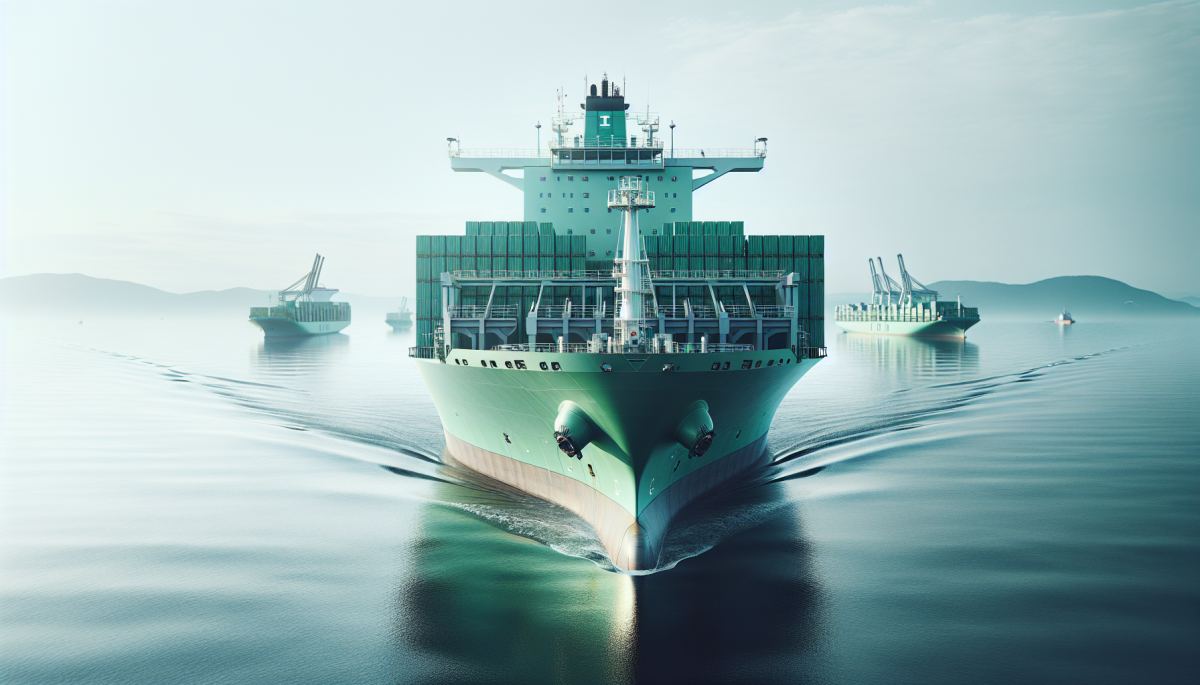
The international effort to decarbonize shipping has never been short of obstacles, but for much of 2025, the most formidable one wore an American face. The United States had threatened to impose port fees on vessels using foreign-built ships, a move widely interpreted as a retaliatory broadside against the International Maritime Organization's Net Zero Framework, the ambitious global plan to price carbon emissions from the shipping sector. Now, analysts are cautiously suggesting that a recent US tariff ruling may have blunted that threat enough to keep the framework alive.
Shipping is responsible for roughly 3 percent of global greenhouse gas emissions, a share that sounds modest until you consider that if the industry were a country, it would rank among the world's top ten emitters. The IMO's Net Zero Framework, hammered out over years of contentious negotiation, aims to reach net-zero emissions from international shipping by or around 2050, with binding mid-term targets and a carbon pricing mechanism that would generate billions in revenue, potentially redirected toward developing nations and clean fuel infrastructure. It is, by any measure, one of the most complex multilateral environmental agreements ever attempted.
The US position had been a source of deep anxiety among negotiators and climate advocates. Washington's threat to levy fees on ships calling at American ports, specifically targeting vessels built in China, created a chilling effect on the entire framework. Because so much of global shipping touches US ports at some point in a voyage, the threat carried genuine economic weight. Analysts warned it could fracture the coalition of nations needed to make any carbon pricing scheme function, since shipowners facing punitive US fees would have little incentive to also absorb IMO carbon levies.
The recent ruling appears to have narrowed the scope of those threatened port fees, at least for now, reducing the immediate economic pressure on international shipowners and giving IMO member states more room to negotiate without one eye permanently fixed on Washington's next move. Analysts quoted by Climate Home News described the development as a meaningful, if incomplete, shift in the geopolitical landscape surrounding the framework.
The word "incomplete" matters here. Divisions within the IMO remain sharp. A bloc of major shipping nations and fossil fuel exporters has resisted the more aggressive carbon pricing proposals, while small island developing states and climate-vulnerable nations have pushed for faster, deeper cuts. The US tariff threat had been functioning, whether intentionally or not, as a kind of gravitational force pulling hesitant nations away from commitment. With that force partially reduced, the internal IMO dynamics may shift, but they will not resolve themselves automatically.
There is a systems-level consequence worth watching closely. Carbon pricing in shipping, if implemented at the scale the framework envisions, would generate an estimated $80 billion or more annually by some projections. How that revenue gets distributed is not a technical question; it is a deeply political one, and it sits at the heart of the North-South tensions that have shadowed these negotiations from the beginning. Developing nations that depend heavily on imported goods transported by sea stand to face higher costs unless revenue is recycled in their direction. If the partial neutralization of the US threat accelerates agreement on the pricing mechanism itself, it could paradoxically intensify the fight over revenue allocation, moving the conflict from "whether" to "who gets what."
The IMO's Marine Environment Protection Committee is scheduled to meet later this year, and the green shipping framework is expected to be a central agenda item. The mood among negotiators, according to observers, is cautiously more optimistic than it was even a few months ago, but optimism in multilateral climate diplomacy has a short shelf life.
The deeper structural reality is that the shipping industry is already making bets on the future. Maersk, the world's second-largest container shipping company, has been ordering methanol-powered vessels. Investment in green ammonia and hydrogen as marine fuels is accelerating, though the infrastructure to supply those fuels at scale remains years away. A credible, durable international carbon price would lock in those investment signals and prevent backsliding toward cheaper, dirtier alternatives as fuel prices fluctuate.
What the tariff ruling has done, at best, is remove one veto player from the edge of the table. The framework still needs to survive the collision between economic self-interest and climate necessity that defines every serious decarbonization negotiation. The more interesting question now is whether the breathing room created by this ruling gets used to build genuine consensus, or simply to delay the next confrontation.
References
- International Maritime Organization (2023) — IMO's work to cut GHG emissions from ships
- Comer et al. (2020) — Transitioning Away from Fossil Fuels in the International Shipping Sector
- Climate Home News (2025) — Prospects for global green shipping deal boosted by US tariff ruling
- Transport & Environment (2024) — Shipping and climate: the case for a carbon levy
Discussion (0)
Be the first to comment.
Leave a comment