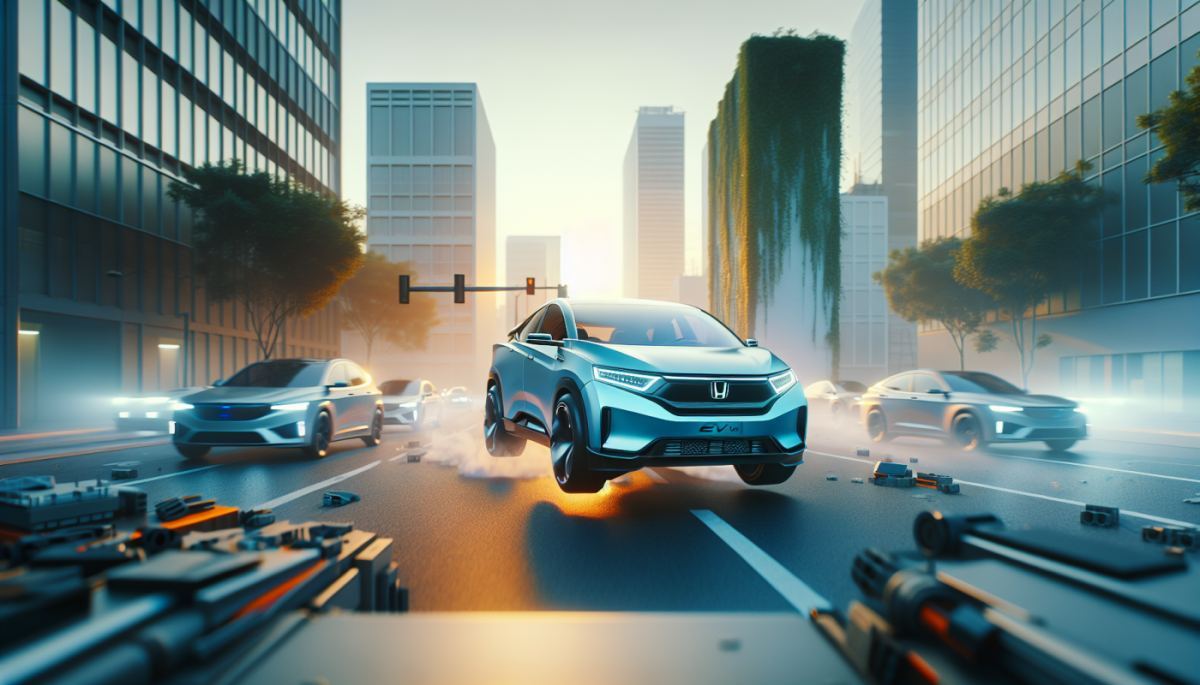
Honda finds itself caught between two worlds, and neither one is particularly forgiving right now. In the United States, the political and consumer appetite for electric vehicles has cooled considerably, leaving automakers who committed billions to EV transitions quietly reconsidering their timelines. In China, the opposite is happening at a pace that would have seemed implausible just five years ago. Homegrown EV manufacturers are not just competing with legacy automakers — they are eating their lunch. Honda, a company that has never been known for bold bets, is now being forced to make them anyway, in both directions at once.
The divergence between these two markets is not a temporary blip. It reflects something more structural: two countries with fundamentally different industrial policies, consumer incentives, and political relationships with the automobile. In the U.S., the Biden administration's Inflation Reduction Act had briefly supercharged EV investment, but the political winds shifted. Automakers who had announced ambitious EV production targets began walking them back, citing softening demand, high interest rates that make financing a $50,000 electric vehicle a harder sell, and a charging infrastructure that still frustrates enough buyers to keep them in the showroom for a hybrid instead. For Honda, which had staked a meaningful portion of its North American future on next-generation EVs, that recalibration is not just a strategic inconvenience — it is a signal that the market it planned for may not materialize on schedule.
Meanwhile, in China, Honda is facing a different kind of reckoning. Companies like BYD, Nio, and a growing constellation of state-backed EV startups have moved with a speed and cost efficiency that traditional automakers were not built to match. China is now the world's largest EV market, and the manufacturers winning there are not Toyota, GM, or Honda — they are companies that did not exist in their current form two decades ago. Honda's China sales have been declining, and the competitive pressure from local EV brands is a significant reason why. These are not cheap knockoffs. They are technologically sophisticated vehicles, often with better software integration and longer range than their foreign competitors, sold at prices that reflect China's vertically integrated battery supply chain.
This creates a feedback loop that is worth understanding carefully. As Chinese EV manufacturers gain scale domestically, their unit costs fall further. Lower costs allow them to price aggressively, which wins more market share, which drives more scale. Honda and other legacy automakers, by contrast, are still managing the transition costs of shifting factories, retraining workers, and writing down investments in internal combustion engine platforms. They are running uphill while their Chinese competitors are running down.
The deeper systemic consequence here is what happens to the next generation of U.S.-made EVs if investment hesitates long enough. Manufacturing capability is not a light switch. If Honda and its peers slow their EV commitments in North America — delaying new models, deferring factory conversions, or quietly shelving planned platforms — the institutional knowledge, supplier relationships, and production capacity required to build competitive EVs does not simply wait around. It atrophies, relocates, or gets absorbed by competitors who kept moving. The U.S. risks not just falling behind on EVs as consumer products, but losing the industrial infrastructure to produce them at scale domestically, which has implications that extend well beyond the auto industry into national economic resilience and trade policy.
There is also a workforce dimension that rarely gets enough attention. The communities that were promised EV manufacturing jobs — many of them in states that had already weathered decades of deindustrialization — are now watching timelines slip. That erosion of trust between industry and labor, and between industry and local government, makes the next round of investment commitments harder to secure and harder to believe.
Honda is not uniquely villainous here, and it is not uniquely vulnerable. It is a useful lens because it is caught so visibly in the middle: too committed to EVs to retreat cleanly, and not committed enough to compete with the companies setting the pace in the world's most important EV market. What happens to Honda's next-generation EV lineup in the U.S. will say something important about whether the American auto industry is genuinely transforming, or just performing transformation until the pressure to do so subsides.
References
- Boudette, N. et al. (2024) — As E.V. Sales Slow, Car Makers Pull Back on Their Commitments
- BloombergNEF (2024) — Electric Vehicle Outlook 2024
- Colias, M. et al. (2024) — Auto Makers Retreat From Electric Vehicles
- Tabeta, S. (2024) — Honda's China sales fall as local EV brands surge
- IEA (2024) — Global EV Outlook 2024
Discussion (0)
Be the first to comment.
Leave a comment