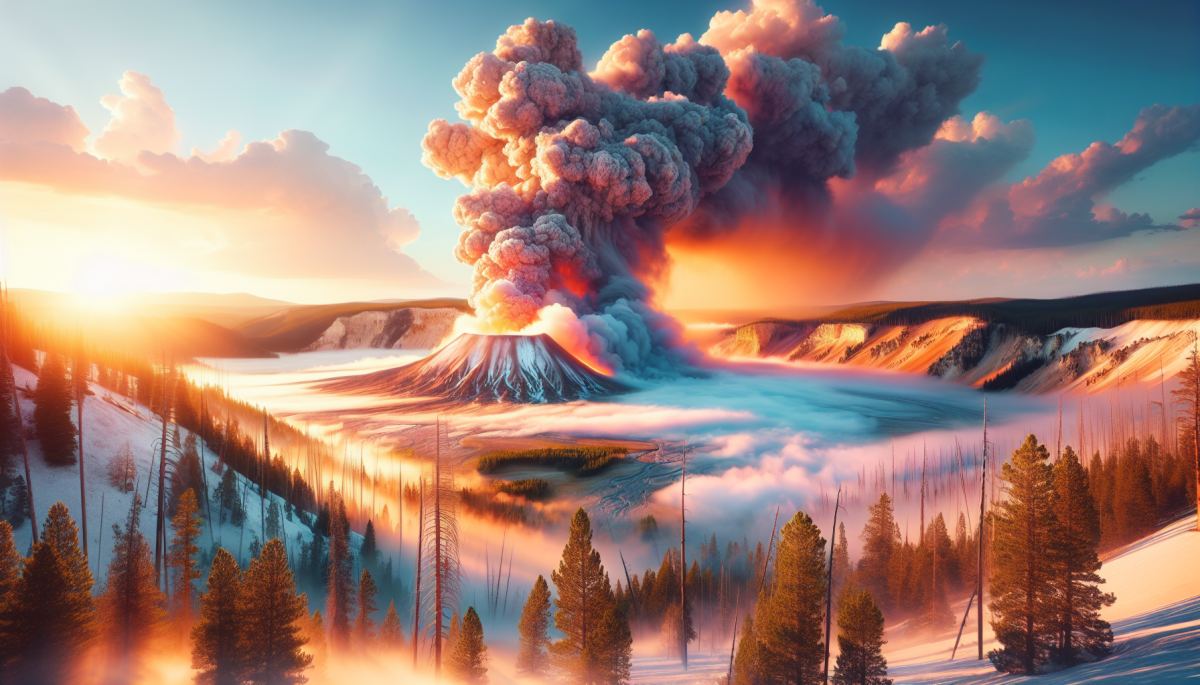
The seafloor south of Japan holds one of the most consequential volcanic systems on Earth, and new research suggests it is not dormant so much as patient. Scientists studying the Kikai caldera, a submerged supervolcano in the Ryukyu Arc, have used seismic imaging to map a substantial magma reservoir beneath the seafloor and confirmed something that carries serious long-term implications: the magma now filling that reservoir is freshly injected material, not the remnants of an ancient eruption slowly cooling into irrelevance.
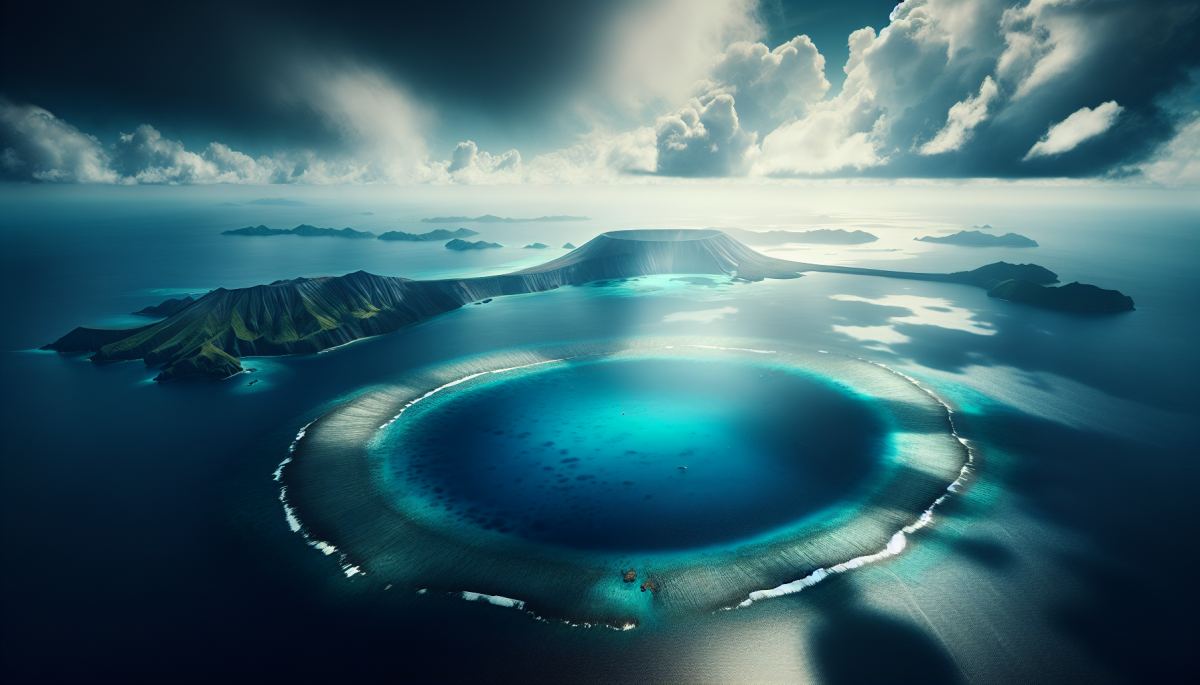
The eruption that originally formed the Kikai caldera, roughly 7,300 years ago, ranks as the most powerful volcanic event of the Holocene epoch. It reshaped coastlines, sent pyroclastic flows racing across the sea surface, and is widely believed to have contributed to the collapse of the Jomon culture on the southern Japanese island of Kyushu. The scale of that event is difficult to fully absorb. For context, it dwarfed the 1815 eruption of Mount Tambora, which caused the so-called "Year Without a Summer" and triggered crop failures across the Northern Hemisphere.
What makes the new findings particularly significant is the chemical fingerprint of the volcanic material. Researchers were not simply observing a static blob of leftover melt sitting beneath the ocean floor. The chemistry of recent eruptive products from the caldera has shifted in ways that indicate fresh magma is being injected from deeper in the mantle into the shallower reservoir. A lava dome has also been growing within the caldera, a physical manifestation of that pressure building from below. These are not signs of a system winding down.
Seismic tomography, the technique used to image the magma reservoir, works by measuring how earthquake waves slow down or deflect when passing through partially molten rock. The resulting maps are not perfectly precise, but they are good enough to reveal the rough geometry and scale of what lies beneath. In the case of Kikai, the reservoir appears large enough to fuel another catastrophic eruption, though scientists are careful to note that the presence of magma does not mean an eruption is imminent or even likely on any human timescale.
That caveat matters, but it should not obscure the broader point. Supervolcanic systems operate on timescales that make human planning instincts nearly useless. The interval between major eruptions at systems like Kikai, Yellowstone, or Campi Flegrei can span tens of thousands of years. Monitoring them requires sustained institutional commitment that tends to outlast political attention spans and funding cycles. Japan, to its credit, has invested heavily in volcanic monitoring infrastructure, partly because the country sits atop one of the most geologically active regions on the planet. But the Kikai caldera is underwater, which adds layers of logistical and financial complexity to any monitoring effort.
The recharging of Kikai raises questions that extend well beyond volcanology. Japan's southern island chains, including the Ryukyu Islands and parts of Kyushu, are home to millions of people and anchor some of the country's most important agricultural and fishing economies. Any significant escalation in volcanic activity, even well short of a supereruption, could affect submarine cable infrastructure, regional fisheries, and air traffic corridors across the western Pacific.
There is also a subtler systemic consequence embedded in this story. As seismic imaging technology improves and scientists gain clearer pictures of what lies beneath more of Earth's surface, the number of volcanic systems identified as "active" or "recharging" is likely to grow. That is not because the planet is becoming more dangerous, but because our ability to see what was always there is getting sharper. The policy and public communication challenge that follows is real: how do governments and scientific institutions convey meaningful risk gradations to populations who reasonably struggle to distinguish between "this system is recharging over geological time" and "this system is about to erupt"?
The Kikai caldera is not sending an alarm. It is doing what large magmatic systems do, cycling through long periods of accumulation punctuated by rare, violent release. But the fact that we can now watch that process in something close to real time, through seafloor seismometers and chemical analysis of fresh lava, represents a genuine shift in humanity's relationship with the deep Earth. The more clearly we can see these systems, the more urgently we will need frameworks for deciding what to do with that knowledge.
References
- Tatsumi et al. (2018) — Formation of a subaqueous caldera and associated magma system at Kikai volcano, southern Japan
- Sigurdsson et al. (2015) — The Encyclopedia of Volcanoes
- Self (2006) — The effects and consequences of very large explosive volcanic eruptions
- Sparks et al. (2012) — Monitoring volcanoes: the anatomy of an early warning system
Discussion (0)
Be the first to comment.
Leave a comment