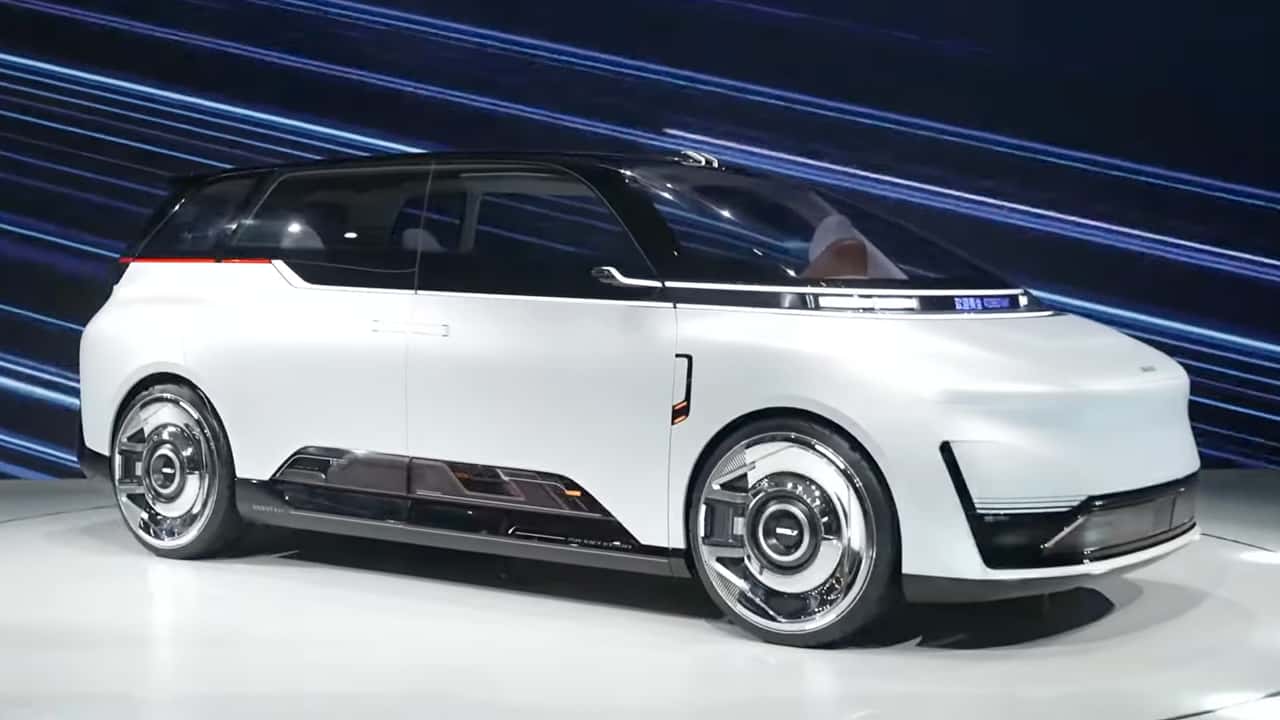
Geely has unveiled what it calls China's first purpose-built robotaxi, a vehicle named the EVA Cab that arrives without a steering wheel, without pedals, and without any of the design compromises that come from retrofitting autonomous technology onto a car originally meant for human drivers. The claim is bold, and as some observers have already noted, it is at least partially debatable. But the debate over who deserves the "first" label may be the least interesting thing about this moment.
What matters more is what the EVA Cab represents as a systems-level bet. Geely is not simply building a car. It is staking out a position in an emerging industrial stack that includes vehicle hardware, autonomous software, fleet operations, and urban mobility infrastructure, all at once. The vehicle is designed from the ground up with massive commercial fleets in mind, which signals that Geely sees the robotaxi not as a novelty or a pilot program but as a scalable product category with real unit economics behind it.
The absence of a steering wheel is more than a design flourish. Regulators in China have been gradually opening the door to fully driverless commercial operations in designated zones, with cities like Wuhan, Shenzhen, and Beijing expanding their autonomous vehicle trial corridors over the past two years. Baidu's Apollo Go service has already logged millions of driverless rides in Wuhan alone. Geely's decision to build a vehicle that physically cannot accommodate a human driver is a calculated read of that regulatory trajectory, essentially locking in a design assumption that full autonomy approval will continue to expand rather than stall.
Geely is entering a field that is already crowded with serious players. Baidu, Pony.ai, WeRide, and Didi have all been operating autonomous or semi-autonomous ride-hail services in China for years. Internationally, Waymo continues to expand in the United States, and the ghost of Cruise's troubled shutdown in 2023 still hangs over the industry as a cautionary tale about what happens when public trust erodes faster than technology matures.
What Geely brings that most of its software-first competitors lack is manufacturing scale and vertical integration. The company already owns Volvo Cars, Lotus, and a significant stake in Mercedes-Benz, giving it deep expertise in vehicle production at volume. Building a purpose-designed robotaxi chassis rather than bolting sensors onto an existing sedan could meaningfully reduce per-unit costs over time, which is the variable that will ultimately determine whether robotaxi fleets become economically viable or remain a subsidized experiment.
There is also a geopolitical dimension that deserves attention. Chinese autonomous vehicle companies have faced increasing scrutiny in Western markets over data security concerns, with both the U.S. and European regulators examining whether vehicles that continuously map public streets and collect passenger data should be subject to stricter controls. Geely's domestic focus with the EVA Cab, at least for now, sidesteps that friction while allowing the company to build operational scale and refine its technology in one of the world's most complex urban driving environments.
If Geely and its competitors succeed in deploying purpose-built robotaxi fleets at scale, the downstream effects on China's urban economy could be substantial and not entirely predictable. The most obvious consequence is pressure on the roughly 7 million people employed as ride-hail drivers in China, a workforce that expanded dramatically after Didi's rise and that has few obvious alternative employment pathways at comparable income levels.
But the less obvious consequence may be what large robotaxi fleets do to urban land use. Vehicles that operate continuously and park rarely require far less dedicated parking infrastructure. If that dynamic plays out over a decade, it could free up significant urban land currently devoted to parking structures and surface lots, creating both an opportunity and a planning challenge for Chinese cities that have built their commercial districts around car storage assumptions.
There is also a feedback loop embedded in the technology itself. Purpose-built robotaxis generate cleaner, more consistent sensor data than retrofitted vehicles because every hardware element is optimized for the autonomous stack rather than adapted from it. Better data accelerates model training, which improves performance, which builds the regulatory confidence needed to expand operational zones. Geely's hardware bet, if it pays off, could compress that feedback loop in ways that give Chinese autonomous vehicle development a structural advantage that is difficult for competitors to replicate quickly.
Whether the EVA Cab is truly China's first purpose-built robotaxi or simply the most prominently marketed one, the more durable question is whether Geely's manufacturing instincts can solve a problem that has so far resisted every company that approached it primarily as a software challenge.
References
- Hawkins, A.J. (2024) — Baidu's robotaxi service Apollo Go hits 6 million rides in Wuhan
- Kolodny, L. (2023) — GM's Cruise loses driverless permits in California after accident
- Pony.ai (2024) — Pony.ai Prospectus, U.S. SEC Filing
- Reuters (2024) — China expands autonomous vehicle testing zones in major cities


Discussion (0)
Be the first to comment.
Leave a comment