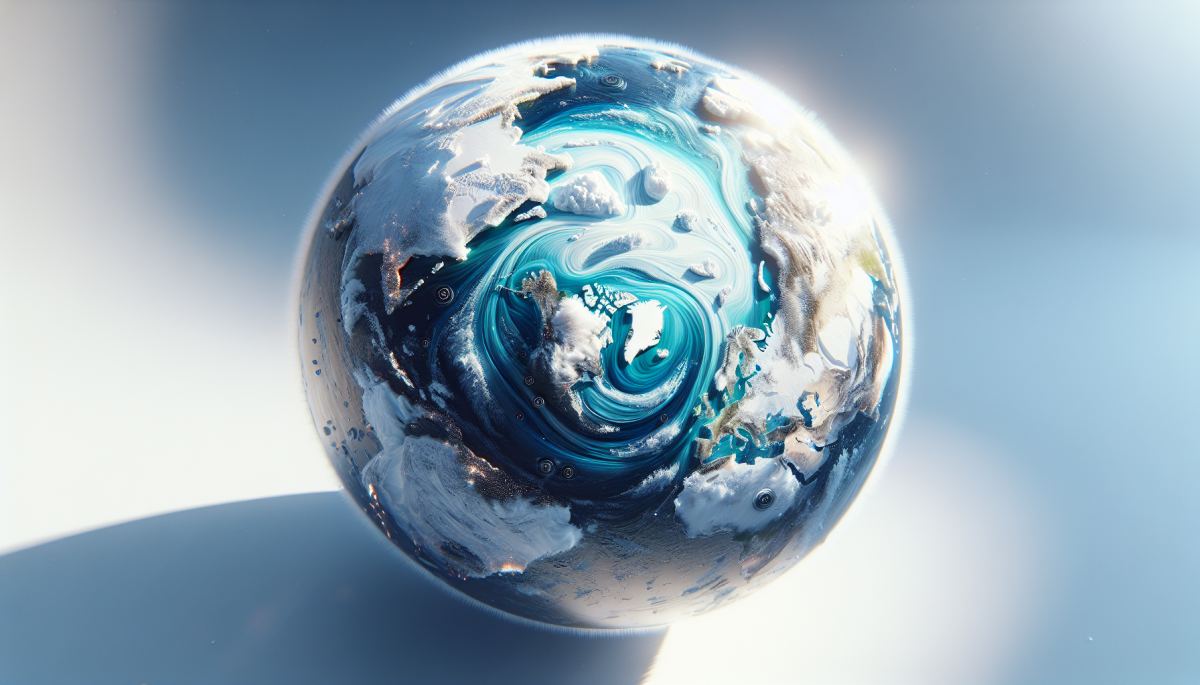
For decades, the standard explanation for how Earth cooled into its current ice age configuration rested on a deceptively simple idea: tectonic plates drifted apart, ocean gateways opened, and a powerful current began circling Antarctica, isolating the continent thermally and triggering glaciation. It was a clean narrative. It was also incomplete.
New research has fundamentally revised that story. The Antarctic Circumpolar Current, the most powerful ocean current on Earth, carrying more water than all the world's rivers combined, didn't simply switch on when the Drake Passage and Tasmanian Gateway opened. Its formation required a precise and unlikely convergence: shifting continents, yes, but also the emergence of powerful Southern Ocean winds that had to align with the new geography before the current could reach its full, climate-altering strength. The implications of that distinction are far larger than they might first appear.
The Antarctic Circumpolar Current flows unobstructed around the entire continent of Antarctica, connecting the Atlantic, Pacific, and Indian Oceans in a continuous loop. Its sheer volume and reach make it one of the primary regulators of global heat distribution. Scientists have long linked its formation to the Eocene-Oligocene transition, roughly 34 million years ago, when Earth experienced one of the most dramatic cooling events in its geological history. Global temperatures dropped sharply, ice sheets expanded across Antarctica, and the planet crossed a threshold it has never fully reversed.
The conventional model credited the opening of the Drake Passage between South America and Antarctica as the key trigger. Once that gateway opened, the thinking went, cold water could circulate freely and isolate Antarctica from warmer equatorial currents. But that model struggled to explain the timing and magnitude of the cooling. Tectonic changes happen over millions of years, yet the climate shift was geologically abrupt.
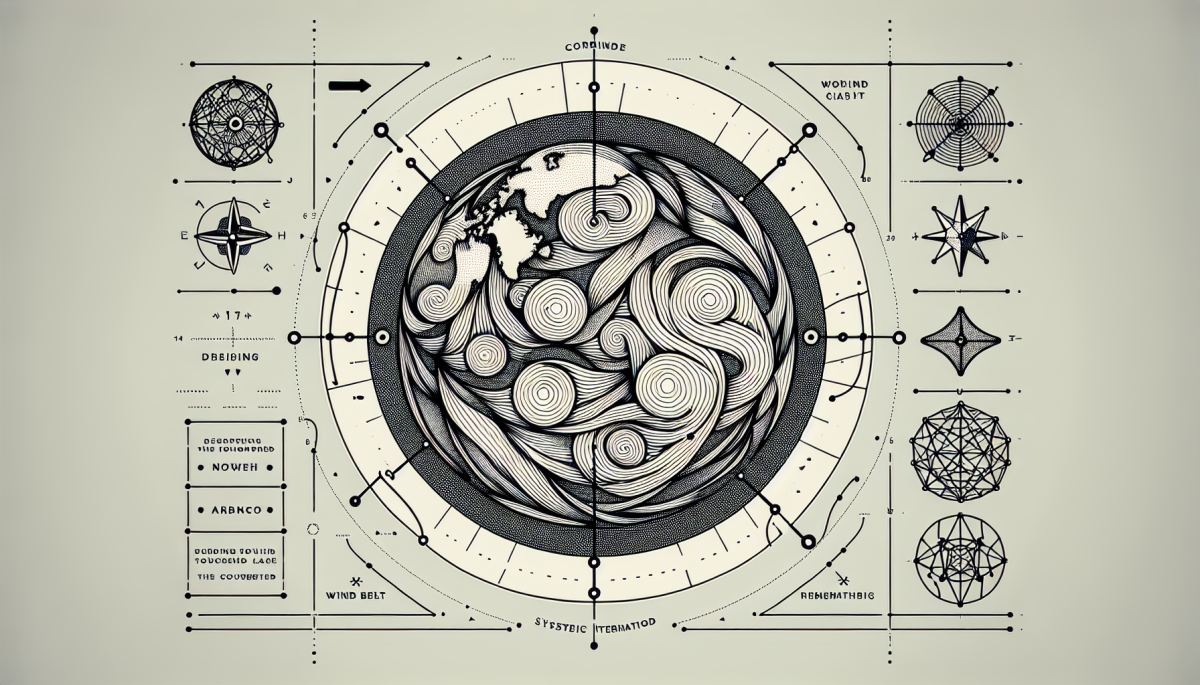
The new research suggests the missing ingredient was wind. As the continents repositioned, atmospheric circulation patterns in the Southern Hemisphere reorganized as well. The westerly wind belts that now drive the circumpolar current into its characteristic ferocity had to shift poleward and intensify before the current could fully develop. Without that wind forcing, an open gateway alone would have produced a far weaker circulation, insufficient to drive the kind of deep-water upwelling and carbon drawdown that preceded the glaciation.
This is where the story connects to something with urgent contemporary relevance. The research indicates that the current's formation helped pull significant quantities of carbon dioxide out of the atmosphere. As the circumpolar current strengthened, it enhanced the upwelling of deep, carbon-rich waters and altered the biological productivity of the Southern Ocean, which acts as one of the planet's major carbon sinks. The feedback loop was self-reinforcing: cooling promoted ice growth, ice growth increased albedo, albedo reflected more solar energy, and temperatures dropped further.
Understanding the precise mechanics of how that carbon drawdown occurred matters enormously right now. The Southern Ocean today absorbs roughly 40 percent of all the CO2 that the oceans take up globally, according to research published in Science. Any disruption to the circumpolar current, whether from freshwater influx due to Antarctic ice melt or from shifts in Southern Hemisphere wind patterns driven by modern climate change, could compromise that sink in ways that current models may not fully capture.
And here is the second-order consequence that deserves more attention than it typically receives: if the current's original formation was as sensitive to wind-continent alignment as this research suggests, then its future behavior under anthropogenic warming may be equally sensitive to relatively modest shifts in atmospheric circulation. The westerly winds over the Southern Ocean have already been migrating poleward over recent decades, a trend linked to both greenhouse gas forcing and ozone depletion. That migration changes how the current mixes water vertically, affecting both heat transport and carbon sequestration in ways that Earth system models are still working to quantify.
The original formation of the Antarctic Circumpolar Current took millions of years and required the slow choreography of drifting plates and reorganizing winds. The pressures now acting on that same system are operating on a timescale of decades. Whether the current can absorb those pressures without a meaningful shift in behavior is a question that the planet's climate history, newly reinterpreted, makes feel considerably more open than it did before.
References
- Scher et al. (2006) — Timing and Climatic Consequences of the Opening of Drake Passage
- Landschützer et al. (2015) — The reinvigoration of the Southern Ocean carbon sink
- Thompson et al. (2011) — Signatures of the Antarctic ozone hole in Southern Hemisphere surface climate change
- Toggweiler & Bjornsson (2000) — Drake Passage and palaeoclimate
- Marshall & Speer (2012) — Closure of the meridional overturning circulation through Southern Ocean upwelling

Discussion (0)
Be the first to comment.
Leave a comment