
The superb fairywren is one of Australia's most recognizable birds. Vivid blue, restless, and seemingly everywhere across the country's gardens and bushland, it has long been treated as a kind of ecological constant, the sort of creature whose presence you stop noticing precisely because it feels permanent. That assumption is now being challenged by nearly three decades of painstaking field data, and the findings are unsettling.
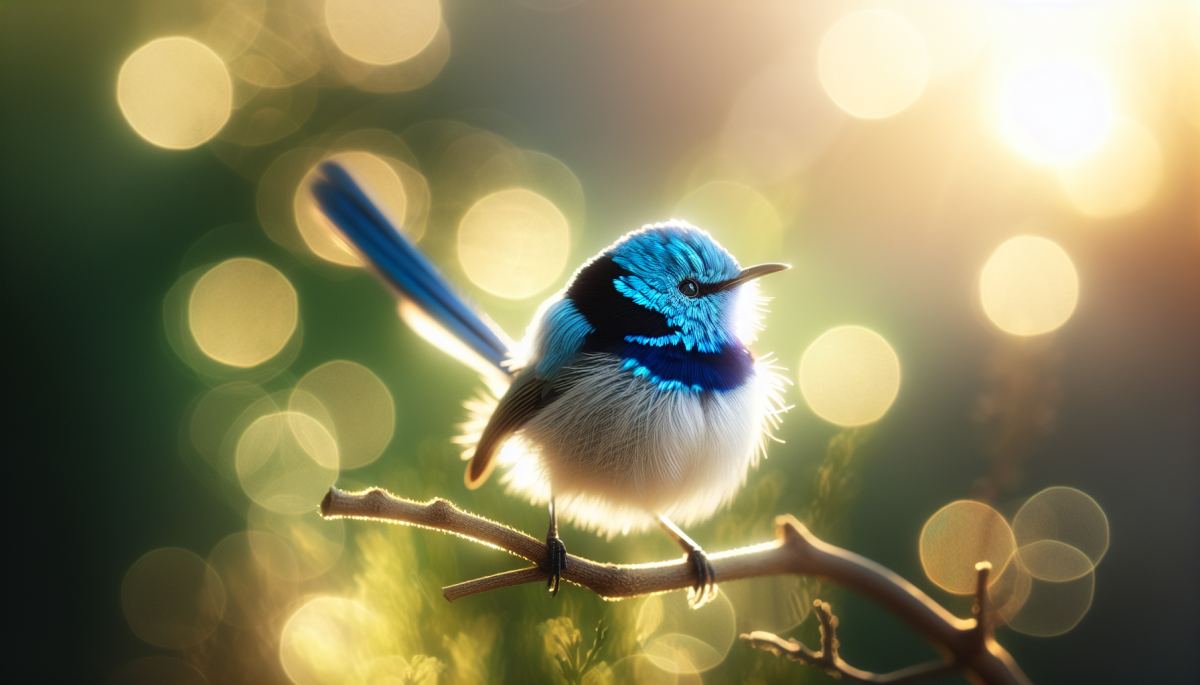
Researchers tracking a population of superb fairywrens in Canberra's Australian National Botanic Gardens have found that climate-driven changes to weather patterns are beginning to erode the conditions the species depends on to survive and reproduce. The projection that follows from their data is stark: without intervention or dramatic shifts in trajectory, the birds could be extinct within 30 to 40 years. A common garden bird, beloved and abundant, potentially gone within a single human lifetime.
What makes this study particularly significant is its methodological depth. Weekly observations spanning nearly 30 years give researchers something rare in ecological science: a long enough baseline to separate signal from noise, to distinguish a bad season from a structural decline. Short-term population studies can miss slow-moving catastrophes entirely. This one did not.
The mechanism here is not a single dramatic event, no wildfire sweeping through a habitat, no invasive predator arriving overnight. Instead, the fairywren's situation illustrates what climate scientists sometimes call "death by a thousand cuts," the gradual misalignment between a species' biological rhythms and the environmental cues it evolved to rely on.
Fairywrens are highly sensitive to temperature and rainfall patterns that govern insect availability, nesting timing, and chick survival rates. As Australia's climate becomes hotter and drier in ways that are increasingly well-documented, those patterns are shifting. The birds' breeding cycles, honed over millennia, are falling out of sync with the conditions they were calibrated for. This phenomenon, known as phenological mismatch, has been observed across species worldwide, from migratory birds in Europe to amphibians in North America, but it tends to receive less public attention than more visible forms of habitat destruction.
The Canberra data adds a crucial dimension to this global picture. Because the study site is a managed botanic garden rather than a remote wilderness, it controls for many of the confounding variables that complicate field ecology. Habitat loss, direct human disturbance, and land clearing are not the primary stressors here. Climate is. That isolation of the variable makes the findings harder to dismiss.
The fairywren's story is not just about one species. It functions as a kind of canary in a very large coal mine. Superb fairywrens occupy a specific niche in Australian ecosystems, feeding on insects, dispersing through fragmented suburban and semi-rural landscapes, and serving as prey for larger animals. Their decline would ripple outward in ways that are difficult to fully model but easy to underestimate.
There is also a second-order consequence worth considering carefully: the psychological and political dimension of losing common species. Conservation attention and funding have historically concentrated on rare or charismatic megafauna. When a creature as familiar and widespread as the superb fairywren begins disappearing, it forces a reckoning with a more uncomfortable truth, that climate change is not only threatening the exotic and the distant. It is restructuring the ordinary. The birds in your backyard. The soundtrack of a suburban morning.
That shift in perception could, paradoxically, become a driver of broader public engagement with climate policy. Or it could produce a kind of grief-induced paralysis, a sense that if even the common things cannot be saved, the situation is already beyond recovery. Which of those responses dominates will depend significantly on how scientists, journalists, and policymakers choose to frame what the data is telling us.
Australia has already lost more mammal species to extinction than any other continent in the modern era. The fairywren's trajectory suggests that birds may be entering a similar chapter, not through sudden catastrophe but through the slow, compounding pressure of a climate that no longer matches the world these creatures were built for. The botanic gardens in Canberra will keep their weekly counts. The question is whether the numbers will keep falling before anyone decides that a common bird is worth an uncommon effort to save.
References
- BirdLife Australia (2023) — Superb Fairywren Species Profile
- Parmesan, C. & Yohe, G. (2003) — A globally coherent fingerprint of climate change impacts across natural systems
- Both, C. et al. (2006) — Climate change and population declines in a long-distance migratory bird
- Woinarski, J. et al. (2015) — Ongoing unraveling of a continental fauna: Decline and extinction of Australian mammals since European settlement
- Australian Bureau of Meteorology (2023) — State of the Climate 2022

Discussion (0)
Be the first to comment.
Leave a comment