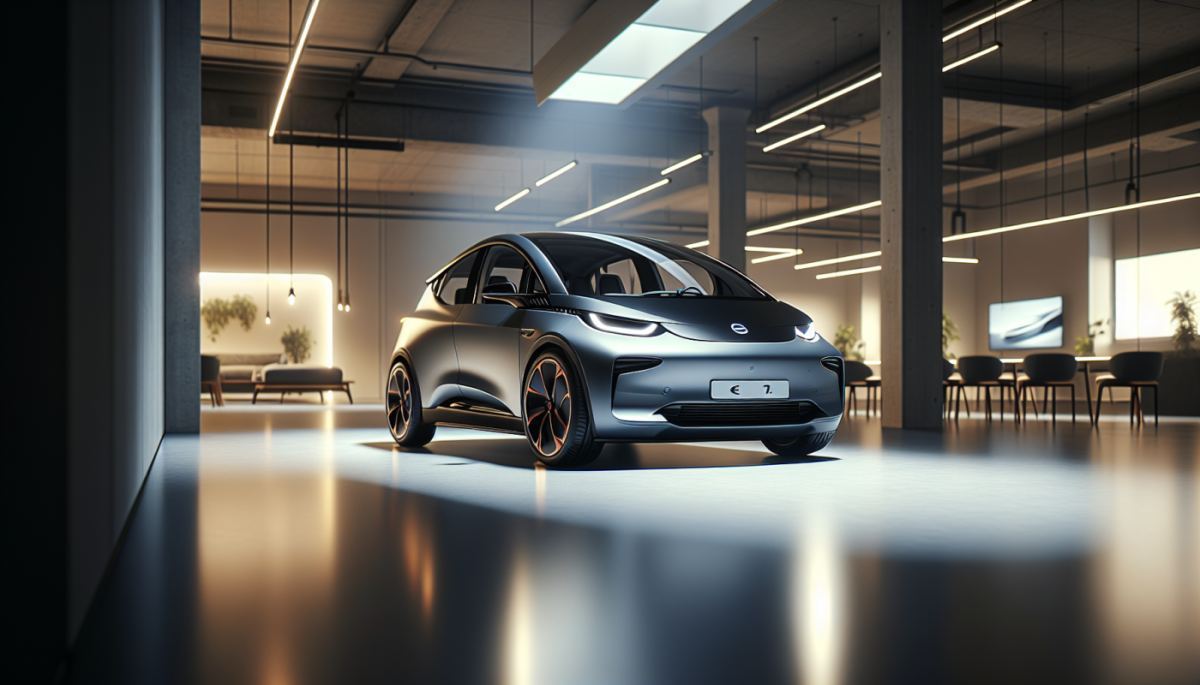
Europe's car industry has spent the better part of a decade convincing itself that the future of electric mobility looks like a Tesla — sleek, software-laden, and priced accordingly. Then along came a small, stripped-down electric city car retailing for €4,900, and a surprising number of Europeans started buying it.
The vehicle in question is the Citroën ë-C3 and its close cousin, the Dacia Spring, part of a growing category of no-frills urban EVs that are challenging the assumption that going electric requires going upmarket. At roughly the price of a used compact from the early 2010s, these cars offer something the industry had largely stopped trying to sell: basic, reliable transportation that happens to run on electricity. No giant touchscreen. No over-the-air software subscriptions. No ambient lighting. Just a motor, a battery, four wheels, and a seat.
The appeal is not hard to understand. Across Europe, the median household is not shopping for a €45,000 crossover. Fuel costs have remained stubbornly high since the energy shocks of 2022, and urban congestion charges — already in place in London and expanding across other major cities — are quietly making internal combustion ownership more expensive by the year. For a city dweller who commutes 20 miles a day and parks on the street, a cheap, small EV is not a compromise. It is a rational economic decision.
What makes a sub-€5,000 electric car viable now, when it wasn't five years ago, comes down to battery chemistry and supply chain geography. The Dacia Spring, manufactured in China by Renault's partner Dacia, uses lithium iron phosphate (LFP) battery cells, which are cheaper to produce than the nickel-manganese-cobalt chemistries that dominate premium EVs. LFP batteries carry less energy per kilogram, which limits range, but for a car designed to travel 100 to 150 miles between charges in an urban environment, that tradeoff is entirely acceptable.
The manufacturing location matters too. Chinese production costs remain significantly lower than European equivalents, which is precisely why the European Union moved to impose tariffs on Chinese-made EVs in 2024 — a policy decision that now hangs directly over the affordable EV segment. The Spring, built in China, was hit with additional import duties that pushed its effective price higher in some markets. The tension here is real: the EU wants to accelerate EV adoption to meet its 2035 combustion engine phaseout, but its trade defense mechanisms are making the most accessible EVs more expensive. That is not a contradiction that resolves itself easily.
Citroën's response has been to develop the ë-C3 for European production, partly insulating it from tariff exposure while keeping costs low through aggressive parts simplification. The company has been explicit that the car is designed around what can be removed, not what can be added.
The mainstream auto press tends to cover affordable EVs as a curiosity — a footnote to the real story of premium electrification. That framing misses what could be a significant structural shift. If low-cost EVs capture even a modest share of Europe's first-time buyer and urban replacement market, the downstream effects on charging infrastructure, grid demand patterns, and the used car economy could be substantial.
Consider the charging question. Owners of €4,900 cars are unlikely to install home wallboxes costing €800 or more. They will depend on public charging, which in most European cities remains patchy and unreliable. A surge in budget EV ownership without a corresponding investment in accessible public charging creates a frustration loop that could stall adoption precisely among the price-sensitive buyers these vehicles are meant to reach.
There is also a fleet renewal dynamic worth tracking. Europe's car parc — the total stock of vehicles on the road — turns over slowly. Cheap EVs accelerate the retirement of older, higher-emission vehicles among lower-income households, which has genuine air quality benefits in dense urban areas. That is a public health externality that rarely appears in EV market analyses but is arguably more significant than the marginal emissions savings from selling a second Tesla to a household that already owns one.
The industry's bet on premium electrification was always a bet on a particular kind of consumer. The €4,900 car is a reminder that most consumers are a different kind entirely — and that the energy transition, if it is going to be a transition rather than a luxury upgrade, will eventually have to meet them where they are.
Discussion (0)
Be the first to comment.
Leave a comment