XPeng just posted its first profitable quarter, and the instinct across financial media has been to reach for the familiar playbook: more units shipped, better factory utilization, margins finally catching up to ambition. That framing is not wrong, exactly. It is just incomplete in ways that matter.
The Guangzhou-based automaker has spent years being written off as a Chinese Tesla wannabe, perpetually burning cash while chasing a market dominated by BYD's sheer volume and Tesla's brand gravity. But the profit milestone, when examined closely, is less about how many cars rolled off the line and more about what those cars are running on. XPeng has been quietly rebuilding its technology stack from the ground up, and the financial results are beginning to reflect that architectural bet.
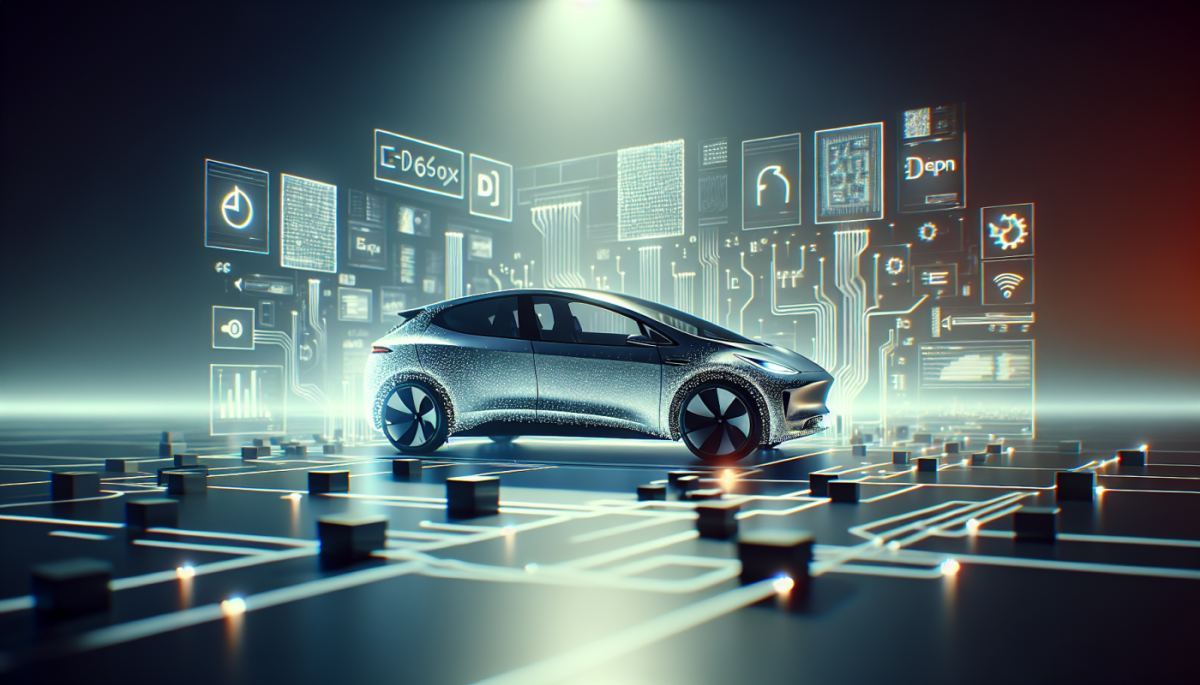
Most automakers, including legacy Western brands scrambling toward electrification, still treat software as a feature layered on top of hardware. XPeng has been moving in the opposite direction, treating the vehicle itself as a node in a larger intelligent system. Its in-house developed Turing AI chip, its end-to-end autonomous driving architecture, and its over-the-air update infrastructure are not add-ons. They are the product. This distinction has enormous implications for cost structure. When a company controls its own silicon and software, it is not paying margin to Nvidia, Mobileye, or Bosch at every unit. That savings compounds as volume grows, but the leverage point is the architecture, not the assembly line.
This is why the volume narrative, while directionally accurate, misses the deeper signal. XPeng's gross margin improvement is partly a function of selling more cars, yes. But it is also a function of selling cars where an increasing share of the value, and therefore the revenue, sits in software and services that carry dramatically higher margins than stamped steel and battery packs. The company has been explicit about its ambitions to monetize its XNGP advanced driver assistance system through subscription tiers, a model that transforms the vehicle from a one-time transaction into a recurring revenue relationship.
The systems-level consequence here extends well beyond XPeng's own balance sheet. If a mid-tier Chinese EV maker can reach profitability by owning its full technology stack rather than by achieving BYD-scale volumes, it changes the calculus for every other player in the market. It suggests that vertical integration of AI and silicon, not just battery chemistry or manufacturing efficiency, is becoming a primary competitive moat.
For Western automakers, this is a quietly alarming development. General Motors, Ford, and Volkswagen have all made high-profile investments in software-defined vehicle platforms, but they are doing so while simultaneously managing legacy dealer networks, union contracts, and product lines that span combustion and electric. XPeng carries none of that institutional weight. It was designed, from its founding in 2014, around the assumption that the car is a computer. That assumption is now paying dividends in a very literal sense.
There is also a geopolitical feedback loop worth watching. As the European Union and the United States impose tariffs on Chinese EVs, companies like XPeng face pressure to either absorb margin hits or accelerate international expansion through licensing, joint ventures, or manufacturing partnerships outside China. XPeng already has a supply agreement with Volkswagen, which is licensing its EV platform and software for models destined for the Chinese market. That deal is a preview of a possible future where Chinese software architecture quietly powers vehicles wearing European badges, a dynamic that trade policy alone cannot easily contain.
The deeper question the industry now faces is whether profitability built on software control is more durable than profitability built on scale. BYD's model depends on volume and relentless cost compression. XPeng's emerging model depends on intellectual property and recurring services. Both can work. But only one of them gets harder to replicate as it matures. If XPeng continues to compound its AI and chip capabilities while its competitors are still negotiating software licensing deals, the gap between those two models will widen in ways that quarterly earnings reports will only partially capture.
The first profitable quarter is a milestone. What it points toward is more interesting than the milestone itself.
References
- Reuters Staff (2025) — XPeng posts first-ever quarterly profit as EV sales surge
- Blum, J. (2024) — XPeng and Volkswagen deepen EV platform partnership
- Shepardson, D. (2024) — U.S. raises tariffs on Chinese electric vehicles to 100 percent
- Ewing, J. (2024) — Europe's EV tariffs on China: what they mean for the industry
Discussion (0)
Be the first to comment.
Leave a comment