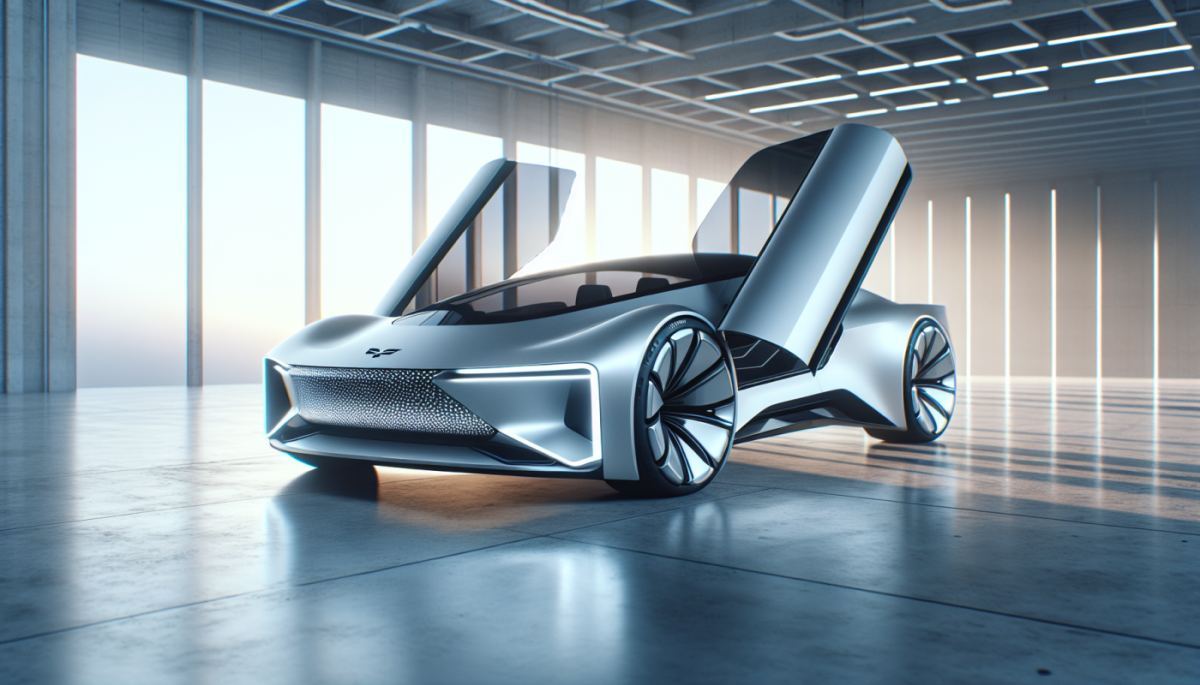
Something quiet is happening on American streets, and it moves at about 25 miles per hour. Wink Motors, a small but increasingly watched player in the low-speed vehicle space, has just rolled out significant upgrades to what the company calls the only true street-legal electric micro-car available in the United States. The timing is not accidental. It arrives at a moment when millions of Americans are quietly reconsidering whether a 4,000-pound vehicle is really what their daily life demands.
Wink's pitch is deceptively simple: retain the enclosed, weather-protected, road-legal experience of a conventional car, but strip away everything that makes car ownership expensive and complicated. No massive battery pack burning through rare earth materials. No insurance premiums calibrated for highway speeds. No dealer markups on a vehicle that costs more than many people's annual salary. The upgraded Wink micro-car slots into the federal "low-speed vehicle" category, a classification that allows street-legal operation on roads posted at 35 mph or under, without the full regulatory burden placed on conventional automobiles.
That regulatory niche is more significant than it first appears. Low-speed vehicles, or LSVs, must meet a specific set of Federal Motor Vehicle Safety Standards, including headlights, mirrors, seat belts, and a windshield, but they are exempt from the crashworthiness standards that add enormous cost and weight to traditional cars. The result is a vehicle that is genuinely legal, genuinely enclosed, and genuinely affordable, occupying a lane that neither golf carts nor full EVs have managed to claim.
The case for micro-mobility in the United States has always crashed against the same wall: American infrastructure was built for speed and distance. But that framing obscures a more granular reality. Studies of American driving patterns consistently show that the vast majority of daily trips are short. The U.S. Department of Transportation has found that roughly 60 percent of all vehicle trips in the country are under six miles. For those trips, a vehicle capable of 25 mph with a modest electric range is not a compromise. It is, arguably, the correct tool.
What Wink is betting on is that a meaningful slice of the American driving public has been underserved by the binary choice between a full-size car and a bicycle. E-bikes have surged in popularity, with sales outpacing electric cars in recent years, but they leave riders exposed to weather and traffic in ways that limit their appeal for older drivers, people with mobility challenges, or anyone carrying groceries in January. Golf carts fill some of that gap in retirement communities and resort towns, but they carry a recreational stigma and often lack the safety features that make street use comfortable.
The upgraded Wink attempts to thread that needle by leaning into the car-like experience. Enclosed cabin. Actual doors. A vehicle that does not require its driver to wear a helmet or accept the vulnerability of open-air travel. The upgrades, while not exhaustively detailed in early coverage, signal that the company is iterating seriously, responding to user feedback rather than simply shipping a novelty.
The deeper story here is not really about one small company's product refresh. It is about what happens to urban and suburban transportation systems if vehicles like this achieve even modest scale. A meaningful shift toward low-speed, short-range electric vehicles would ripple outward in ways that are easy to underestimate. Parking infrastructure, designed for full-size vehicles, becomes dramatically more efficient when cars shrink. Insurance markets face pressure to develop new product categories. Municipal planners in cities that have resisted dedicated low-speed lanes may find the political calculus shifting as constituents arrive at city hall in enclosed micro-cars rather than on bicycles.
There is also a feedback loop embedded in the economics. If LSVs reduce the total cost of personal transportation significantly, households that currently operate two full-size vehicles might rationally shift one of those to a micro-car, reducing household transportation costs and potentially freeing capital for other spending. That is not a trivial effect at scale.
The resistance will come, as it always does, from the systems built around the status quo. Dealership networks, auto insurance pricing models, road design standards, and the cultural weight of the American car as status object all push back against the micro-car's logic. Wink is not going to dismantle any of that alone. But the company is placing a considered bet that the edges of the transportation system are where change actually begins, and that enough Americans living in the right zip codes, driving the right distances, are ready to stop paying for more car than they need.
If that bet pays off even partially, the more interesting question will not be whether micro-cars succeeded, but which parts of the old system were the first to quietly adapt around them.
Discussion (0)
Be the first to comment.
Leave a comment