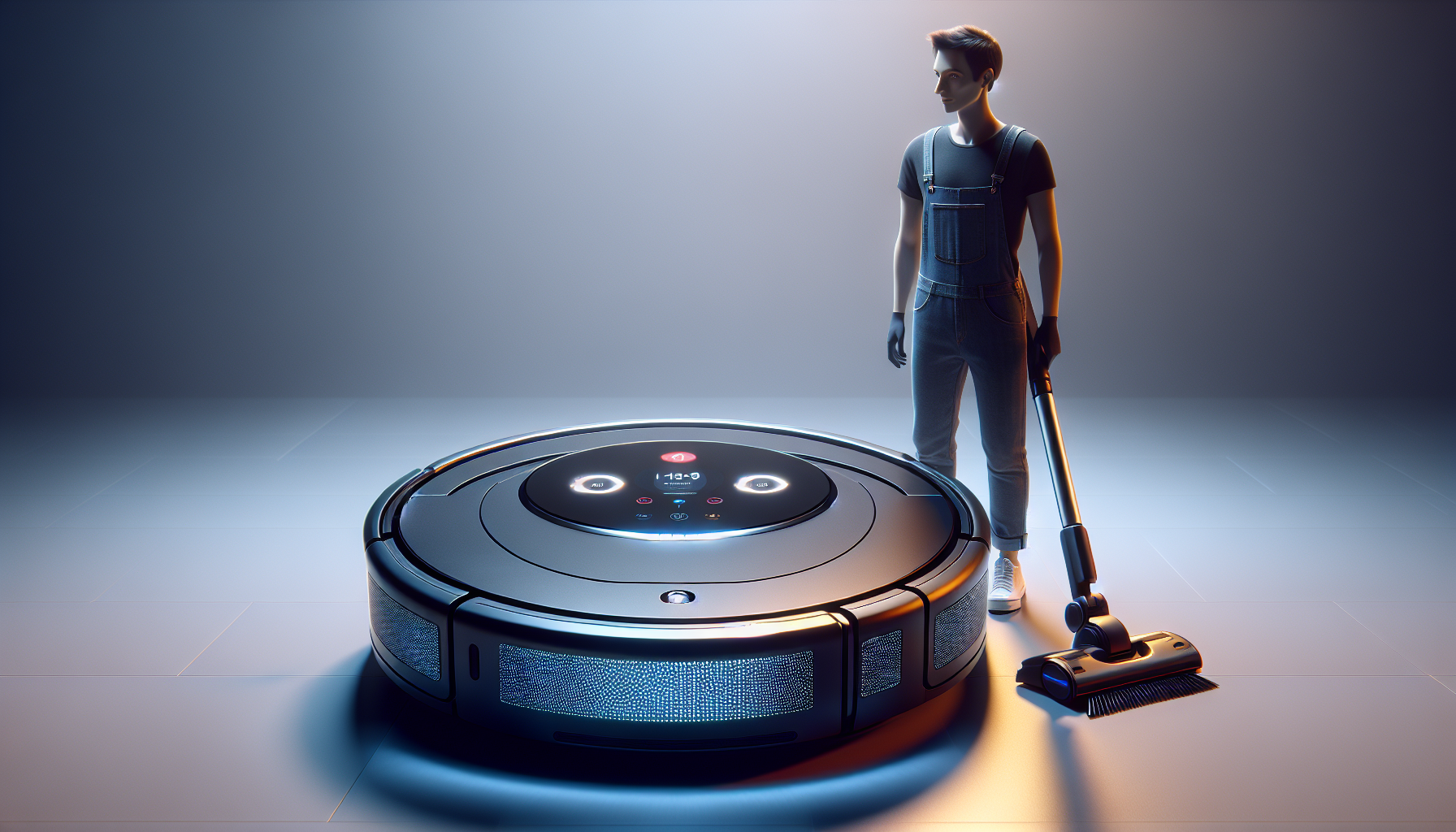
The timing feels almost theatrical. Amazon's Big Spring Sale hasn't even officially started, and already the discounts are arriving like an early tide, pulling prices on premium robot vacuums down by hundreds of dollars. Dreame's L10s Pro Ultra, a device that once carried a list price placing it firmly in luxury territory, is now nearly $1,000 off. Ecovacs' Deebot X8 and X9 Pro Omni have dropped to $599 and $679, representing discounts of $501 and $621 respectively. These are not modest markdowns. These are the kinds of numbers that signal something structural is happening beneath the surface of consumer electronics retail.
To understand why, it helps to step back from the sale tags and look at the competitive architecture of the robot vacuum industry. For years, iRobot and its Roomba line held something close to a cultural monopoly on the category. The brand became a verb in some households. But Chinese manufacturers, Dreame and Ecovacs chief among them, have spent the better part of a decade engineering their way into the premium tier, matching and in some cases exceeding the technical capabilities of Western incumbents at lower base prices. When those already-competitive prices then get slashed by four-figure amounts during retail events, the pressure on the entire market intensifies dramatically.
Deep pre-sale discounts are rarely just generosity. They reflect inventory strategy, competitive positioning, and sometimes a quiet acknowledgment that a product cycle is turning. When a retailer or manufacturer drops a premium robot vacuum by nearly $1,000 before a major sale event even begins, it suggests one of a few things: stock needs to move, a newer model is coming, or the brand is willing to sacrifice margin to capture market share during a high-attention window. Possibly all three at once.
Amazon's role here is worth examining carefully. The company has its own line of smart home devices and a vested interest in the broader ecosystem of connected home products. Hosting aggressive discounts on robot vacuums from Dreame and Ecovacs drives traffic, builds basket size, and deepens customer reliance on Amazon's retail infrastructure. The platform benefits whether Dreame wins or Ecovacs wins, as long as the transaction happens on Amazon. This is the quiet leverage of marketplace dominance: the house takes a cut regardless of which player at the table wins the hand.
For consumers, the short-term arithmetic looks straightforward. A device that automates a genuinely tedious household task is now accessible at a price point that would have seemed implausible two years ago. But the second-order effects are more interesting and less discussed.
When premium hardware becomes cheap quickly, it compresses the perceived value of the entire category. Consumers who buy a $400 robot vacuum today will be reluctant to pay $800 for an upgrade in three years, even if the technology has meaningfully advanced. This is the innovator's dilemma playing out in real time on a product shelf: aggressive discounting accelerates adoption but simultaneously trains buyers to wait for the next sale, eroding the pricing power that funds future research and development.
There is also a data dimension that rarely surfaces in coverage of these sales. Modern robot vacuums, particularly the high-end models from Dreame and Ecovacs, are sophisticated mapping and sensing platforms. They build detailed floor plans of homes, track movement patterns, and in some configurations integrate with broader smart home systems. As these devices become cheaper and more widespread, the volume of spatial and behavioral data they generate grows substantially. Who owns that data, how it is stored, and what it might eventually be used for are questions that consumer protection frameworks have not yet caught up with.
The robot vacuum price war is, on its surface, a story about a good deal on a convenient appliance. Underneath, it reflects the maturation of a hardware category, the strategic logic of platform retail, and the slow normalization of ambient data collection inside the home. The sale ends. The vacuum keeps mapping.




Discussion (0)
Be the first to comment.
Leave a comment