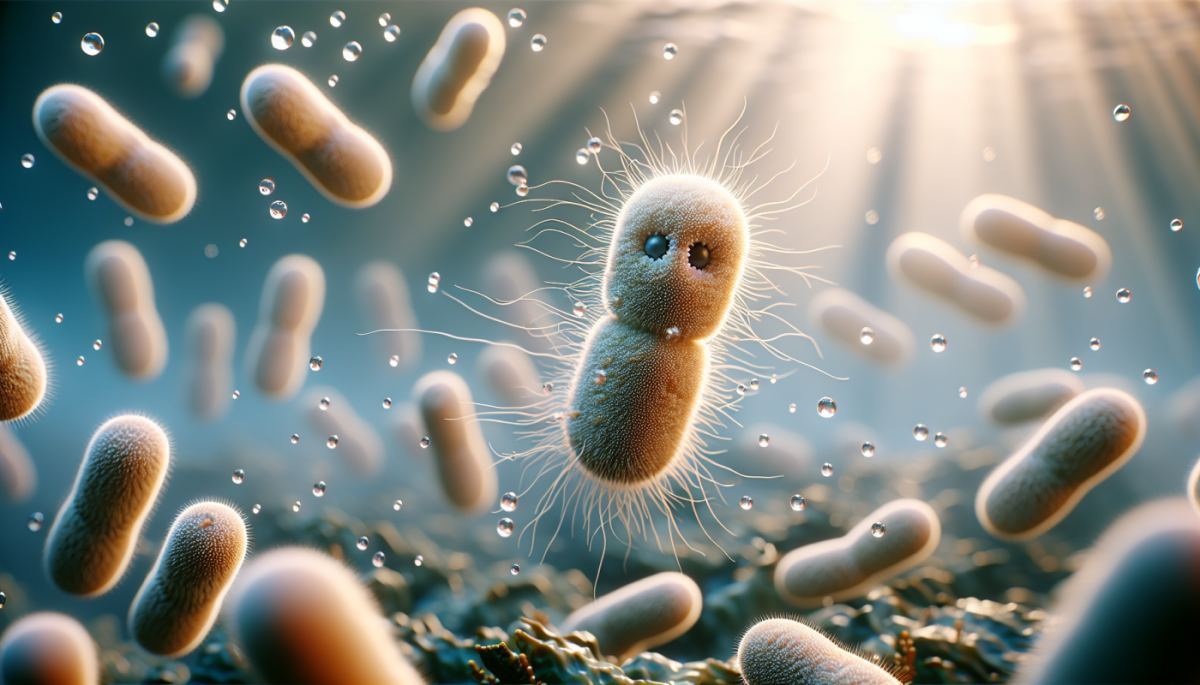
When scientists model the future of ocean chemistry under climate change, they tend to focus on the big, visible disruptions: coral bleaching, dead zones, acidification. What rarely makes the headlines is the invisible microbial machinery humming beneath the surface, processing nitrogen, cycling iron, and quietly keeping marine food webs from collapsing. A new finding about one of the ocean's most abundant microorganisms suggests that machinery may be more resilient than anyone expected, and that resilience could reshape how we think about ocean productivity in a warmer world.
Nitrosopumilus maritimus is not a household name, but it probably should be. This single-celled archaeon belongs to a group called ammonia-oxidizing archaea, and it performs one of the most consequential chemical reactions in the ocean: converting ammonia into nitrite, the first step in a process called nitrification. That reaction sits at the foundation of the marine nitrogen cycle, which in turn governs how much biological productivity the ocean can support. Without it, the nutrients that phytoplankton need to grow would accumulate in the wrong forms, in the wrong places, and the cascading effects on fish populations, carbon sequestration, and ultimately the global climate system would be severe.
Researchers studying N. maritimus expected warming deep-sea waters to spell trouble for the microbe. Iron is already scarce in much of the open ocean, and warmer temperatures were assumed to compound that stress, pushing the organism toward metabolic failure. What they found instead was something more surprising: N. maritimus appears capable of adapting to warmer, iron-limited conditions by becoming more efficient in how it uses iron. Rather than requiring more of a resource that is becoming harder to find, the microbe has found a way to do more with less.
To understand why this matters, it helps to appreciate just how tightly iron constrains life in the ocean. Iron is a critical component of the enzymes that drive nitrogen metabolism, and in vast stretches of the Pacific and Southern Ocean, it is so scarce that it limits biological productivity more than any other nutrient. This is the logic behind iron fertilization experiments, the controversial idea that seeding the ocean with iron could trigger phytoplankton blooms large enough to draw down atmospheric carbon dioxide.
N. maritimus already operates at the extreme low end of iron availability. It has evolved over millions of years in the deep ocean, where iron concentrations can be vanishingly small. The new findings suggest that as ocean temperatures rise and stratification increases, further reducing the upwelling of iron-rich deep water, this microbe may not simply decline. It may instead tighten its metabolic efficiency and hold its ecological position.
That adaptability carries significant second-order consequences. If N. maritimus sustains nitrification rates even as conditions deteriorate, it could act as a stabilizing buffer in ocean nitrogen cycles at precisely the moment when other parts of the marine system are destabilizing. Phytoplankton communities, which are far less metabolically flexible, depend on the nitrogen forms that N. maritimus helps produce. A resilient archaeon at the base of the nutrient cycle could mean the difference between a marine ecosystem that degrades gradually and one that tips more abruptly.
It would be a mistake to read this finding as reassurance that the ocean will simply adapt its way out of trouble. Resilience in one node of a complex system does not mean resilience in the system as a whole. Even if N. maritimus maintains its function, warming waters will continue to alter the physical structure of the ocean, reducing mixing, shifting currents, and changing where nutrients end up. The microbe may keep doing its job, but the job may matter less if the nutrients it produces cannot reach the surface waters where phytoplankton live.
There is also the question of evolutionary timescale. The efficiency gains observed in N. maritimus likely reflect existing genetic flexibility rather than rapid evolution, which means there are limits to how far that adaptation can stretch. If warming accelerates beyond what current projections anticipate, the buffer the microbe provides could erode faster than researchers expect.
What the finding does offer is a more nuanced picture of ocean resilience, one that takes microbial life seriously as a variable rather than treating it as a fixed background condition. The deep ocean is not a passive stage on which climate change performs. It is a living system, and some of its smallest actors may have more agency in shaping the outcome than the models currently assume. Whether that agency is enough to matter will depend on choices made far above the surface.
References
- Martens-Habbena et al. (2009) — Ammonia oxidation kinetics determine niche separation of nitrifying Archaea and Bacteria
- Moore et al. (2013) — Processes and patterns of oceanic nutrient limitation
- Hutchins & Tagliabue (2024) — Feedbacks between climate change and ocean micronutrient cycling
- Eby et al. (2009) — Lifetime of Anthropogenic Climate Change

Discussion (0)
Be the first to comment.
Leave a comment