
The drug was built to fight cancer. What researchers found instead — or rather, in addition — has quietly shifted the conversation about how aging works at a molecular level. A next-generation cancer therapeutic, tested in yeast, has demonstrated a striking ability to extend lifespan and slow biological aging by acting on one of the most fundamental growth-control systems in living cells. The implications reach far beyond oncology.
The pathway in question is TOR, short for Target of Rapamycin, a molecular signaling hub that cells use to decide whether to grow, divide, or conserve resources. When nutrients are abundant, TOR accelerates growth. When they are scarce, it pulls back, triggering a kind of cellular thrift mode that has long been associated with longevity. Caloric restriction, one of the most reliably life-extending interventions ever studied in animals, works largely through this mechanism. The new drug appears to tap into the same lever, dialing down TOR activity and mimicking some of the biological effects of eating less without requiring the organism to actually go hungry.
What makes this finding more than a footnote in aging research is the unexpected discovery about agmatinases, a class of enzymes that had not previously been understood as major players in longevity biology. The researchers found that agmatinases help regulate the balance of metabolites that feed into the TOR pathway. When agmatinase activity was disrupted, the careful equilibrium that keeps TOR in check was thrown off. This suggests that the body's ability to age gracefully, or not, may depend in part on enzymatic machinery that most scientists were not paying close attention to.
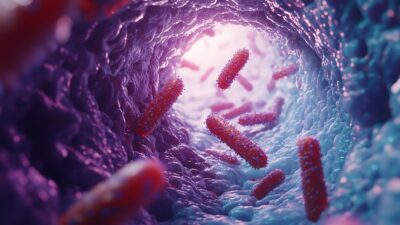
Perhaps the most consequential thread running through this research is what it implies about diet and the microbiome. The metabolites that agmatinases process are not produced solely by the body's own cells. They are also generated by gut bacteria and influenced by what a person eats. Agmatine, the compound these enzymes act upon, is found in fermented foods, aged cheeses, wine, and certain meats. It is also synthesized by a range of gut microbes. This means the microbial ecosystem living inside the digestive tract may be quietly modulating a pathway that determines how fast cells age.
This is not an entirely new idea. Research over the past decade has increasingly linked gut microbiome composition to inflammation, metabolic health, and even neurological function. But the specific mechanism identified here, where microbial metabolites influence TOR signaling through agmatinase activity, adds a new layer of biochemical specificity to that broader story. It moves the conversation from correlation to a plausible causal chain.
The second-order consequence worth watching is what this means for how cancer drugs get developed and evaluated going forward. Oncology trials are designed to measure tumor response, survival rates, and toxicity. They are not designed to detect subtle shifts in cellular aging. If a drug that targets growth pathways in cancer cells is simultaneously altering aging biology in healthy tissue, that effect would almost certainly go unnoticed in a standard clinical trial. The yeast model used in this study is a deliberately simplified system, but it raises a legitimate question: how many drugs already in use, or already approved, are doing something to the aging process that nobody has thought to measure?
Yeast is not a human being, and the distance between a lifespan extension in Saccharomyces cerevisiae and a meaningful anti-aging effect in a person is vast. The TOR pathway is conserved across species, which is why yeast remains a useful model, but the complexity of human metabolism, immune function, and tissue-specific gene expression means that results rarely translate cleanly. Researchers will need to move into mammalian models before any clinical relevance can be seriously claimed.
Still, the finding arrives at a moment when the biology of aging is attracting serious institutional and commercial attention. Longevity-focused research programs at universities and biotech companies have grown substantially over the past five years, and the search for druggable targets within aging pathways has become a legitimate scientific priority rather than a fringe pursuit. A cancer drug that moonlights as an aging modulator, acting through a newly understood enzymatic mechanism shaped by diet and gut bacteria, fits neatly into that expanding research agenda.
The more interesting long-term question may not be whether this particular drug ever reaches an anti-aging clinic. It is whether the discovery of agmatinases as regulators of TOR signaling opens a door to a new class of interventions, ones designed from the start not to kill cancer cells, but to keep healthy cells from aging faster than they should.
References
- Fontana et al. (2010) — Extending Healthy Life Span: From Yeast to Humans
- Saxton & Sabatini (2017) — mTOR Signaling in Growth, Metabolism, and Disease
- Johnson et al. (2013) — mTOR Is a Key Modulator of Ageing and Age-Related Disease
- Sonnenburg & Bäckhed (2016) — Diet–Microbiota Interactions as Moderators of Human Metabolism


Discussion (0)
Be the first to comment.
Leave a comment