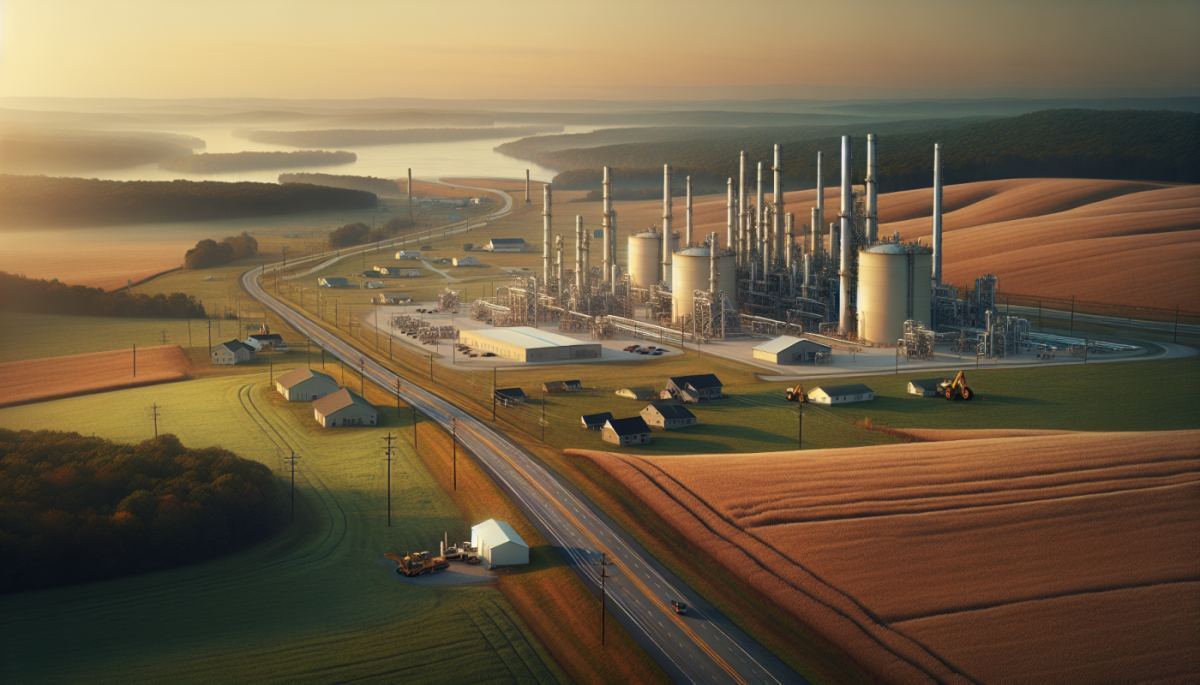
Fluvanna County, Virginia, sits in a quiet stretch of the state between the historic weight of Monticello and the urban pull of Richmond. It is the kind of place where local government decisions carry outsized consequence, where a single zoning vote can reshape a community's economic trajectory for decades. When county supervisors recently approved a land use permit for a proposed natural gas power plant, they handed a victory to one side of a divide that has been quietly widening across rural America for years.
Brian Faulknier, a 54-year-old grandfather, captured the pro-plant sentiment with a directness that is hard to dismiss. He wants the tax revenues. He is not losing sleep over the natural gas supply chain, including the hydraulic fracturing that brings the fuel to the surface. For residents in counties where the property tax base is thin and school budgets are perpetually strained, a large industrial facility promising steady tax contributions is not an abstraction. It is a school bus. It is a road repaved. It is a budget that does not require painful cuts.
That calculus is real, and it deserves to be taken seriously rather than waved away by critics who do not live with the fiscal constraints that shape daily governance in rural Virginia.
But the approval also reflects something more structurally complicated than a simple jobs-versus-environment debate. Natural gas power plants are long-lived infrastructure. A facility permitted today will likely operate well into the 2040s or beyond, locking in both the emissions profile and the economic dependency that comes with it. Fluvanna County would not just be gaining a tax base. It would be tethering its fiscal health to the continued operation of fossil fuel infrastructure at precisely the moment when state and federal energy policy is, however unevenly, moving in a different direction.
Virginia's Clean Economy Act, passed in 2020, set the state on a path toward carbon-free electricity by 2045 for large utilities. That statutory backdrop creates a genuine tension: a county approving a gas plant today is betting that either the state's clean energy timeline will slip, that the plant will be granted exceptions, or that the economic benefits will outlast the political and regulatory pressure. Any one of those bets might pay off. All three simultaneously is a riskier proposition.
The second-order effect worth watching here is what happens to Fluvanna's fiscal position if that bet goes wrong. Communities that become dependent on a single large industrial taxpayer are vulnerable in ways that are not always visible at the moment of approval. If the plant faces early retirement pressure due to carbon regulations, or if natural gas prices make the facility economically uncompetitive before its design life ends, the county could find itself with a stranded asset on its tax rolls and a budget built around revenue that evaporates faster than anticipated. That is not a hypothetical. It is a pattern that has played out in coal-dependent counties across Appalachia, where the fiscal cliff arrived faster than local governments had planned for.
The deeper issue is that rural counties like Fluvanna are being asked to make 30-year infrastructure decisions inside a policy environment that cannot guarantee 10-year stability. The federal incentive landscape for clean energy shifted dramatically with the Inflation Reduction Act. State-level clean energy mandates are real but contested. The economics of utility-scale solar and battery storage are moving faster than most local planning processes can track.
Opponents of the plant in Fluvanna are not wrong to raise concerns about air quality, water resources, and the long-term direction of energy markets. But they are often speaking a language, and citing a timeline, that does not map onto the immediate fiscal pressures that Faulknier and his neighbors are navigating. That communication gap is itself a systems problem. When the people bearing the near-term costs of energy transition are not the same people capturing its long-term benefits, local approval processes become battlegrounds rather than deliberative forums.
Fluvanna County's vote is one data point in a much larger pattern. Across the rural South and Midwest, communities with limited economic alternatives are approving fossil fuel infrastructure while state capitals and federal agencies push in the opposite direction. The resulting patchwork is not irrational. It is the predictable output of a system where the costs and benefits of energy transition are distributed unevenly, and where no institution has yet figured out how to make the transition fiscally whole for the places asked to bear its burdens first.
The question Fluvanna will eventually have to answer is not whether the plant was a reasonable choice in 2024. It is whether the county will have the fiscal flexibility to adapt when the energy landscape it was betting on looks different than expected.
References
- Virginia State Corporation Commission (2020) — Virginia Clean Economy Act Overview
- Konidari et al. (2023) — Stranded Assets and Energy Transition Risk in U.S. Communities
- Raimi et al. (2022) — Transitioning Coal Communities: Fiscal Risks and Policy Options
- Larson et al. (2021) — Net-Zero America: Potential Pathways, Infrastructure, and Impacts
Discussion (0)
Be the first to comment.
Leave a comment