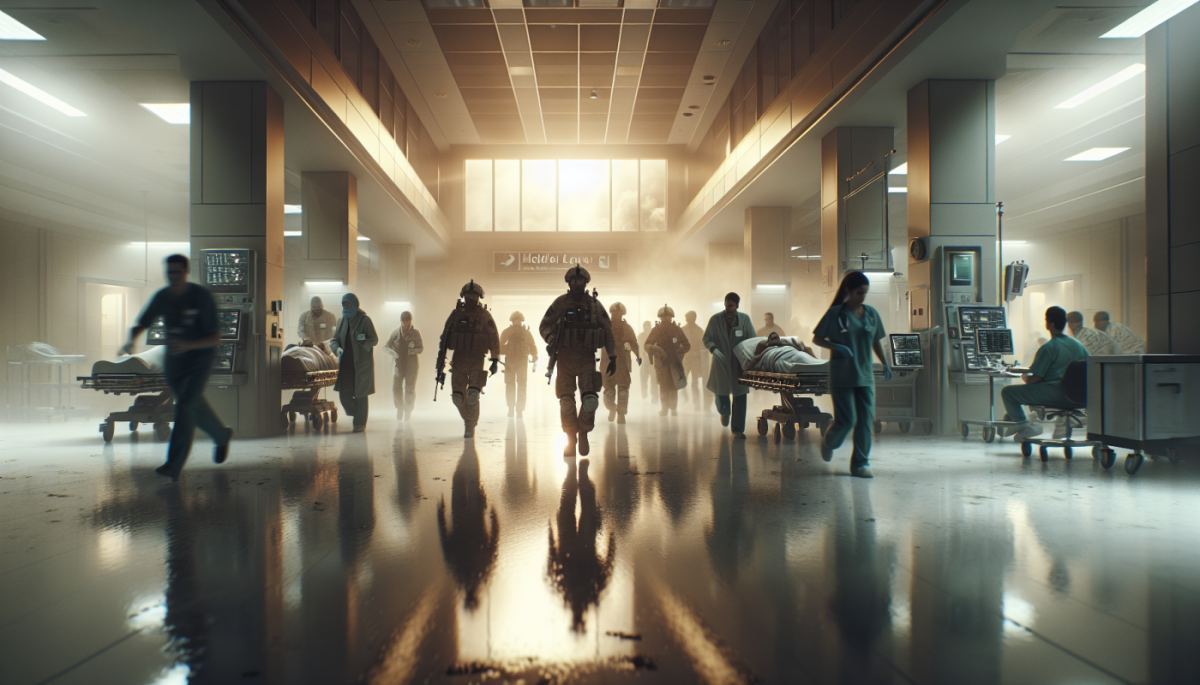
The injuries arrive faster than hospitals can absorb them. The displaced move faster than supply chains can follow. And the public health risks accumulate quietly in the background, building pressure that no ceasefire agreement will instantly relieve. More than ten days into the latest escalation of conflict across the Middle East, the World Health Organization is sounding an alarm that goes beyond casualty counts: the region's health infrastructure is fracturing under compounding stress, and the damage will outlast the fighting itself.
The numbers released by national health authorities are staggering in their own right. Iran reports more than 1,300 deaths and 9,000 injuries. Lebanon has recorded at least 570 deaths and more than 1,400 injuries. Israel reports 15 deaths and 2,142 injuries. These figures, taken together, represent tens of thousands of people requiring medical attention simultaneously across a region where health systems were already operating under significant strain before the first missile of this escalation was fired.
But the raw casualty data tells only part of the story. What the WHO is tracking with particular concern is the pattern of attacks on health care facilities themselves, a phenomenon that has become a grim constant in modern conflict. When hospitals become targets, or when they sit inside active conflict zones, the damage is not linear. A single destroyed emergency ward does not simply remove its own capacity from the system. It redirects patients to neighboring facilities, overwhelms those facilities, and begins a cascade that can collapse an entire regional health network within days. Ambulances that cannot move. Surgeons who cannot operate. Blood supplies that cannot be replenished. Each failure amplifies the next.
Beyond the immediate trauma of blast injuries and burns, conflict generates a slower, less visible public health emergency. Displacement is the engine of this second wave. When hundreds of thousands of people are forced from their homes, they carry with them the conditions that breed infectious disease: overcrowding, compromised sanitation, interrupted vaccination schedules, and broken access to chronic disease medication. A diabetic who cannot reach insulin, a child whose polio booster is now three weeks overdue, a pregnant woman who has lost contact with her prenatal care provider. These are not dramatic stories, but they accumulate into mortality statistics that appear months after the fighting ends and are rarely attributed to the conflict that caused them.
The WHO's warning that public health risks are increasing is, in this sense, a forecast as much as an observation. The organization has spent decades documenting how conflict-driven displacement creates the conditions for cholera outbreaks, measles resurgences, and spikes in maternal and neonatal mortality. The Middle East, with its existing pressures on water infrastructure and its history of displacement crises, is particularly vulnerable to exactly this kind of delayed catastrophe.
There is also the question of what happens to health workers themselves. Doctors, nurses, and paramedics operating in conflict zones face not only physical danger but psychological collapse. Burnout and trauma among health professionals is one of the least-discussed feedback loops in conflict medicine: as the crisis deepens, the people most needed to respond become least able to do so.
What makes the current situation particularly difficult to resolve is that the health crisis is not a side effect of the conflict so much as it is woven into the conflict's logic. Disrupting health systems degrades civilian resilience, which in turn affects political will and population movement, which shapes the conflict itself. This is not a new dynamic, but it is one that international institutions like the WHO are structurally limited in their ability to interrupt. They can document, they can appeal, they can coordinate supply lines where access permits. What they cannot do is compel warring parties to treat hospitals as sanctuaries.
The asymmetry in casualty figures between the parties involved also points to something worth examining carefully. Vastly different death and injury tolls across borders reflect not just the geography of violence but the unequal distribution of shelter, early warning systems, and emergency medical capacity. Conflict does not strike evenly, and neither does the health system collapse that follows it.
What the WHO's warning ultimately signals is that the window for preventing the second-order health catastrophe is already closing. Supply chains need to move now, vaccination campaigns need to be protected now, and health facilities need guaranteed access now, not in the aftermath of a ceasefire that may itself be weeks or months away. The history of conflict medicine suggests that by the time the guns fall silent, the next wave of preventable deaths is already in motion.



Discussion (0)
Be the first to comment.
Leave a comment