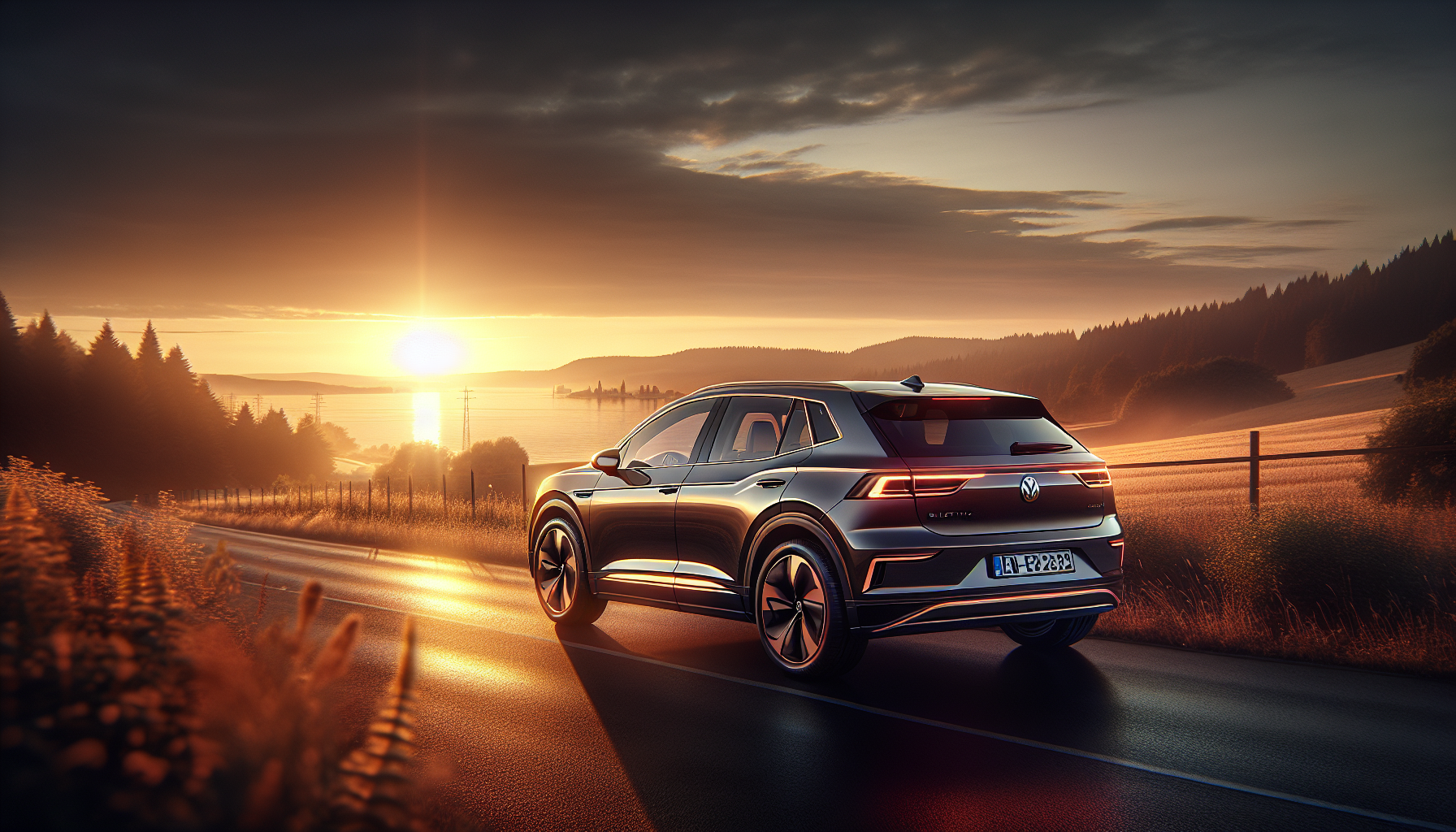
Somewhere on a test track in central Europe, a heavily camouflaged Volkswagen crossover is doing something quietly radical. It is not breaking speed records or showcasing autonomous driving software. It is simply trying to be affordable. And in the current landscape of electric vehicles, that might be the most disruptive thing a car can do.
The vehicle in question is VW's upcoming subcompact electric crossover, priced at around €28,000 and aimed squarely at mainstream European buyers who have so far watched the EV revolution from the sidelines. For context, the average transaction price for an electric vehicle in Europe still hovers well above €40,000, a figure that effectively prices out the continent's largest consumer demographic: the middle-income household that currently drives a used Golf or a Renault Clio and replaces it every five to seven years. Volkswagen is not building this car for early adopters. It is building it for everyone else.
The EV industry spent its first decade solving the wrong problem. Manufacturers raced to extend range, accelerate faster, and pack in more software features, all of which pushed prices upward and created vehicles that were technically impressive but commercially inaccessible to ordinary buyers. Policy incentives papered over some of that gap, but subsidy programs across France, Germany, and Italy have been repeatedly trimmed or restructured as government budgets tightened. What remained was a market shaped like an hourglass: expensive EVs at the top, a growing but still niche budget segment at the bottom anchored by Chinese imports, and a conspicuous void in the middle where volume sales actually live.
Volkswagen's move into that void is not accidental. The company has been under sustained pressure since its combustion-era profitability began eroding, and its previous electric offerings, the ID.3 and ID.4, earned reasonable reviews but failed to generate the kind of mass-market momentum the brand needed. The ID.3 in particular, launched with considerable fanfare, struggled with software problems at launch and never quite shed the perception that it was a premium product dressed in economy clothing. A €28,000 subcompact crossover represents a genuine recalibration, not just a rebadging exercise.
The crossover form factor matters here too. European buyers have shifted decisively toward higher-riding vehicles over the past decade, and a subcompact crossover sits at the precise intersection of the body style people want and the price point they can actually reach. Volkswagen is not fighting consumer preference; it is finally following it into the electric segment.
What happens if this car succeeds is more interesting than the car itself. A credible, mass-market EV from Europe's most recognisable automotive brand at €28,000 would create immediate pressure on Stellantis, Renault, and Toyota to respond in kind, compressing the timeline for affordable electrification across the entire European fleet. It would also complicate the position of Chinese manufacturers like BYD and MG, who have used price as their primary competitive lever in Europe. If Volkswagen can match or approach their price points while offering the brand trust and dealer network that Chinese entrants still lack, the window for Chinese EV dominance in the European mainstream could narrow faster than most analysts currently project.
There is also a second-order consequence worth watching on the infrastructure side. Mass adoption of affordable EVs does not just increase the number of cars plugged in; it changes who is plugging in and where. Wealthier early adopters typically charge at home, in private garages or driveways. The buyers Volkswagen is now targeting are far more likely to live in apartments, in dense urban areas, or in smaller towns where public charging infrastructure remains patchy and unreliable. A surge in demand from this demographic would expose the charging network's weakest points with unusual speed, turning what has been a background policy concern into an acute operational crisis for grid operators and charging providers.
The camouflage on that test vehicle will come off eventually, and when it does, the car underneath will look ordinary by design. That ordinariness is precisely the point. The most transformative products in any industry are rarely the ones that look revolutionary. They are the ones that make the revolutionary feel routine. Volkswagen is betting that Europe is finally ready for an electric car that does not ask you to be an enthusiast first.
Discussion (0)
Be the first to comment.
Leave a comment