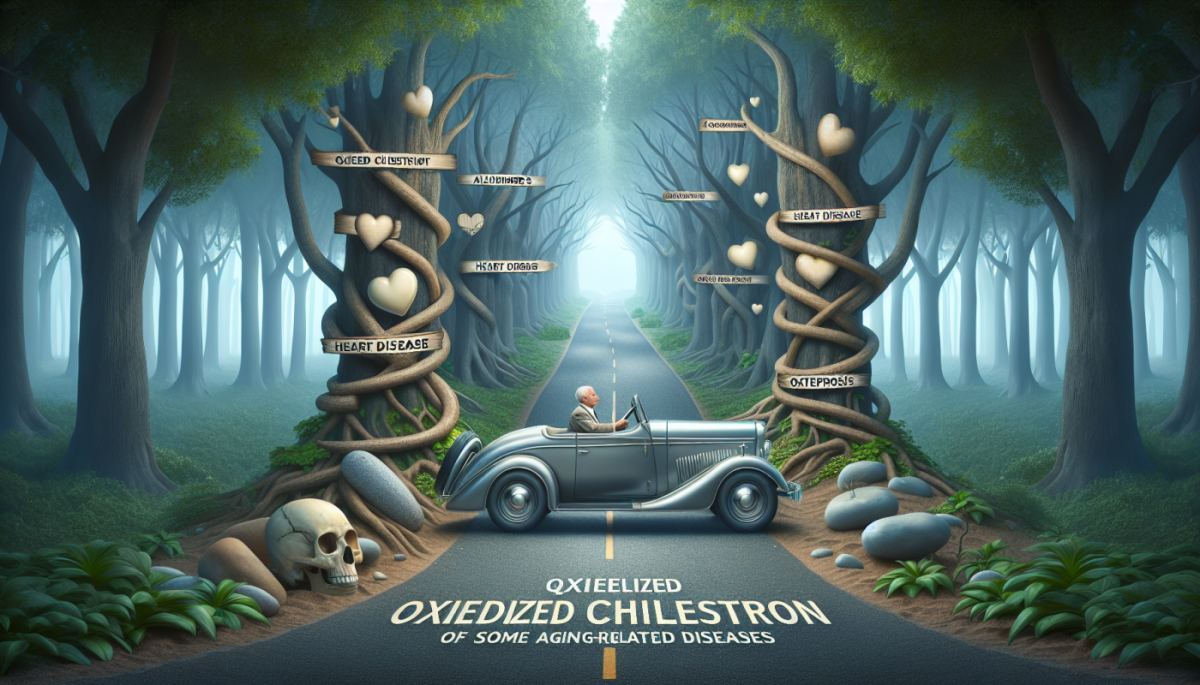
Cholesterol has long been cast as the villain in cardiovascular disease, but the story is considerably more complicated than the standard lipid panel suggests. A newly published review from researchers including Matthew O'Connor of Cyclarity Therapeutics is drawing fresh attention to one of cholesterol's more dangerous derivatives: 7-ketocholesterol, or 7KC, an oxidized form of cholesterol that accumulates in human tissue over time and appears to be involved in a striking range of age-related diseases.
7KC belongs to a class of compounds called oxysterols, which form when cholesterol is exposed to reactive oxygen species. Unlike regular cholesterol, which the body has well-developed machinery to process and recycle, 7KC resists normal metabolic clearance. It builds up inside cells, particularly in the lysosomes, those cellular recycling centers responsible for breaking down waste. Once lodged there, it begins to interfere with the very machinery meant to remove it, creating a feedback loop that compounds over time.
The review details how this accumulation is not a passive process. 7KC is biologically active in ways that are genuinely alarming. It promotes inflammation, disrupts cell membranes, triggers a form of cell death distinct from ordinary apoptosis, and impairs the function of macrophages, the immune cells tasked with clearing cellular debris. In atherosclerosis, macrophages that ingest oxidized lipids in arterial walls become so overwhelmed they transform into so-called foam cells, the fatty deposits that form the core of arterial plaques. 7KC appears to be a significant driver of that transformation.
What makes the 7KC story particularly significant from a systems perspective is the breadth of conditions it seems to touch. The review connects elevated 7KC levels to atherosclerosis, age-related macular degeneration, neurodegenerative diseases including Alzheimer's and Parkinson's, and non-alcoholic fatty liver disease. This is not a molecule with a narrow pathological footprint. It sits at an intersection where cardiovascular, neurological, and metabolic disease all converge, which raises an important question: how much of what we attribute to "aging" is actually the downstream consequence of a specific, measurable biochemical accumulation?
The implications for how we think about aging biology are substantial. The dominant framework for aging research has long focused on genetic damage, telomere shortening, and protein misfolding. But the 7KC literature points toward a different kind of problem: the gradual failure of the body's waste-disposal systems under the burden of compounds they were never fully equipped to handle. Lysosomes, it turns out, are not infinitely capable. When they become clogged with materials like 7KC that resist degradation, their broader function declines, and the consequences ripple outward into inflammation, immune dysfunction, and tissue damage.
Cyclarity Therapeutics, the company O'Connor is affiliated with, is developing cyclodextrin-based therapies specifically designed to extract 7KC from cells. Cyclodextrins are ring-shaped sugar molecules with a hydrophobic interior cavity that can capture and solubilize lipid compounds, essentially acting as molecular chaperones that escort 7KC out of lysosomes and into circulation where it can be excreted. The approach is elegant in its logic: rather than suppressing a pathway or blocking a receptor, it targets the physical accumulation itself.
If therapies targeting 7KC prove effective, the second-order consequences could be far-reaching in ways that extend well beyond any single disease indication. Consider that atherosclerosis, macular degeneration, and neurodegeneration are typically treated as separate clinical problems managed by separate medical specialties with separate drug pipelines. A molecule that contributes meaningfully to all three suggests that some portion of the disease burden across these categories shares a common upstream cause. Clearing that cause, even partially, could produce benefits that look disproportionately large relative to the intervention itself.
There is also a diagnostic dimension worth watching. If 7KC accumulation is measurable in blood or tissue, it could eventually serve as a biomarker for biological aging that is more mechanistically meaningful than chronological age alone. That would have implications not just for clinical trials but for how insurers, employers, and public health systems think about risk stratification.
The deeper lesson from the 7KC literature may be about the limits of reductionist medicine. Decades of research have produced extraordinary drugs for managing cholesterol, blood pressure, and blood sugar, each targeting a specific pathway with precision. But the body's aging process does not respect those categorical boundaries. A molecule that oxidizes quietly in arterial walls, retinal cells, and neurons simultaneously is a reminder that the most consequential threats to human health are often the ones that don't fit neatly into a single specialist's office. The researchers publishing this review are, in a sense, making a case for a more integrative biology, one where the accumulation of toxic metabolic byproducts is treated as a systemic problem deserving systemic solutions. Whether the medical establishment is ready to receive that argument is another question entirely.


Discussion (0)
Be the first to comment.
Leave a comment