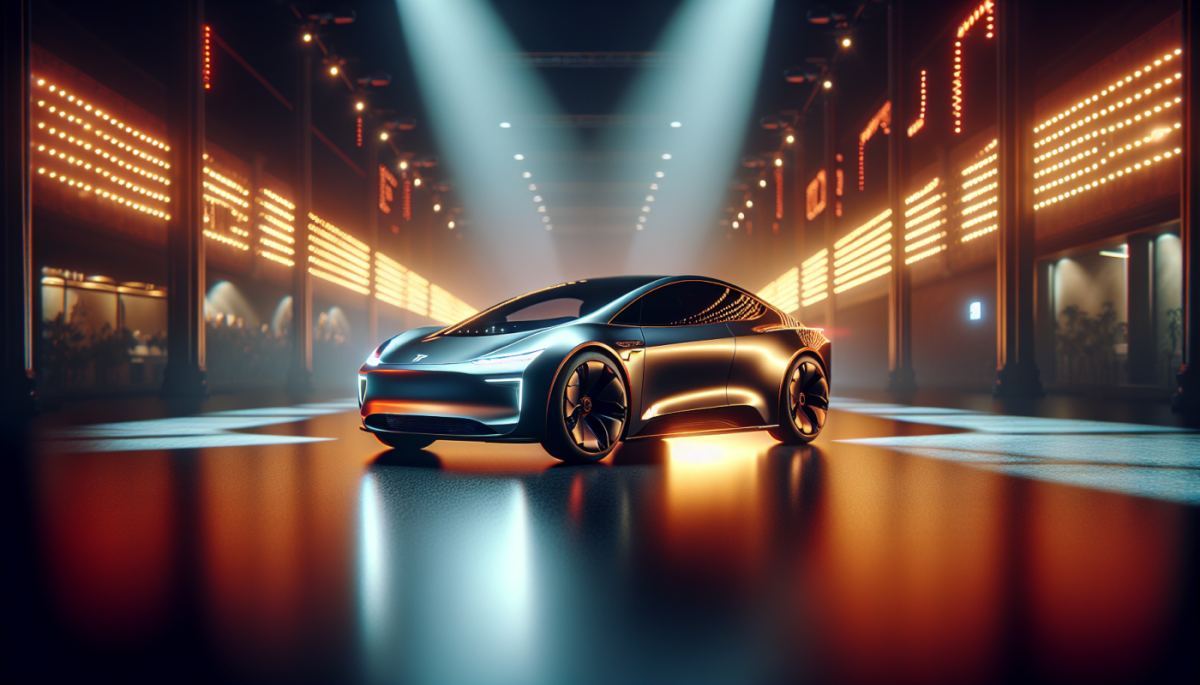
When Xiaomi filed specifications for its YU7 GT with China's Ministry of Industry and Information Technology, the numbers landed like a provocation. Nine hundred and ninety horsepower. Four hundred and thirty-eight miles of claimed range. A crossover body that, on paper, outguns the Porsche Macan Turbo in raw output. For a company that spent most of its life selling budget smartphones and rice cookers, the audacity is almost architectural.
But the YU7 GT is not really about horsepower. It is about what happens when a vertically integrated consumer electronics giant decides that the automobile is just another screen with wheels, and then prices accordingly. Xiaomi's entry-level SU7 sedan launched in China at roughly $30,000, undercutting Tesla's Model 3 by a significant margin while matching or exceeding it on several performance metrics. The YU7 GT will sit higher in the range, but the company's cost structure, built on massive component-sharing across phones, home appliances, and now vehicles, gives it leverage that legacy automakers and even Tesla cannot easily replicate.
The MIIT filing is a regulatory disclosure, not a marketing event, which makes it more credible as a signal. China's Ministry of Industry and Information Technology requires automakers to submit technical specifications before a vehicle can be sold domestically, and those filings are public. What they reveal about the YU7 GT is a tri-motor configuration pushing that 990-horsepower figure, paired with a battery system large enough to support 438 miles of range under China's CLTC testing cycle, a standard that tends to be more generous than the EPA's but still represents a genuinely large pack. The Porsche Macan Turbo Electric, by comparison, produces around 630 horsepower and offers roughly 288 miles of EPA-rated range.
The comparison to Porsche is not accidental. Xiaomi has been deliberate about positioning the SU7 against the Porsche Taycan in marketing materials, and the YU7 appears to be extending that strategy into the SUV segment. This is a calculated cultural move as much as a technical one. In China's aspirational consumer market, Porsche carries enormous status weight. By benchmarking against Stuttgart rather than Detroit or Fremont, Xiaomi is telling a specific buyer that they no longer have to choose between prestige and value.
The second-order consequences here extend well beyond China's domestic market. European and American automakers have largely treated the Chinese EV surge as a local phenomenon, insulated from their home markets by tariffs and brand loyalty. The European Union imposed additional duties on Chinese-made EVs in 2024, and the United States has maintained steep tariff walls. But tariffs address imports, not the underlying competitive pressure on technology expectations and price anchoring.
When a buyer in Shanghai or Shenzhen can purchase a 990-horsepower electric crossover from a brand they already trust for its phones and smart home devices, their reference point for what a performance EV should cost shifts permanently. That shift travels. Chinese tourists, diaspora communities, automotive journalists, and global social media all carry those reference points outward. Porsche, BMW, and Mercedes are not just competing on driveways; they are competing on perception, and perception is harder to tariff.
There is also a feedback loop forming inside China's EV supply chain that deserves attention. Xiaomi's aggressive specifications force domestic rivals like BYD, Li Auto, and Nio to respond in kind, which accelerates battery energy density research, motor efficiency improvements, and software integration across the entire sector. Each competitive cycle produces components that are cheaper and more capable, and those components eventually flow into export markets through partnerships, licensing, or simply through the global parts ecosystem. The walls that tariffs build around finished vehicles do not extend to the underlying technology.
Xiaomi has not yet confirmed global availability for the YU7 GT, and the regulatory and logistical barriers to selling a Chinese-made performance SUV in Europe or North America remain formidable. But the company's trajectory since entering the auto market in 2024 suggests it is not building cars for one market. It is building infrastructure for a platform, and platforms have a way of finding their edges.
The more interesting question may not be whether the YU7 GT reaches a Porsche dealership's neighborhood, but whether Porsche's neighborhood starts looking different because it did.
Discussion (0)
Be the first to comment.
Leave a comment