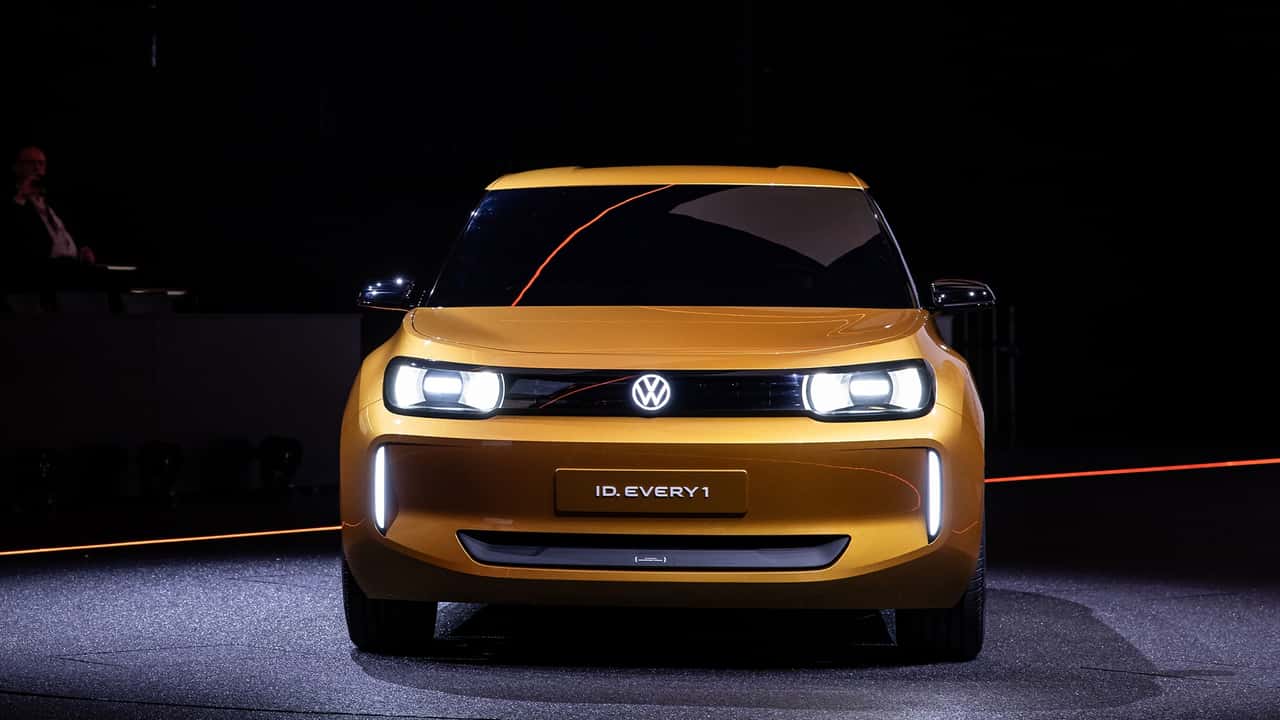
Volkswagen's chief financial officer Arno Antlitz made a candid admission recently that most automakers prefer to bury in footnotes: the company's current electric vehicles are generating only 70 to 80 percent of the profit margins that equivalent gasoline-powered cars produce. That gap, modest as it might sound in percentage terms, represents billions of euros in foregone earnings across one of the world's largest automotive groups, and it tells a story far more complicated than a simple technology transition.
The confession matters because VW is not a struggling startup burning through venture capital in pursuit of market share. It is a century-old industrial giant with 120 manufacturing facilities, roughly 650,000 employees worldwide, and a brand portfolio stretching from budget Škodas to Lamborghinis. When a company of that scale says its newest product line earns less than its oldest, the implications ripple outward through supply chains, labor agreements, investment timelines, and the broader credibility of the European auto industry's electrification promises.
Antlitz tied the profitability shortfall directly to architecture. VW's current EVs, including the ID.4 and ID.7, run on the MEB platform, a transitional design that was engineered before the company fully understood the cost structures of mass-market electrification. The next-generation SSP platform, which stands for Scalable Systems Platform, is expected to close much of that gap when it arrives later this decade. SSP is designed from the ground up to reduce software complexity, consolidate electronic control units, and enable over-the-air updates that eliminate costly dealer-level reprogramming. In theory, it should behave more like a consumer electronics product and less like a rolling collection of legacy subsystems.
The deeper problem VW faces is one that systems thinkers would recognize immediately as a path dependency trap. Decades of investment in combustion engine manufacturing, tooling, and supplier relationships created enormous efficiencies that took generations to build. Electric vehicles, by contrast, are still in the early stages of their own learning curve, where volumes are rising but not yet high enough to fully amortize the fixed costs of new factories, battery gigaplants, and software development teams.

This is not unique to Volkswagen. Ford has disclosed multi-billion dollar losses on its Model e division. General Motors delayed its Ultium-based truck rollout amid cost concerns. Even Toyota, which spent years skeptical of pure battery electrics, has acknowledged that its first-generation BEV platform carries higher per-unit costs than it would like. The pattern suggests the industry is navigating what economists call a valley of death between two profitable equilibria: the mature combustion business it is leaving and the scaled electric business it has not yet reached.
What makes VW's situation particularly acute is the timing. The company is simultaneously managing a painful restructuring in Germany, where it has been in tense negotiations with labor unions over potential plant closures and workforce reductions. High labor costs at home, combined with thinner margins on the products that are supposed to represent the future, create a financial squeeze that has few easy exits. Cutting costs too aggressively risks undermining the quality and software investment needed to make SSP competitive. Moving too slowly burns cash and tests investor patience.
The profitability gap also carries a less obvious systemic consequence: it may quietly reshape which markets VW prioritizes. If European and American consumers are buying EVs that generate 20 to 30 percent less margin than their gasoline counterparts, the commercial logic pushes toward either raising EV prices, which risks ceding volume to Chinese competitors like BYD, or accepting lower returns and hoping scale eventually rescues the math. Neither path is comfortable.
Chinese automakers, it is worth noting, have already navigated a version of this transition at lower cost structures, partly because of state subsidies, partly because of vertically integrated battery supply chains, and partly because they were not carrying the legacy overhead of a combustion era. CATL, BYD's battery affiliate and the world's largest EV battery maker, has driven cell costs down to levels that Western manufacturers are still struggling to match even with their own gigafactories.
VW's SSP platform, when it finally arrives, will be a meaningful test of whether a legacy automaker can engineer its way out of a structural cost disadvantage, or whether the combustion era's efficiencies were simply too deeply embedded to replicate quickly in a new technology paradigm. The answer will matter not just for VW's shareholders, but for every government that has staked industrial policy on the assumption that its domestic automakers can compete in an electric future they did not invent.
Discussion (0)
Be the first to comment.
Leave a comment