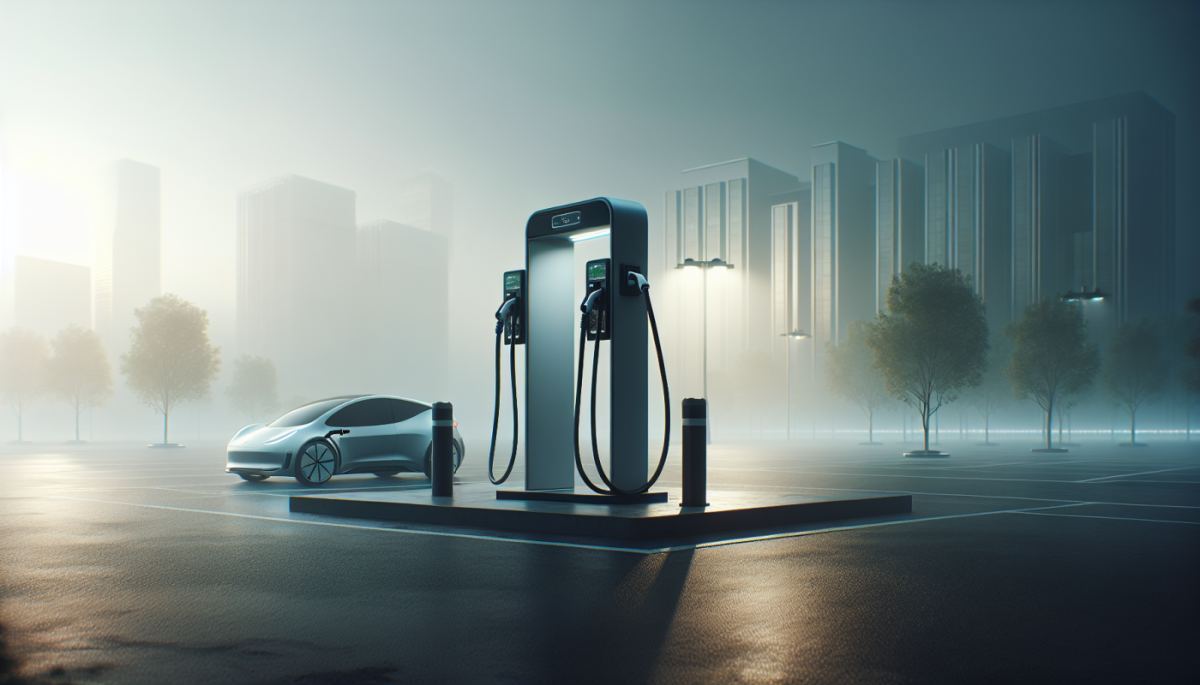
When Tesla began cracking open its Supercharger network to non-Tesla vehicles, most analysts treated it as a goodwill gesture or a regulatory play. What it actually was, in retrospect, was a strategic land grab — one that is reshaping the competitive architecture of the entire electric vehicle industry in ways that are only now becoming fully visible.
As of 2026, dozens of non-Tesla EVs can plug into Superchargers across the United States. The list has grown from a handful of early adopters to a broad coalition spanning Ford, General Motors, Rivian, Honda, Nissan, and a growing roster of others. What started as a trickle has become something closer to an industry standard, and the implications of that shift extend well beyond the convenience of finding a fast charger on a road trip.
The core dynamic at work here is a classic network effect, but with an unusual twist. Normally, network effects benefit the platform by attracting more users, which attracts more value, which attracts more users still. Tesla's Supercharger opening does all of that — but it also does something subtler. It converts competitors into dependents. Every automaker that engineers its vehicles to accept the North American Charging Standard (NACS) connector, which Tesla pioneered and which has now been adopted as the dominant plug format in the U.S., is effectively building Tesla's charging moat deeper into the foundation of the broader EV ecosystem.
The Society of Automotive Engineers formalized NACS as SAE J3400 in 2023, which gave the standard institutional legitimacy and accelerated adoption across the industry. But the physical infrastructure — the roughly 50,000 Supercharger stalls Tesla has deployed globally — remains Tesla's asset. Automakers can adopt the connector standard, but they cannot replicate the network overnight. That asymmetry is the crux of Tesla's advantage.
For drivers of non-Tesla EVs, the practical benefit is real and significant. Superchargers are widely regarded as the most reliable fast-charging infrastructure in the country. Competing networks like Electrify America and EVgo have faced persistent criticism for uptime issues and inconsistent speeds. When Ford and GM drivers began accessing Superchargers through adapter programs and then native NACS ports, the reliability gap became immediately apparent — and immediately sticky. Drivers who experience a seamless charging session don't forget it.
The second-order consequences of this consolidation are worth sitting with. As more automakers route their customers toward Tesla's network, the financial pressure on competing charging networks intensifies. Electrify America, which was born out of Volkswagen's diesel emissions settlement and has received billions in federal infrastructure funding, now faces a harder road to profitability if the vehicles it was built to serve increasingly have a better option. That's not just a business problem — it's a policy problem, because federal dollars have flowed heavily into non-Tesla charging infrastructure under the assumption of a more pluralistic market.
There's also a quieter dynamic unfolding inside the automakers themselves. Engineering a vehicle around NACS and optimizing it for Supercharger compatibility requires a kind of technical alignment with Tesla's ecosystem that has downstream effects on software integration, over-the-air update compatibility, and eventually, perhaps, data. What charging behavior data flows through a Supercharger session, who owns it, and what it can be used for are questions that haven't been fully litigated yet — but they will be.
For consumers, the near-term story is straightforwardly positive. More vehicles, more access, more reliability. But the longer arc points toward a market where one company's infrastructure decisions set the tempo for an entire industry. Tesla doesn't need to win the EV sales race outright to win the EV era. It may only need to remain the indispensable utility underneath it.
The more the Supercharger network becomes the default answer to range anxiety across brands, the harder it becomes for any single automaker — or any government program — to dislodge it. Infrastructure, once embedded, tends to stay embedded. The question worth watching now isn't which new models are joining the Supercharger list each month. It's whether anyone is building the alternative that could eventually make that list irrelevant.

Discussion (0)
Be the first to comment.
Leave a comment