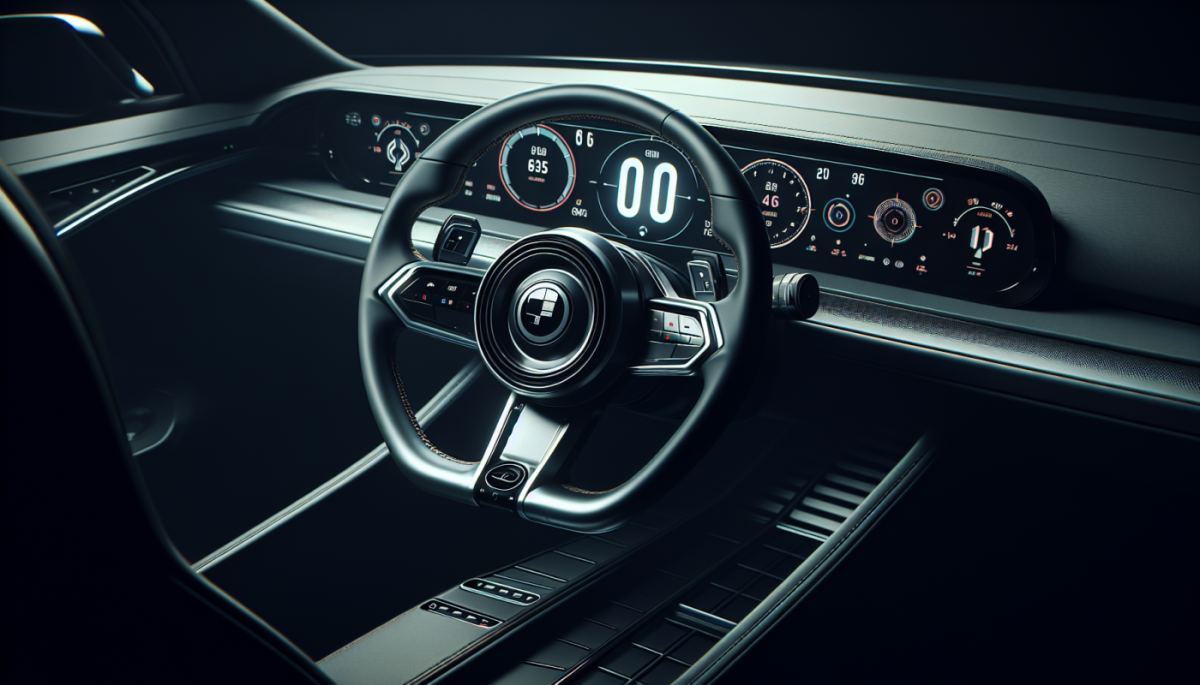
The Polestar 3 is, by most accounts, a genuinely compelling electric SUV. It drives well, looks sharp, and carries the kind of Scandinavian restraint that makes it feel like a considered alternative to the more maximalist offerings from Tesla or Mercedes. But there is a detail buried inside the ownership experience that reveals something uncomfortable about where the auto industry is heading: more than a year after the car launched, eight of its twelve steering wheel buttons do essentially nothing. They are physical controls, present and tactile, that simply do not work.
That is not a minor software glitch. It is a design philosophy made visible.
Polestar, the Volvo and Geely-backed brand that has positioned itself as a tech-forward EV maker, built the Polestar 3 around a software ecosystem it clearly intended to grow into over time. The hardware was shipped ahead of the software. This is now a recognizable pattern in the EV industry, borrowed loosely from the smartphone world, where you release the device and patch the experience later. Tesla normalized it. Rivian has leaned into it. And now legacy-adjacent brands like Polestar are following suit.
The problem is that a car is not a phone. When eight buttons on your steering wheel do nothing, you notice every single time you reach for them. The tactile expectation is set the moment your hands grip the wheel. The muscle memory begins forming. And then, repeatedly, nothing happens. That friction is not abstract. It erodes trust in the product in a way that a missing app feature on a phone simply does not.
What makes the Polestar 3 situation particularly striking is the timeline. Over a year post-launch, those buttons remain dormant. That suggests the gap between hardware ambition and software delivery is not a matter of weeks or a minor delay. It points to deeper organizational or technical constraints, whether that is the complexity of integrating Android Automotive OS with proprietary vehicle systems, resource allocation decisions, or the challenge of coordinating software updates across a global fleet.
The immediate story is about a frustrating ownership experience. But the second-order consequence is more significant and worth sitting with: automotive brands that ship incomplete products and rely on over-the-air updates to finish them are quietly shifting the risk of product development onto the consumer.
In traditional manufacturing, a car was complete when it left the factory. Recalls existed for safety failures, not for features that were never functional to begin with. The new model asks buyers to pay full price for a product that is, in a measurable sense, unfinished, and to trust that the company will eventually deliver what the hardware implies. That is a meaningful transfer of risk, and it is happening without much explicit acknowledgment from automakers or, frankly, from the automotive press.
For Polestar specifically, this matters more than it might for a brand with deeper roots. Polestar does not have decades of loyalty to draw on. It is still building its identity and its owner community. Every person who buys a Polestar 3 and spends a year pressing buttons that do nothing is a potential advocate who becomes, instead, a cautionary tale. Word of mouth in the EV enthusiast community is a powerful force, and incomplete software experiences have a long memory in forums, subreddits, and YouTube reviews.
There is also a regulatory dimension quietly forming in the background. As more vehicles ship with placeholder hardware, consumer protection agencies in the U.S. and Europe are beginning to ask harder questions about what "feature complete" means at point of sale. The FTC has signaled interest in software-defined product representations, and the EU's broader digital product liability framework is evolving in ways that could eventually require automakers to be more explicit about what is and is not functional when a car is delivered.
Polestar will likely patch those buttons eventually. The company has a history of meaningful over-the-air updates, and the underlying platform is capable. But the damage to perception compounds with every month the fix does not arrive. The Polestar 3 is a genuinely good car trapped inside an incomplete product experience, and that gap, more than any spec sheet comparison, may define how the brand is remembered in its most critical growth window.
The deeper question the industry has not yet answered is whether consumers will keep accepting the smartphone model for products that cost fifty or eighty thousand dollars, or whether the patience for "we'll update it later" has a shorter half-life than Silicon Valley assumes.
Discussion (0)
Be the first to comment.
Leave a comment