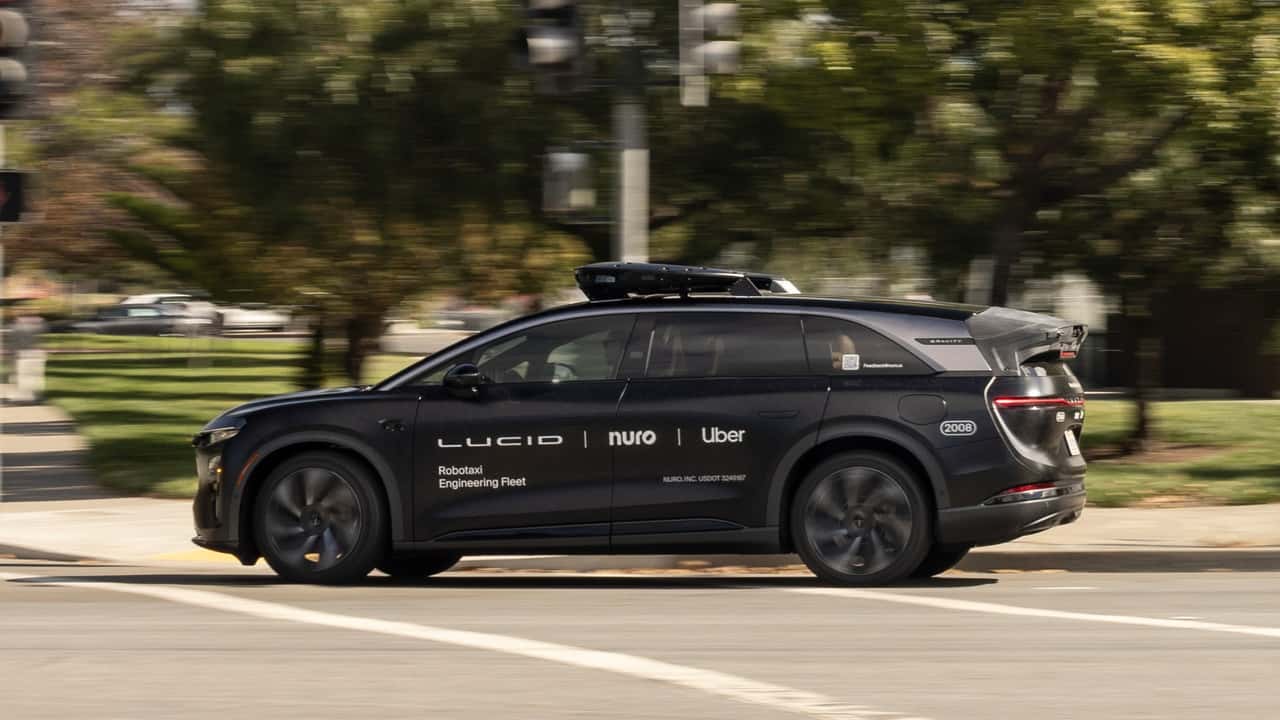
California's robotaxi race just got a new wrinkle. While Tesla dominates headlines with promises of autonomous vehicles and Elon Musk regularly teases a fully driverless future, it is Lucid Motors, Nuro, and Uber that have quietly secured two critical California permits that put them meaningfully ahead in the regulatory game. The California Public Utilities Commission and the Department of Motor Vehicles have granted these companies the authorizations needed to begin testing and, in some cases, deploying autonomous vehicles on public roads, including in commercial contexts. Tesla, for all its bravado, has not even submitted an application for comparable permits.
This is not a minor administrative footnote. California's permitting process is one of the most rigorous in the world, requiring companies to demonstrate safety protocols, data reporting standards, and liability frameworks before a single robotaxi can legally carry a paying passenger. The fact that Lucid's Gravity platform, Nuro's delivery robots, and Uber's autonomous partnerships have navigated this process while Tesla has not tells you something important about how these companies are actually prioritizing regulatory compliance versus public narrative.
The CPUC's Passenger Carrier Permit and the DMV's Autonomous Vehicle Deployment Permit are the two gatekeeping mechanisms at the center of this story. Together, they form the legal foundation for any company hoping to charge passengers for rides in driverless vehicles in California. Waymo, which has operated a commercial robotaxi service in San Francisco since 2023, holds both. Cruise held them too, before a pedestrian accident in October 2023 led to a suspension of its permits and a broader corporate collapse at General Motors' autonomous unit. The bar, in other words, is real.
Lucid's entry into this space is particularly interesting because the company is best known as a luxury electric vehicle manufacturer, not an autonomy-first tech firm. The Gravity SUV is a premium product aimed at competing with Tesla's Model X and the Rivian R1S. Pivoting toward robotaxi certification suggests Lucid is thinking about revenue diversification at a time when EV demand has softened across the industry and the company continues to burn through cash. Pairing a high-end vehicle platform with autonomous mobility services could open a fleet-sales channel that pure consumer retail cannot easily provide.
Nuro's situation is different. The company has spent years operating small, low-speed autonomous delivery robots and has steadily expanded its regulatory footprint. Uber's involvement reflects the ride-hailing giant's long-running effort to reduce its dependence on human drivers, a cost structure that has kept the company's margins under persistent pressure despite years of revenue growth.
The absence of Tesla from California's permit roster is worth sitting with. The company has repeatedly promised a fully autonomous vehicle experience, with Musk at various points predicting a fleet of self-driving robotaxis by 2020, then 2022, then 2024. The actual product, Full Self-Driving, remains a driver-assistance system that legally requires a human behind the wheel. Tesla has not applied for the permits that would allow it to operate commercially without a driver in California, which is either a strategic choice to avoid regulatory scrutiny or an acknowledgment that the technology is not yet ready for that standard of oversight.
This creates a second-order consequence worth watching carefully. If Lucid, Nuro, and Uber build out operational robotaxi infrastructure in California over the next two to three years, they will accumulate something Tesla cannot buy quickly: real-world safety data, regulatory trust, and consumer familiarity with non-Tesla autonomous rides. Regulatory agencies tend to develop institutional relationships with the companies they oversee. A company that has been filing incident reports, cooperating with audits, and iterating on safety protocols for years starts with a credibility advantage that a late entrant, even a well-funded one, cannot easily replicate.
The Cruise collapse demonstrated how quickly that trust can evaporate. But it also demonstrated that the permits themselves are achievable, and that the CPUC and DMV are willing to grant them to companies that do the work. The question now is whether Tesla's long-term robotaxi ambitions will be constrained not by engineering but by the regulatory relationships it chose not to cultivate while it was busy making promises.
California has historically set the template for vehicle regulation that other states eventually follow. What gets permitted, and who gets permitted to do it, in Sacramento tends to shape the national conversation within a few years. The companies earning those approvals today may be writing the rules that everyone else has to live with tomorrow.
References
- California Public Utilities Commission (2024) — Autonomous Vehicle Passenger Service Permits
- California DMV (2024) — Autonomous Vehicles: Testing and Deployment Permits
- Hawkins, A. (2023) — Cruise's driverless car permit suspended after pedestrian dragging incident
- Lambert, F. (2024) — Tesla Full Self-Driving still requires driver supervision, NHTSA confirms
- Boudette, N. (2024) — Waymo expands robotaxi service in San Francisco
Discussion (0)
Be the first to comment.
Leave a comment