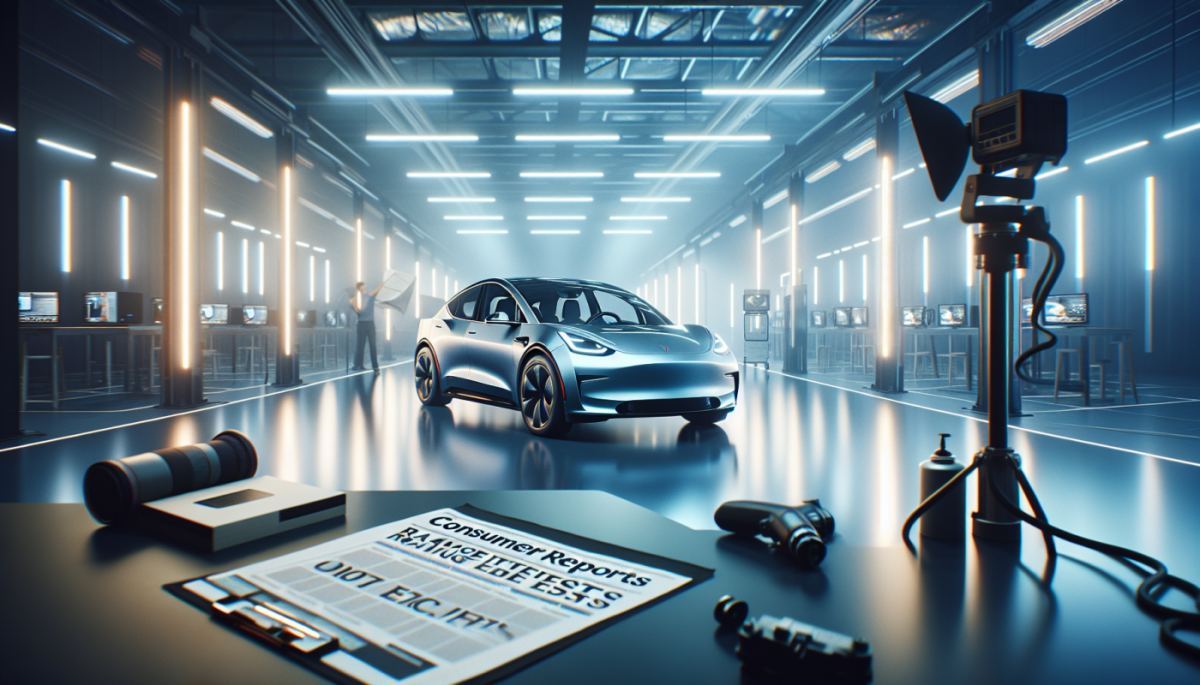
There is a quiet contract between automakers and EV buyers, written in the fine print of every window sticker: the EPA range estimate. Buyers plan road trips around it, make purchase decisions based on it, and feel betrayed when their car falls short. Consumer Reports recently tested the real-world highway range of nearly 30 electric vehicles, and the results expose just how unevenly that contract is being honored across the industry.
The findings matter because highway driving is where range anxiety bites hardest. City driving, with its lower speeds and regenerative braking opportunities, tends to flatter EV range. Highways are the stress test. Sustained speeds, climate control loads, and aerodynamic drag combine to drain batteries faster than the EPA's blended test cycle typically reflects. The gap between the sticker and the road is where consumer trust either holds or fractures.
Among the brands tested, one stood out for consistently beating its EPA ratings in real-world highway conditions. That kind of overperformance is not accidental. It reflects deliberate engineering choices: conservative battery management software, aerodynamic efficiency prioritized over styling, and thermal systems that maintain cell performance under sustained load. When a manufacturer consistently delivers more than it promises, it signals a corporate culture that values margin of safety over marketing headline numbers.
The EPA's testing methodology has long been a source of friction between the agency, automakers, and consumer advocates. The standard test cycle blends city and highway driving in a way that tends to produce optimistic figures, particularly for vehicles that suffer disproportionately at highway speeds. The agency has acknowledged this gap and has made incremental adjustments over the years, but the fundamental tension remains: a single number has to summarize performance across wildly different driving conditions, climates, and driver behaviors.
Some manufacturers have learned to game this dynamic, tuning their vehicles to perform well within the specific parameters of the EPA test while accepting that real-world performance will lag. Others, apparently including the brand that topped Consumer Reports' rankings, have taken the opposite approach, engineering for real-world conditions and letting the EPA number land where it may. The difference in philosophy produces very different ownership experiences, even when two vehicles carry identical sticker ratings.
This creates a second-order market problem that rarely gets discussed. When consumers repeatedly experience range shortfalls from certain brands, they don't just lose trust in those brands. They lose trust in EV range claims broadly, which slows adoption across the entire category. The manufacturers who overpromise are, in effect, externalizing a reputational cost onto the whole industry. Every disappointed driver who tells friends their EV "never actually gets the rated range" is doing quiet damage to a transition that depends on consumer confidence.
The brands that performed best in Consumer Reports' testing share a few characteristics worth examining. Their software-defined battery management systems tend to be more conservative about what portion of the pack's total capacity is accessible to the driver, which protects long-term battery health and maintains more consistent range across temperature extremes. Their aerodynamic profiles are typically optimized with less compromise for visual drama. And their thermal management systems, the unsung heroes of EV engineering, do a better job of keeping cells in their optimal operating window during sustained highway loads.
The brands that underperformed, by contrast, often face a structural incentive problem. In a competitive market where buyers compare EPA numbers on spreadsheets before ever driving a car, there is real commercial pressure to post the highest possible rating. Engineering teams that push back against optimistic range targets can find themselves overruled by product planners watching the competition. The result is a race to the top of the window sticker that can quietly become a race to the bottom of owner satisfaction.
Consumer Reports' testing, and the broader ecosystem of independent range validation it represents, is one of the few feedback mechanisms that can correct this dynamic. When third-party data consistently shows a brand delivering 85 percent of its EPA rating on the highway while a competitor delivers 105 percent, that information eventually reshapes purchase decisions, press coverage, and ultimately the incentive structures inside automakers themselves. The question is whether that feedback loop operates fast enough to influence the next generation of vehicles already in development, or whether the industry will keep writing checks its batteries can't cash.
Discussion (0)
Be the first to comment.
Leave a comment