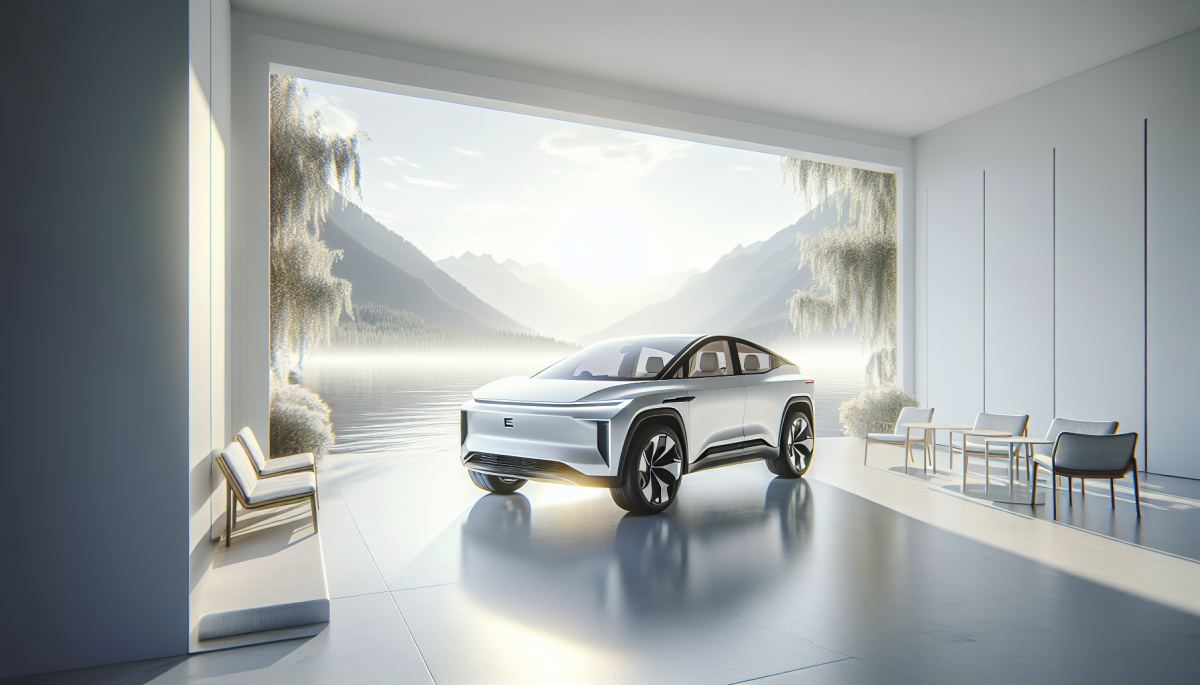
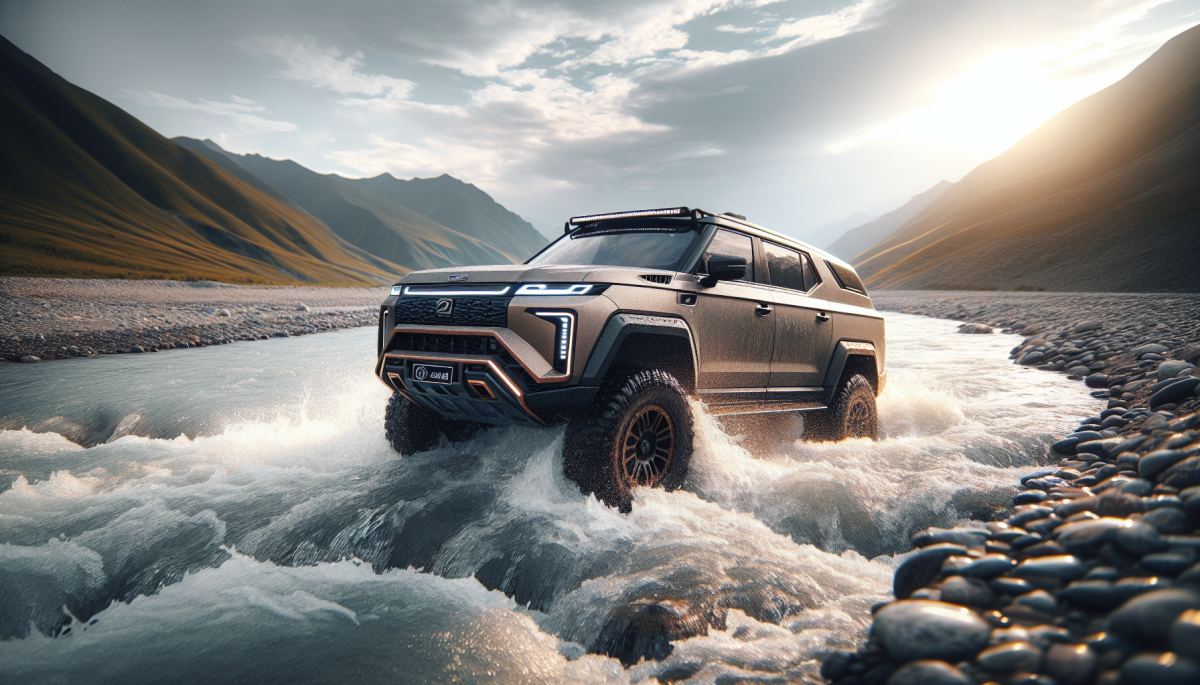
The Jetour G700 does not look like a boat. It is a large, angular SUV built by Chery, one of China's most aggressive automotive exporters, and it sits on four wheels like any other vehicle. But at the top of its options list sits something unusual: a propeller kit, designed to push the truck across rivers and flooded terrain. The G700, it turns out, can float.
This is not a novelty stunt. It is a product decision made by engineers who understood their market, and it reflects something much larger happening inside China's automotive industry right now. Chinese automakers are no longer competing on price alone. They are competing on capability, on spectacle, and on a kind of maximalist engineering ambition that Western brands largely abandoned decades ago.
To understand why a mainstream Chinese SUV brand is shipping propellers, you have to understand the geography and psychology of the Chinese off-road market. China has vast rural interiors, flood-prone river deltas, and a growing class of adventure-oriented buyers who want vehicles that signal genuine toughness rather than just the aesthetic of it. The plug-in hybrid powertrain is central to this. Because PHEVs carry large battery packs alongside combustion engines, they can deliver enormous amounts of low-end torque instantly, which is exactly what you need when you are trying to push a two-ton vehicle through standing water or up a muddy embankment.
Chery's Jetour brand has been positioning the G700 as a serious overlanding machine, and the amphibious capability, however theatrical it sounds, is a logical extension of that positioning. The vehicle reportedly features sealed underbody components, a raised air intake, and a chassis designed to maintain buoyancy long enough for the propeller to do its work. This is not a vehicle that swims gracefully. It is a vehicle that survives water crossings that would destroy conventional SUVs, and in markets where roads wash out seasonally, that is a meaningful distinction.
The broader context here is China's PHEV boom. While battery-electric vehicles have grabbed most of the global headlines, plug-in hybrids have quietly become the dominant growth segment in China's new energy vehicle market. BYD, Li Auto, and now Chery have all leaned into extended-range and plug-in hybrid architectures that offer the electric efficiency buyers want in cities while delivering the range and power that rural and adventure use cases demand. The G700 is a direct product of that engineering momentum.
Western automakers watching this from a distance should feel something between admiration and unease. Ford's Bronco and Jeep's Wrangler remain iconic off-road brands, but neither has moved toward amphibious capability as a production feature, and neither has paired serious off-road hardware with a plug-in hybrid drivetrain in the same aggressive way Chinese brands are now doing. The gap is not just technological. It is a gap in willingness to take risks on unusual product configurations.
Chinese automakers benefit from a domestic market large enough to absorb experimental products, a regulatory environment that moves quickly, and a manufacturing ecosystem that can iterate on hardware faster than most Western supply chains allow. When Jetour decides to engineer a propeller mount into an SUV, the path from concept to production is shorter than it would be at General Motors or Stellantis. That speed is itself a competitive advantage.
The second-order consequence worth watching is what happens when these vehicles reach export markets. Jetour and Chery are already expanding aggressively into Southeast Asia, the Middle East, Latin America, and parts of Africa, precisely the regions where road infrastructure is least reliable and where amphibious capability is least absurd. If the G700 finds a loyal following in flood-prone markets like Bangladesh, Vietnam, or coastal West Africa, it could establish a product category that Western brands will then scramble to answer. The history of the automotive industry is full of features that seemed eccentric until they became standard, and the line between novelty and necessity tends to shift faster than legacy manufacturers expect.
The propeller on the Jetour G700 is easy to laugh at. It is also easy to underestimate, which is a mistake the global auto industry has already made once with Chinese electric vehicles, and is perhaps not in a position to make again.

Discussion (0)
Be the first to comment.
Leave a comment