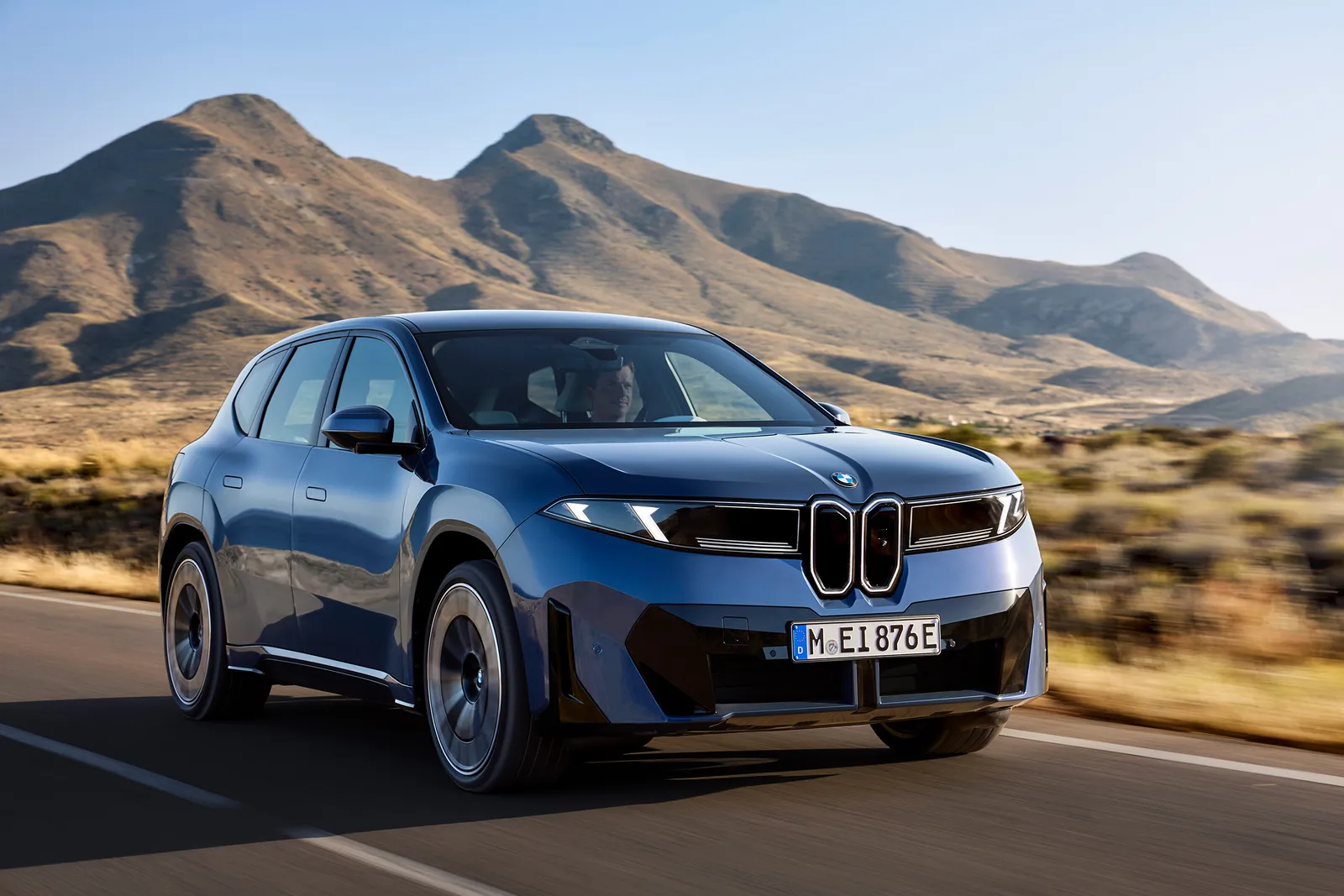
There is a particular kind of confidence a carmaker needs to rack up 50,000 orders for a vehicle before a single customer has taken it for a test drive. BMW appears to have found it with the new iX3, and the numbers are forcing a quiet rethink of what electric vehicle buyers actually want.
The orders have come in on the back of a straightforward proposition: meaningful range, fast charging, and a price that does not require a buyer to rationalise the purchase for three weeks. BMW has not released the full specification sheet to the public yet, but the order volume alone tells a story that the broader auto industry would do well to read carefully. Fifty thousand reservations, placed largely on faith in the brand and the basic promise of the product, suggests that the EV market's so-called demand problem may have always been, at its core, a value problem.
For years, the dominant narrative around electric vehicle adoption has centred on range anxiety, charging infrastructure, and consumer hesitancy. Those are real forces, but they have often served as convenient cover for a simpler issue: many EVs have been either too expensive for what they offer, too compromised in real-world usability, or both. The iX3's early order surge implies that when a manufacturer gets the fundamentals right, the hesitancy dissolves faster than the industry expected.
BMW's position here is not accidental. The company has spent several years absorbing the lessons of its earlier EV efforts, including the original iX3 and the i4, watching where customers pushed back and where they quietly walked away. The new iX3 appears to be the product of that feedback loop finally closing. Fast charging capability matters enormously to buyers who do not want to restructure their lives around a charging schedule. Range matters because the psychological buffer it provides is worth more to most drivers than the actual kilometres they will ever use. And price matters because the EV premium, which was once tolerated as the cost of early adoption, is no longer acceptable to a mainstream buyer who has watched the technology mature for a decade.
What makes the 50,000 figure particularly striking is the absence of test drives in the equation. Automotive retail has historically depended on the tactile experience of a vehicle, the way a door closes, the feel of acceleration, the sense of space inside a cabin. BMW has apparently built enough trust, through brand reputation and the specifics of what it has communicated about the iX3, that tens of thousands of buyers were willing to commit without that ritual. That is a meaningful shift in how cars are sold, and it has implications well beyond this single model.
The cascading effect worth watching here is not what happens to BMW's order books. It is what happens to every other manufacturer currently hedging on EV investment, trimming range targets to cut costs, or delaying fast-charging integration to protect margins. The iX3's order volume is a market signal, and market signals of this clarity tend to accelerate competitive timelines in ways that individual company roadmaps rarely anticipate.
Suppliers who have been cautious about committing capacity to EV-specific components will feel this pressure. Dealership networks that have been slow to invest in EV sales training and charging infrastructure will find themselves behind a curve that is now moving faster. And perhaps most importantly, the political and regulatory conversation around EV adoption targets, which has grown increasingly fraught in several major markets, will have one more data point suggesting that the demand is there when the product is genuinely competitive.
There is also a subtler feedback loop at work. Every large pre-order wave for an EV that delivers on its promises makes the next wave easier to generate. Consumer confidence in the category builds incrementally, and BMW, by hitting the right notes early, is not just selling iX3s. It is contributing to a broader normalisation of EV purchasing behaviour that will benefit the entire segment, including its rivals.
The real question now is whether 50,000 orders converts into 50,000 satisfied owners once deliveries begin, because in the EV market, the gap between reservation and reputation is where the next chapter gets written.
Discussion (0)
Be the first to comment.
Leave a comment